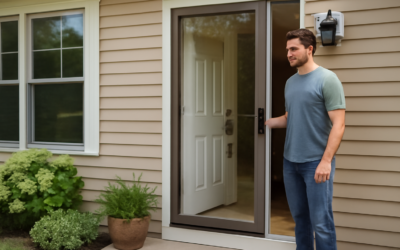
A storm door earns its keep only if it lets you enjoy a breeze in spring and seals out the cold in January, and few models handle both jobs as gracefully as this one. The Larson 80 Split Fullview storm door uses a clever two-piece glass-and-screen system that lets you swap ventilation for weatherproofing in seconds without hauling panels down to the basement. It sits in Larson’s mid-tier lineup, giving homeowners a genuine full-view aesthetic and interchangeable panels at a price well below the top-of-the-range retractable models. If you are weighing this door against the alternatives, here is what you actually get.
Part of our Windows & Doors guide — explore the full guide →
- What “Split Fullview” Actually Means
- Key Features Worth Knowing
- How the Panel Swap Works
- Sizing and Fit
- Installation: DIY or Hire Out?
- Pricing and Value
- Maintenance and Longevity
- How It Compares to Other Larson Models
- Energy Efficiency and Weather Protection
- Common Issues and How to Prevent Them
- Is It the Right Door for You?
What “Split Fullview” Actually Means
The name describes the design. “Fullview” means the door is glass from top to bottom, giving you an unobstructed view of your entry door and letting maximum light into the foyer. “Split” refers to the panel system — the door frame is divided so you can install a glass panel on top and a screen on the bottom, or swap them seasonally. Rather than one giant pane, you get two interchangeable inserts you slide in and out by hand.
This matters because it solves the classic storm-door dilemma. A solid-glass door blocks airflow; a full-screen door offers no winter protection. The split system lets you run glass in cold months for insulation and screen in warm months for ventilation, and the panels store flat when not in use.
Key Features Worth Knowing
The 80 series is built around convenience and a clean look. The features that set it apart from a basic builder-grade storm door include:
- Interchangeable glass and screen panels that swap in seconds without tools
- Full-view design for maximum light and an unobstructed sightline to your entry door
- Durable aluminum frame with a baked-on finish resistant to fading and corrosion
- Standard color options including white, sandstone, and dark tones to match trim
- Screen-away style ventilation without the higher cost of a fully retractable screen
Larson backs the frame and hardware with a limited warranty, and the glass is safety-rated tempered glass that resists breakage and meets code for exterior doors.
How the Panel Swap Works
The appeal of this door is how painless the seasonal changeover is. Traditional triple-track storm doors ask you to slide heavy glass and screen sections up and down within the frame. The split system instead uses lightweight removable inserts. When spring arrives, you lift out the upper glass panel, slide in the screen insert, and reverse the process in fall. The panels are light enough for one person to handle and store flat against a wall or in a closet.
Because there is no bulky triple-track hardware, the door also has a slimmer, cleaner profile than older ventilating storm doors. That is a meaningful upgrade if you care about curb appeal.
Sizing and Fit
Storm doors come in standard sizes, and getting the measurement right is the difference between a smooth install and a frustrating afternoon. The Larson 80 fits common door openings, but you must confirm your rough opening before ordering.
- Measure the width of your door opening at the top, middle, and bottom; use the smallest number.
- Measure the height on both sides and in the center.
- Standard storm doors fit 36-inch and 32-inch openings, with adjustable frames handling minor variance.
- Note whether your hinge side is left or right as you face the door from outside — the door is handed.
Most home centers stock the common 36-inch white version, while other colors and the 32-inch size may be special-order. Measure twice before you buy.
Installation: DIY or Hire Out?
A competent DIYer can install this door in two to four hours with basic tools — a drill, level, tape measure, and hacksaw to trim the frame if needed. Larson includes a Z-bar mounting system and an installation guide, and the design is forgiving of small out-of-square openings. The most common mistakes are failing to shim the frame plumb and over-tightening the sweep at the bottom, which causes drag.
That said, if your opening is badly out of square, if you are not comfortable on a ladder, or if you want a factory-clean seal, professional installation runs roughly $100 to $250 on top of the door price. For a first-time installer, watching Larson’s official video walkthrough before starting saves a lot of grief.
Pricing and Value
The Larson 80 Split Fullview typically sells in the mid-price range for full-view storm doors — expect to pay somewhere in the neighborhood of $250 to $400 depending on size, color, and retailer, with the white 36-inch model at the lower end. That places it above bare-bones fixed-glass doors and below premium retractable-screen models that can top $500. For the money, you get interchangeable panels, a full-view look, and Larson’s reputation for durable aluminum frames, which makes it a strong value for homeowners who want ventilation flexibility without the premium price.
Maintenance and Longevity
These doors are close to maintenance-free, but a few habits extend their life. Wipe the glass and frame with mild soap and water a couple of times a year, and avoid abrasive cleaners on the baked finish. Lubricate the closer and hinges annually with a light silicone spray so the door swings smoothly. Store the off-season panel flat and clean to prevent scratches, and check the bottom sweep each fall to make sure it still seals against drafts. Treated well, an aluminum-framed Larson storm door lasts 15 to 20 years.
How It Compares to Other Larson Models
Larson organizes its storm doors into tiers numbered by series, and understanding where the 80 sits helps you shop with confidence. Below it, entry-level series offer fixed glass or basic single-vent designs at lower prices but without the interchangeable panel convenience. Above the 80, higher series introduce retractable screens that roll up and disappear into the door frame, so you never have to store a panel at all — but those doors carry a noticeably higher price and more complex hardware. The 80 Split Fullview lands in the middle as the value sweet spot: you get true full-view glass and swappable screen and glass panels without paying for the retractable mechanism. For most homeowners who do not mind storing a panel twice a year, that trade delivers the best mix of features and cost.
Energy Efficiency and Weather Protection
A storm door’s practical payoff is the insulating air pocket it creates in front of your entry door. In winter, running the glass panel adds a buffer of still air that reduces heat loss and drafts through the main door, which can trim heating costs on an older or poorly sealed entry. In summer, swapping to the screen panel lets you open the solid door and pull a cross breeze through the house without inviting insects, cutting cooling needs on mild days. The tempered glass also shields your expensive front door from driving rain, UV fading, and wind-blown debris, extending the life of the finish on the entry door behind it. Over years, that protection alone can justify the door’s cost.
Common Issues and How to Prevent Them
Storm doors are simple, but a few problems crop up if they are neglected. Watch for and prevent these:
- Wind damage — always engage the wind chain or a heavy-duty closer so a gust cannot fling the door past its stops and bend the hinges
- Closer drift — adjust the pneumatic closer’s tension screw seasonally so the door latches firmly but does not slam
- Panel seal wear — inspect the gaskets around the glass and screen inserts and replace worn weatherstripping to keep the seal tight
- Latch misalignment — if the door stops latching, check that it has not sagged and adjust the strike
A second closer at the top of the door and a wind chain are cheap insurance against the number-one killer of storm doors: a strong gust catching an open door.
Is It the Right Door for You?
The Larson 80 Split Fullview storm door hits a sweet spot for homeowners who want real seasonal flexibility, plenty of natural light, and a clean modern look without stepping up to the most expensive retractable models. If you value being able to switch between glass and screen quickly, and you have a standard-size opening, it is an easy recommendation. Buyers who want a screen that disappears entirely into the frame year-round may prefer Larson’s higher retractable series, but for most entries, the split panel system delivers the best mix of convenience, appearance, and price.