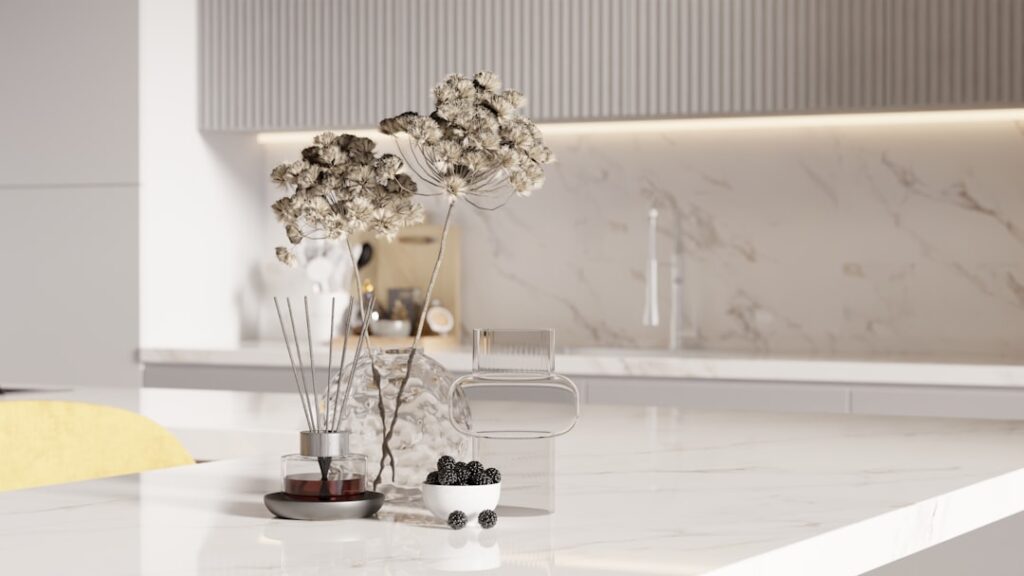
Run your hand across a countertop with a polished finish and it slides. Run the same hand across a leathered slab and you feel subtle dimples, faint ridges, and a warm tactile quality closer to fine cowhide than cold stone. Leather granite has quietly become the third major granite finish alongside polished and honed, and it solves several longstanding complaints about stone countertops without sacrificing durability. Before you commit, understanding the tradeoffs keeps the decision from backfiring a year down the road.
Part of our Countertops guide — explore the full guide →
How Leather Finish Is Created
Fabricators produce a leathered surface by running diamond-bristled brushes across a previously honed slab. The bristles erode softer minerals slightly faster than harder ones, revealing natural micro-texture while maintaining the honed matte sheen. The process takes longer than polishing and adds roughly $5 to $12 per square foot over the polished version of the same stone.
The texture reveals the granite’s natural crystal structure. Dark stones like Black Pearl, Cambrian Black, and Titanium show pronounced texture, while lighter granites like White Ice and Kashmir White take a subtler pattern.
Key Advantages Over Polished Granite
The leathered finish solves problems that push buyers toward quartz:
- Hides fingerprints and water spots dramatically better
- Shows fewer crumbs and smudges between deep cleanings
- Reduces glare in bright kitchens with large windows
- Softens visual impact of dark stones that can feel cold polished
- Feels warmer to the touch than polished stone
- Camouflages minor scratches and etching better over time
The Tradeoffs to Know
The textured surface creates real maintenance considerations:
- Food debris and crumbs lodge in the micro-texture more easily
- Requires a soft-bristled brush rather than just a cloth for deep cleaning
- Sealant absorbs into the texture differently and needs more frequent reapplication
- Rolling out pie dough or pastry is slightly less smooth than on polished stone
- Premium cost over polished ranges from 10 to 25 percent depending on fabricator
Cost Breakdown in Context
Installed pricing varies by stone species and region, but general ranges look like this:
- Budget leather granite: $55 to $75 per sq ft installed (Uba Tuba, New Venetian Gold)
- Mid-range leather granite: $75 to $110 per sq ft (Black Pearl, Tan Brown)
- Premium leather granite: $110 to $180 per sq ft (Titanium, Cambrian Black, Fusion)
- Exotic leather granite: $180 to $300+ per sq ft (blue bahia, van gogh, rare quartzites)
A typical 45 sq ft kitchen installation in leather Tan Brown lands around $4,500 to $5,500 fabricated and installed, compared to $3,800 to $4,600 for the polished version of the same slab.
Best Stones for a Leathered Finish
Not every granite benefits equally from leathering. Dark igneous stones with strong mineral contrast reveal the texture best. Proven candidates include:
- Black Pearl: deep charcoal with silver flecks that pop in leathered texture
- Titanium: dramatic movement becomes more three-dimensional
- Tan Brown: warm brown-black blend that hides crumbs exceptionally well
- Cambrian Black: uniform deep black that looks expensive leathered
- Steel Grey: versatile neutral that works in modern and traditional kitchens
- Verde San Francisco: forest green with emerald inclusions
Where Leather Granite Works Best
Kitchen islands are the top application because the broader visible surface rewards texture detail. Butler’s pantries, bar tops, and outdoor kitchens all benefit from the glare reduction and fingerprint hiding. Bathroom vanities in leather look high-end, especially in powder rooms where guests notice the tactile difference immediately.
Avoid leather finishes on surfaces where you will routinely roll out dough, since the texture transfers slightly to soft dough. For primary baking kitchens, install a polished insert or use a dedicated marble pastry slab.
Cleaning and Daily Maintenance
Daily cleaning uses a soft microfiber cloth with pH-neutral stone cleaner like Method Daily Granite ($5) or Granite Gold ($10). Skip vinegar, citrus, and any acidic cleaner that etches the stone. For weekly cleaning, use a soft-bristled brush (the kind designed for dish-washing) to work cleaner into the textured surface where crumbs settle. Follow with a clean damp cloth and dry with a soft towel.
Sealing Schedule
Leathered granite typically needs resealing every 12 to 18 months, slightly more often than polished because the texture opens more surface area for moisture. Use an impregnating sealer like Miracle Sealants 511 Impregnator or StoneTech BulletProof, applying with a clean cloth and wiping off excess after 10 minutes. A quart ($35) treats a full kitchen and lasts the intended cycle.
Test the seal quarterly by dropping water on the surface. If the water beads up, the seal is fine. If it darkens the stone within a minute, reseal immediately.
Stain and Scratch Resistance
Properly sealed leather granite resists most kitchen stains. Red wine, tomato sauce, and olive oil wipe up within 15 minutes without leaving marks. Long-sitting spills (overnight olive oil on unsealed stone) can still stain. Minor scratches disappear into the textured surface, unlike polished finishes where they stand out as bright lines. Deep gouges require professional repair regardless of finish.
How It Compares to Honed and Polished
Polished granite reflects light and maximizes pattern definition but shows every smudge. Honed granite mutes the pattern and kills reflections but can look flat and reveal fingerprints on dark stones. Leather finishes bridge the two, offering muted sheen, strong pattern visibility, and superior fingerprint concealment. For most modern and transitional kitchens, leather granite hits the sweet spot where maintenance and aesthetics align without the upkeep demands of honed or the high-gloss look of polished.