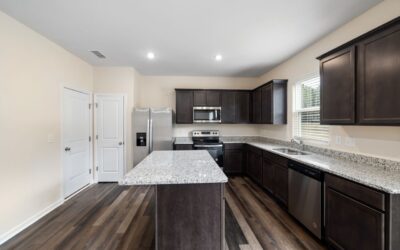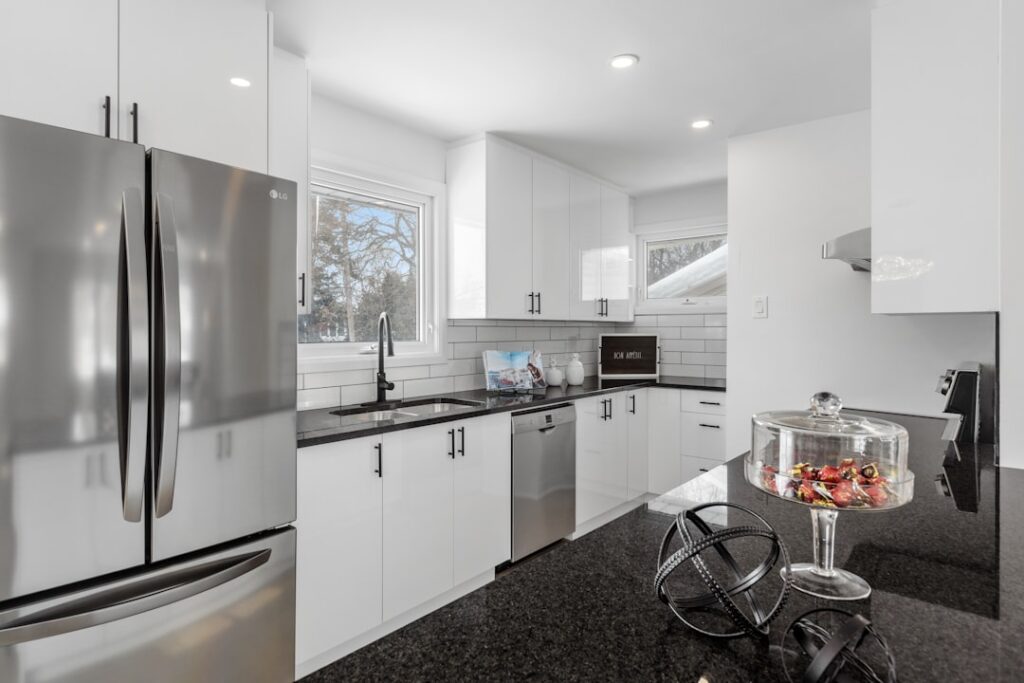
Polished granite ruled kitchens for 20 years, but designers and homeowners are quietly shifting to a softer, more textured finish that hides fingerprints and reads warmer in modern kitchens. Leather granite countertops — sometimes called antiqued, brushed, or suede finish — use the same natural stone slabs but finish the surface with a diamond-brush process that creates a low-sheen, slightly textured feel like full-grain leather. The look is understated, the maintenance is easier than polished, and in a kitchen that doubles as a daily work zone, it hides smudges and water spots in a way no glossy finish can match.
Part of our Countertops guide — explore the full guide →
How the Finish Is Created
Every granite slab starts as a rough-cut piece from a quarry block. Polished granite goes through progressively finer diamond abrasive pads until the surface reaches a mirror shine at around 3,000 to 5,000 grit. Honed granite stops at roughly 400 grit — matte and smooth, no shine.
Leather finish takes honed granite one more step. The slab passes under a rotating stack of textured brushes embedded with diamond grit. The brushes flex into the natural pits and fissures of the stone, leaving a subtle dimpled texture that mimics tooled leather. The darker pigments in the stone pop because light scatters differently off the textured surface — blacks go deeper, veins look richer, and iron-oxide reds warm up noticeably compared to the same stone polished.
What It Looks and Feels Like
Run a hand across leather granite and you feel a soft resistance — like running fingers over a book cover. Visually, the surface reads matte from a distance and subtly dimpled up close. Every natural variation in the granite — feldspar crystals, mica flecks, quartz veins — is more visible because the glare of a polished finish is gone.
The texture hides water spots, fingerprints, and light smudges that polished granite shows within minutes of a meal prep. Black leathered granite in particular looks uniformly dark under kitchen lighting, while a polished black slab would show every dust mote and knife swirl.
Popular Colors for Leather Finish
- Black Pearl: Medium-dark black with silver and copper flecks — reads dramatic after leathering
- Steel Grey: Dark charcoal with horizontal linear veining — industrial-modern look
- Virginia Mist: Light to medium gray with wispy black and white veins — hides well in busy kitchens
- Cosmic Black: Deep black with subtle gold and red specks
- Titanium: Dark brown-black with copper and gold undertones — warm and moody
- Absolute Black: Pure uniform black that reads soft and dark when leathered
- Alaska White: Light cream with beige veining — leathers into a sandy, organic look
Lighter colors like Alaska White, Colonial Cream, or New Venetian Gold leather nicely but can collect trapped dirt in the texture if not sealed properly. Darker stones are the safer starting point for most homeowners.
Cost Compared to Polished and Honed
Leathered granite is generally 10 to 25 percent more expensive than polished from the same slab. The finishing process adds labor and specialized equipment that not every fabricator owns. Rough pricing in 2026:
- Level 1 polished granite: $45 to $65 per square foot installed
- Level 1 leathered granite: $55 to $80 per square foot installed
- Exotic leathered granite (Black Pearl, Cosmic Black): $75 to $120 per square foot installed
- High-end leathered slabs (Titanium, Sensa-treated): $100 to $160 per square foot installed
Before committing, ask the fabricator to show you a leathered sample from the exact slab you intend to buy. The finish can look very different from one granite type to another — what leathers beautifully on Black Pearl may look dull on Absolute Black.
Stain Resistance and Sealing
Granite is porous, and leather granite countertops actually have slightly more surface area than polished because of the texture. Sealing is essential. Use a high-quality penetrating sealer like Stone Care International Granite Sealer, Miracle 511 Impregnator, or Aqua Mix Sealer’s Choice Gold. Two coats at install, let the first dry 30 minutes before the second.
After sealing, water droplets should bead on the surface. If they soak in within 10 minutes, reseal. Expect to reseal once a year on kitchen installs and every 2 to 3 years on bathroom vanities. A 32-ounce bottle of sealer runs $30 to $50 and handles dozens of square feet.
The textured surface does not trap stains more than polished granite, but it does make certain cleaning harder. Oily splatter near a range can settle into the micro-dimples and require a degreaser like Stone Care International Granite Cleaner or a dab of dish soap and warm water with a soft nylon brush. Avoid steel wool — it will embed fragments in the texture.
Maintenance Routine
Daily cleaning is simple. Wipe with a microfiber cloth and water, or use a pH-neutral stone cleaner. Never use vinegar, lemon juice, bleach, or ammonia — all of them etch granite or strip the sealer.
For a deeper clean every few weeks, spray a granite-specific cleaner like Method Daily Granite or Granite Gold Cleaner, let it dwell 30 seconds, and wipe dry. Drying matters more on leather finish than polished because trapped moisture in the texture can leave faint water spots if it evaporates unevenly.
Hot pans still need trivets. The texture does not affect heat resistance — granite handles direct heat up to about 1,200 degrees F briefly — but repeated thermal shock from a 500 degree F cast iron pan can crack the stone over years.
Pairing With Cabinets and Backsplash
Leather granite’s matte texture pairs beautifully with shaker cabinets in white, navy, or forest green. The low sheen keeps the stone from competing with cabinet detail. For backsplash, subway tile in white, light gray, or soft sage works almost universally. Full-height backsplash in the same leathered stone produces a seamless, modern look that is popular in transitional kitchens.
Pendant lighting over an island looks best with warm 2,700K to 3,000K bulbs on leather finish. Cool LED lighting makes the texture read chalky or ashen on darker stones.
Downsides to Consider
Leather granite shows flour and powdered sugar more than polished granite because the texture grabs fine particles. A quick pass with a damp cloth handles it, but bakers who work with a lot of flour may find polished easier. The texture also limits the visual depth of heavily veined stones — if you fell in love with a slab because of its dramatic book-matched veining, a polished finish usually accentuates that pattern better than leather.
Repair of deep scratches or chips is harder on leather than polished. A polished surface can be spot-buffed back to sheen. Leather finish requires the same diamond-brush process to match, which most local fabricators cannot replicate on-site — they have to pull the slab back to the shop or patch with epoxy that never quite matches.
Is Leather Granite Right for Your Kitchen?
If you cook daily, hate fingerprints, and like a subtle natural look, leather granite countertops deliver exactly what they promise. If you want high drama, bookmatched veining, or the traditional glossy stone aesthetic, stick with polished. The material costs 10 to 25 percent more, the maintenance curve is similar, and the finish ages with more patina and less visible wear than any polished granite you can buy.