
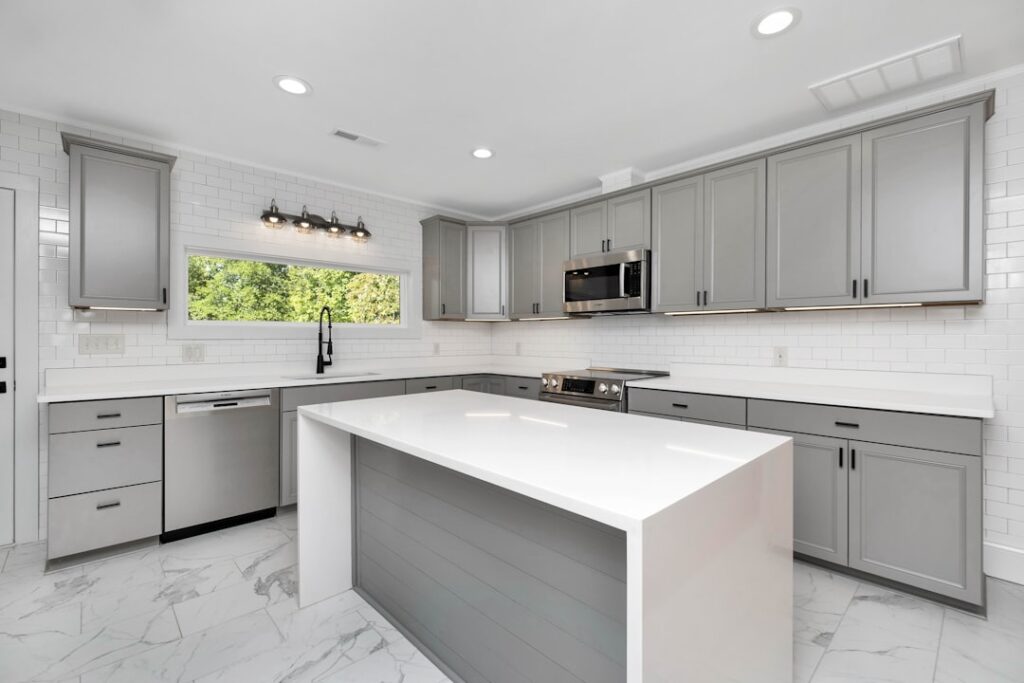
Ask a countertop showroom about matte finishes and you will hear three words used almost interchangeably: honed, suede, and leathered. They are not the same thing, and the confusion costs buyers money. Leathered quartz countertops are engineered quartz slabs finished with a soft, tactile texture — a gentle dimensionality you can feel under your fingertips, somewhere between brushed suede and worn leather — instead of the glassy polish that has defined quartz since the material took over American kitchens. I have templated and installed a good number of these now, and the finish is genuinely lovely and genuinely different to live with. This piece stays focused on the finish itself: how it is made, who offers it, what it costs over polished, and the daily-life details the sample chip will not tell you.
Part of our Countertops guide — explore the full guide →
What “Leathered” Actually Means on an Engineered Slab
Leathering started as a granite treatment: diamond-abrasive brushes run over a honed natural stone slab, eroding the softer minerals slightly more than the harder ones, leaving an undulating, pebbled surface that follows the stone’s own grain. Quartz is a manufactured product — roughly 90 percent ground quartz in polymer resin — so it has no differential mineral hardness to exploit. Manufacturers create the leathered (often branded “rough,” “textured,” or by trade names) finish during production, texturing the surface at the press or with post-press brushing so the face carries a controlled, repeating tactility. The practical differences from the neighboring finishes:
- Polished: full gloss, maximum color depth and reflectivity. The default 90 percent of quartz ships in.
- Honed/matte: flat and smooth. No shine, no texture — silky under the hand.
- Suede/velvet: a micro-texture with a soft low sheen; the middle child, and what several brands actually deliver when a showroom says “leathered.”
- Leathered/rough: the most pronounced texture, with visible and palpable relief.
Because branding is loose, never buy this finish from a 3×3-inch chip or a website term. Put your hand on a full slab, drag a fingertip across it dry, then wipe it with a damp cloth and watch how it dries. The texture depth varies meaningfully between brands and even between colors within one brand.
Why People Choose It — the Honest Case For
The aesthetic argument is the strong one. Texture reads as natural stone; gloss reads as engineered. A leathered dark quartz does a convincing impression of leathered granite or soapstone, and in the current design climate — matte everything, tactile materials, warm minimalism — a glossy counter can feel like the oldest thing in a new kitchen. Beyond looks, the finish has real functional wins: fingerprints, smudges, and water spots that glare on polished dark quartz essentially vanish on leathered surfaces, which is why I steer clients who insist on black or charcoal counters toward texture almost automatically. Fine scratches and daily wear also blend into the texture rather than announcing themselves in raking light, and glare from can lights and big windows disappears. Households with kids, dark color palettes, or strong sun exposure get the most from it.
The Trade-Offs Nobody Mentions Until After Install
Every one of these is manageable, and every one has surprised a client of mine at some point.
- Cleaning takes slightly more effort. A polished counter wipes clean in one pass; a textured surface holds crumbs, flour, and dried spills in its low spots, and you will develop a two-pass habit — damp microfiber, then dry. It is a small tax paid daily, and people who hate it, hate it a lot.
- Colors read lighter and softer. Texture scatters light, so the same pigment looks less saturated and veining less contrasty than the polished version of the identical color. Dramatic marble-look patterns lose some punch; solid and stone-look colors gain depth. Always compare finishes within the same color before deciding.
- Some textures can hold grease sheen near cooktops. Oil aerosol settles into relief; a periodic degrease with dish soap and warm water keeps the area even.
- Edges and seams show the finish change. Fabricated edges are polished or honed by the shop, and matching a factory texture on an edge profile is somewhere between difficult and impossible. Simple eased or small-radius edges look best; ornate profiles telegraph the mismatch.
- Repairs are less invisible. A chip repair on polished quartz can be buffed to blend; on a textured face, the filled spot reads smoother than its surroundings. Chips are rare with quartz, but the asymmetry is real.
What has not changed: this is still quartz. Nonporous, no sealing ever, stain resistance far better than any natural stone, and the same heat rules — use trivets, because the resin scorches around 300 degrees Fahrenheit regardless of finish.
Availability and Brands
Texture is a premium, catalog-limited option. Cambria’s “Matte” and textured offerings, Caesarstone’s “Rough” and concrete-textured colors (their Rugged Concrete popularized the whole category), Silestone’s “Suede” line, MSI Q’s rough-finish colors, and LG Viatera and Hanstone matte options are the names you will actually encounter in US showrooms. Expect the finish to be offered on a fraction of each brand’s palette — often the concrete looks, solid darks, and a few marble looks — and expect lead times, since warehouses stock polished first. If your heart is set on a specific color and a leathered face, confirm the combination exists before designing the kitchen around it.
Cost: What the Texture Premium Really Is
| Item | Typical Installed Price |
|---|---|
| Polished quartz, mid-range color | $60-$100 per sq ft |
| Leathered/suede quartz, same tier | $70-$120 per sq ft |
| Typical texture premium | 10-25% over polished |
| 40 sq ft kitchen, polished | $2,400-$4,000 |
| 40 sq ft kitchen, leathered | $2,800-$4,800 |
For comparison, leathering natural granite is often a fabricator upcharge of $15 to $25 per square foot over polished stock, so quartz’s premium is in the same neighborhood. The delta buys you the finish itself plus, frankly, scarcity — fewer slabs, fewer competing quotes. Get pricing from at least two fabricators, because shops that rarely handle textured material pad their numbers.
Care Routine, Start to Finish
Daily: warm water, a drop of dish soap, microfiber, then a dry pass to lift residue out of the texture. Weekly or as needed: a dedicated quartz cleaner or diluted isopropyl alcohol for the greasy zones flanking the range. Never: abrasive powders and scrub pads (they can burnish the texture’s high points shiny over years), bleach at strength, oven cleaner, or anything with a pH warning on the label — these attack the resin, not the quartz, and finish damage on a textured face cannot be polished away like it sometimes can on gloss. A soft brush (a clean nail brush works) is the secret weapon for dried-on spills in the relief. That is the entire regimen; there is no sealing, no annual anything.
Where the Finish Shines Beyond the Kitchen
Kitchens get the attention, but the textured finish arguably makes even more sense elsewhere. Bathroom vanities are the sleeper application: toothpaste spatter, water spots, and hairspray film — the daily sins that keep polished dark vanities looking dirty — read as nothing on a leathered surface, and the finish’s soft hand suits the spa aesthetic bathrooms chase. Laundry rooms and mudroom counters, which take abrasion from baskets and boots, hide wear in the texture. Fireplace surrounds and waterfall island panels use the finish where hands and eyes meet the material most directly, which is exactly where texture earns its premium. The one place I steer people back to polished or honed: baking-heavy prep zones, because rolling dough directly on a textured counter is mildly annoying and flour finds every low spot. Outdoor kitchens remain off-limits for any quartz finish — the resin’s UV limits do not care about texture.
My bottom-line advice after living with both finishes in client kitchens and my own: leathered quartz is the right call if you want dark or stone-look counters, hate fingerprints, get strong natural light, or simply want the counter to feel like material instead of laminate’s glossier cousin. Stay polished if your priorities are the absolute easiest wipe-down, maximum veining drama, or the lowest quote. And whichever way you lean, make the decision with your hand flat on a full slab in the finish you will actually receive — this is the one countertop choice a photo cannot make for you.


