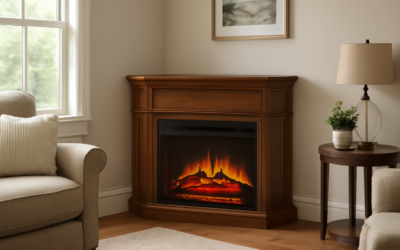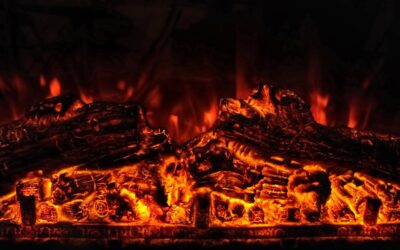
Most people assume the glow in an LED electric fireplace comes from a fancy screen. It usually does not. The flame you see is a trick of light, motion and reflection, built from a strip of low-wattage LEDs, a slowly turning rod or a shaped mirror, and a textured panel that scatters the light into something that reads as fire from across the room.
That design has two practical results. First, the flame effect draws very little power, often 10 to 40 watts, so you can run it for hours for pennies. Second, the flame and the heater are separate systems, which means nearly every unit can run as a no heat fireplace when you only want the look. If you are shopping for ambience in a warm climate, a rental, or a bedroom that already stays comfortable, flame-only operation is the feature that matters most.
- How an LED Electric Fireplace Creates Its Flames
- Color Modes, Ember Beds and Brightness
- Running a No Heat Fireplace: Cost and Lifespan
- Choosing the Right Format: Freestanding, Wall-Mount or Insert
- Electrical Safety for Plug-In and Hardwired Units
- Troubleshooting Common LED Flame Problems
- What to Look for Before You Buy
- When to Call a Professional
- Frequently Asked Questions
Beyond the surface details, buying well comes down to four things: how the flame is produced, how the ember bed and color modes are handled, how bright and how quiet the unit is, and whether you want a freestanding unit, a wall-mount panel, or an LED fireplace insert that slides into an existing opening.
How an LED Electric Fireplace Creates Its Flames
Every LED electric fireplace uses some version of the same recipe. A row of LEDs shines light onto or through a moving element, and that light lands on a screen or panel that softens it into flickering shapes. The quality difference between a budget unit and a convincing one lives almost entirely in those three parts.
Rotating rod and reflector systems
The most common design uses a thin spindle with mirrored or foil flaps that turns slowly on a small motor. LEDs underneath bounce light off the flaps, and the reflections dance up a frosted panel. Good versions vary the rod speed and use several LED colors so the flame has an orange core with yellow tips. Cheaper versions show a repeating pattern you can spot after a few minutes of watching.
Programmed LED panels
Some newer models skip moving parts and use a grid of addressable LEDs behind a diffuser, with software controlling the flicker. These are silent, which is a real advantage in a bedroom, and they tend to offer more color modes. The tradeoff is that some look flatter, almost like a glowing sign, unless the diffuser has real depth to it.
Water vapor and 3D effects
Premium units push ultrasonic mist through LED light to create a flame with actual volume. It looks impressive, but it needs distilled water, regular cleaning and a slightly higher purchase price. For most rooms, a well-made reflector or panel design delivers 90 percent of the effect with none of the upkeep.
Color Modes, Ember Beds and Brightness
Color modes are the feature buyers either love or ignore. Most units offer a classic orange flame plus blue, purple, and a cycling rainbow mode, and many let you set the flame and ember bed colors separately. In practice, the setting most people keep is a warm orange flame with a dim red or amber ember bed, because that is what the eye accepts as fire.
The ember bed matters more than the flame for realism. Look for:
- Separate ember lighting with its own brightness control, so the logs glow while the flame stays subtle.
- A choice of media such as resin logs, crushed glass or river-stone pebbles. Glass and stone suit modern linear units; logs suit a traditional mantel.
- Pulsing or breathing embers that brighten and fade slowly rather than blinking.
Brightness should have at least four or five steps. A flame that looks good in a sunny afternoon is often far too bright at night, and a unit stuck at one level becomes a distraction. Also check that the flame speed can be slowed. A rapid flicker reads as cartoonish; a slow, irregular roll reads as a real log fire.
Running a No Heat Fireplace: Cost and Lifespan
The heater in a plug-in electric fireplace is usually a 1,500-watt fan-forced element, the same draw as a portable space heater. That is where nearly all the operating cost lives. The LED flame alone is a tiny load by comparison.
At a typical residential rate of 15 to 17 cents per kilowatt-hour, here is roughly what you can expect:
| Mode | Typical draw | Approximate cost per hour |
|---|---|---|
| Flame only | 10 to 40 watts | Less than 1 cent |
| Flame plus low heat | about 750 watts | 11 to 13 cents |
| Flame plus high heat | about 1,500 watts | 22 to 26 cents |
So a fake fireplace with no heat running four hours a night for a month costs well under a dollar. That makes an LED fireplace with no heat a reasonable choice for year-round ambience, including summer evenings when nobody wants extra warmth.
LED lifespan is usually quoted at 30,000 to 50,000 hours. At five hours a day, that is well over a decade. The weak points tend to be the rotating rod motor, which can start to hum or squeak after several years, and the heater fan. If silence matters, read reviews for motor noise specifically, and favor units with a replaceable flame motor.
Choosing the Right Format: Freestanding, Wall-Mount or Insert
Before comparing flame quality, decide where the unit will live. Formats differ in installation effort, depth and price.
- Freestanding mantel units. A cabinet with a firebox built in. Plug it in and you are done. Good for renters and for rooms with no existing fireplace. Expect roughly $250 to $1,200.
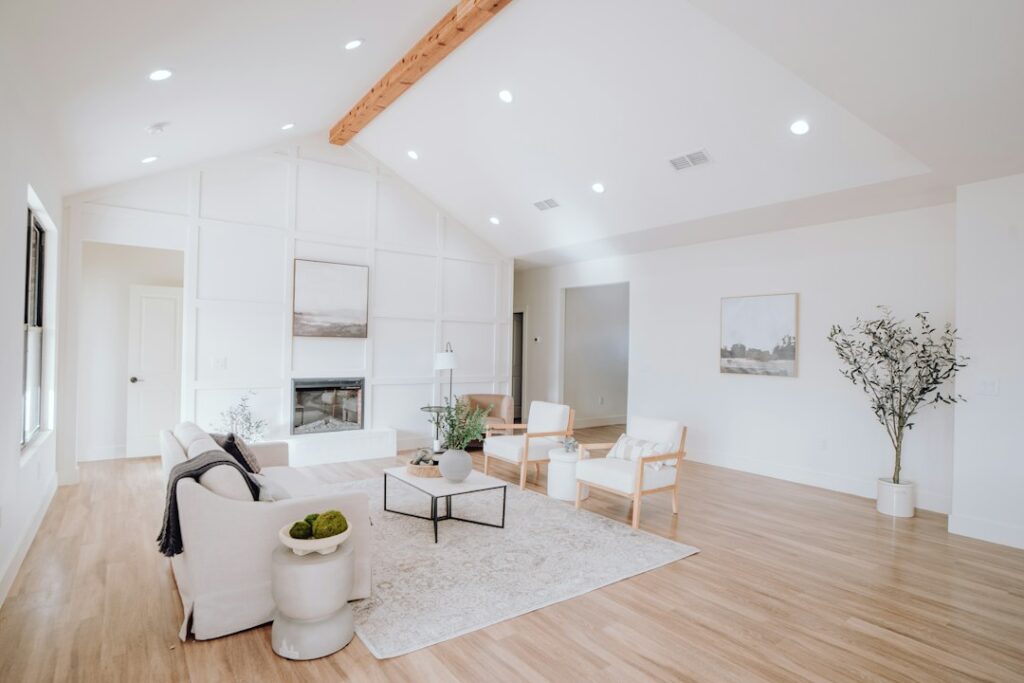
- Wall-mount linear panels. Thin units, often 4 to 6 inches deep, that hang like a TV. They look modern, but the cord has to be managed, either with a cord cover or an outlet installed behind the unit.
- Recessed or built-in units. Framed flush into a wall cavity or bump-out. The cleanest look, with the most work and usually a dedicated outlet.
- An LED fireplace insert. Designed to slide into an existing masonry or prefab firebox. A faux fireplace insert is one of the simplest ways to bring a drafty, unused wood fireplace back to life without fuel, smoke or chimney cleaning.
If you are converting an old wood-burning opening, measure the front width, rear width, height and depth before shopping. Many inserts come with a trim kit to cover gaps of an inch or two around the edges. Close the damper or install a chimney balloon behind the insert, because an open flue keeps pulling warm room air up the chimney.
Electrical Safety for Plug-In and Hardwired Units
Most units ship with a standard plug and run on a regular 120-volt household outlet. Plug the fireplace directly into a wall receptacle. Never run it through an extension cord or a power strip, because a 1,500-watt heater can overheat a light-duty cord. Ideally the outlet sits on a circuit that does not also feed a microwave, space heater or other big load.
Some larger built-in units are hardwired, and some homeowners want a new outlet hidden behind a wall-mount panel. Any work on house wiring starts with switching off the breaker and confirming the power is off with a non-contact voltage tester. Never work on wiring that is still powered. Adding a new outlet or a dedicated circuit is a job for a licensed electrician, who will pull the permit and confirm the circuit can handle the load. If the unit sits near a wet bar or in a basement prone to moisture, ask about GFCI protection.
Keep the heater outlet clear of curtains, blankets and stacked items, follow the clearance listed in the manual, and choose a unit with automatic overheat shut-off. When you only want the flame, you can switch the heater off entirely, which removes almost all of the heat-related risk.
Troubleshooting Common LED Flame Problems
Most issues are simple and fixable without opening the unit.
- Flame frozen or not moving. The rotating rod motor has stalled or the rod slipped off its bracket. Unplug the unit, remove the front glass per the manual, and reseat the rod. A grinding sound usually means the motor needs replacing.
- Clicking or humming noise. Often the flame rod rubbing a bracket or the heater fan collecting dust. Unplug, let it cool, and vacuum the vents with a brush attachment.
- Dim or patchy flame. One section of LEDs may have failed. Many units have plug-in LED boards that can be swapped. Check the brightness setting first, since some units remember the last level.
- Remote not responding. Replace the battery, then check whether the control panel on the unit itself works. If it does, the remote needs re-pairing.
- Heater trips the breaker. Too many loads on the circuit. Move the unit to a different outlet or run flame-only until an electrician can evaluate the circuit.
What to Look for Before You Buy
A quick checklist keeps you from paying for features you will not use and missing the ones you will:
- Flame-only mode that runs with the heater fully off
- At least four brightness and flame-speed levels
- Separate controls for flame color and ember color
- Quiet operation, with motor noise mentioned in reviews
- Thermostat and timer, so the heater does not run longer than needed
- Overheat protection and a recognized safety listing on the label
- Correct depth and trim size for the wall or firebox you have
Budget roughly $150 to $400 for a basic wall-mount or small freestanding unit, $400 to $1,500 for a well-built linear or insert model, and $1,500 to $4,000 or more for large built-in units or water-vapor designs. Installation for a plug-in unit is a DIY afternoon. Built-ins with new wiring and framing typically add several hundred to a couple thousand dollars in labor and materials, depending on the wall and finish.
If you are upgrading an empty firebox, an LED electric fireplace insert is usually the best value: you get a realistic flame, optional heat, and no venting, while the existing mantel and surround stay in place.
When to Call a Professional
Freestanding and plug-in units rarely need help. Call a licensed electrician if you want a new outlet behind a wall-mount unit, if the manufacturer requires a dedicated circuit, or if the fireplace will be hardwired. Bring in a carpenter or finish contractor for a built-in that involves framing, drywall or tile around the opening. If you are placing an insert into an old wood-burning firebox, a chimney sweep can confirm the damper seals and that no loose debris or animal nests remain in the flue before you close it off.
Frequently Asked Questions
Can an LED electric fireplace run without heat?
Yes. Nearly every model has a flame-only setting that leaves the heater completely off. In that mode it draws about as much power as a couple of light bulbs and stays cool to the touch.
How long do the LEDs in an electric fireplace last?
LED boards are typically rated for 30,000 to 50,000 hours. The flame motor and heater fan usually wear out before the LEDs do, so choose a model with replaceable parts if you plan to keep it for many years.
Is a fake fireplace with no heat worth buying?
For ambience in warm climates, bedrooms or apartments, it can be. You get the glow and the focal point for very little running cost, and you can always add a heat-capable model later if comfort becomes a goal.
Does an LED fireplace insert need a chimney?
No. It produces no combustion gases, so it needs no venting. Close the damper or seal the flue behind it to keep warm air from escaping up the chimney.
Are electric fireplaces safe to leave on overnight?
Flame-only mode is very low risk, but follow the manual. If the heater is on, use the timer, keep clearances, and choose a unit with overheat shut-off rather than leaving it running unattended for long periods.