If you have spent any time slab shopping for a kitchen remodel, you have probably run into LG Viatera quartz somewhere along the way. Made by LG Hausys, Viatera is a line of engineered quartz surfaces that blends roughly 90% natural quartz with resins and pigments to create a hard, low-maintenance countertop. It competes directly with the big names in the category, and for good reason: it looks like stone, behaves better than most natural stone in a busy kitchen, and carries solid third-party certifications.
Part of our Countertops guide — explore the full guide →
This guide walks you through what Viatera actually is, how the patterns are organized, what you can expect to pay, and how to keep it looking new for decades. Think of it as the conversation you would have with a fabricator before you sign off on a slab.
What Viatera Quartz Actually Is
Engineered quartz is not a slab cut straight out of a quarry. Manufacturers crush natural quartz, one of the hardest minerals on earth, then bind it with polymer resins and add pigments to control color and veining. The result is a non-porous, consistent surface. Viatera follows this formula, with quartz content in the neighborhood of 90% by weight.
That high mineral content is what gives the material its toughness. Because the slab is bound with resin rather than left porous like granite or marble, liquids do not soak in, which means you never have to seal it. Viatera is also NSF-certified for food contact and carries GREENGUARD-style low-emission certifications, which matters if indoor air quality is on your radar.
Pattern and Color Collections
Viatera is sold in a range of named patterns rather than one flat color chart, and LG periodically refreshes the lineup. Broadly, you will find a few families to choose from:
- Solid and near-solid tones for a clean, modern look in white, gray, and warm neutrals.
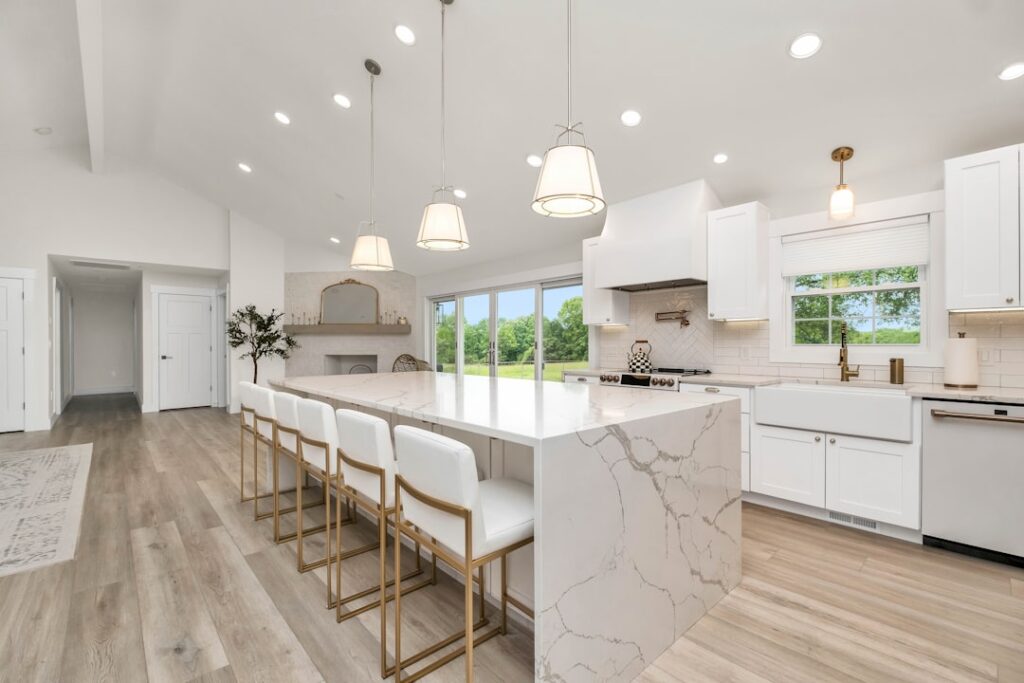
- Marble-look patterns with soft gray or taupe veining designed to mimic Carrara and Calacatta without the maintenance.
- Speckled and granular patterns that scatter fine flecks for a busier, more forgiving surface that hides crumbs and water spots.
- Dramatic veined movement in newer collections aimed at people who want a statement island.
Because color names and availability shift over time, confirm the current pattern names with your supplier and, critically, view a full slab in person. A 4-inch sample chip cannot tell you how veining flows across a 120-inch slab, and engineered quartz patterns repeat in ways that natural stone never does.
Durability and Everyday Performance
For day-to-day kitchen life, Viatera holds up extremely well. The surface resists scratches from normal use, shrugs off most stains, and does not need sealing. Spilled wine, coffee, lemon juice, and oil will not etch or discolor it the way acidic spills can mar natural marble.
There are limits worth knowing. Quartz is heat-resistant but not heatproof. The resin binder can scorch or discolor if you set a screaming-hot pan straight on the counter, so always use a trivet for cookware coming off the burner or out of the oven. Direct, prolonged sunlight can also affect some resin-based surfaces over many years, so it is a better fit for indoor applications than a sun-baked outdoor kitchen.
What Viatera Quartz Costs
Pricing depends heavily on the pattern, your region, the complexity of the fabrication, and your slab yard, so treat any figure as an estimate. As a general guide, installed Viatera quartz tends to land in roughly the $55 to $100 per square foot range, with high-movement designer patterns reaching the upper end or beyond.
A typical mid-size kitchen with around 40 to 50 square feet of countertop often falls somewhere between $3,000 and $5,000 installed, but edge profiles, cutouts for sinks and cooktops, waterfall ends, and tear-out of old counters all move that number. Ask your fabricator for an itemized quote so you can see where the dollars go.
How It Compares to Other Surfaces
Against granite, Viatera wins on maintenance because it never needs sealing and offers more pattern consistency, while granite gives you a one-of-a-kind natural slab. Against natural marble, quartz is the practical choice for a working kitchen since marble etches and stains far more easily. Compared with other engineered quartz brands, Viatera is squarely in the same tier on performance; the deciding factors are usually pattern preference, price at your local yard, and warranty terms.
One more point: because all quartz is engineered, the look is more uniform from slab to slab. That predictability is a benefit if you want a specific aesthetic, and a slight drawback if you crave the random character of natural stone.
Care and Cleaning
Maintenance is refreshingly simple, which is half the appeal. For routine cleaning, warm water, a soft cloth, and a little mild dish soap handle almost everything. Wipe up spills when you see them, though you have plenty of grace period since nothing soaks in.
- Skip abrasive scouring pads and harsh powders that can dull the polished finish.
- Avoid strong alkaline or high-pH cleaners, oven cleaners, and bleach-heavy products, which can damage the resin over time.
- For dried-on gunk, let a damp cloth sit to soften it rather than scraping with a metal blade.
- Always use a cutting board; the surface resists scratches but your knives will dull and you risk fine marks.
- Use trivets and hot pads, no exceptions, to protect against thermal shock.
Edge Profiles and Thickness Options
Beyond color, two fabrication choices shape the final look of your Viatera counters: thickness and edge profile. Quartz slabs commonly come in 2 cm and 3 cm thicknesses. The thicker 3 cm option feels more substantial and often needs no plywood support underneath, while 2 cm can be built up at the edge to look thicker for less material cost.
Edge profiles range from a simple eased or straight edge, which suits modern kitchens, to beveled, bullnose, ogee, and mitered profiles for a more traditional or dramatic effect. A mitered edge creates the illusion of an ultra-thick slab and is popular on islands. Each step up in complexity adds to the fabrication cost, so balance the look you want against your budget. Discuss profiles with your fabricator and view them on a sample piece, since the right edge ties the whole installation together.
Is LG Viatera Right for Your Kitchen?
For most homeowners who want the look of stone with minimal upkeep, Viatera is an easy recommendation. It delivers durable, non-porous performance, a broad palette from quiet solids to bold veining, and certifications that back up its food-safety and emissions claims. The trade-offs are real but manageable: respect the heat limit, keep it out of harsh sun, and clean it with gentle products.
Before you commit, do three things. View the actual slabs in person, get a detailed installed quote rather than a per-foot guess, and confirm current pattern availability and warranty coverage through an authorized fabricator. Do that, and LG Viatera quartz can be the kind of countertop you stop thinking about because it simply works, year after year.