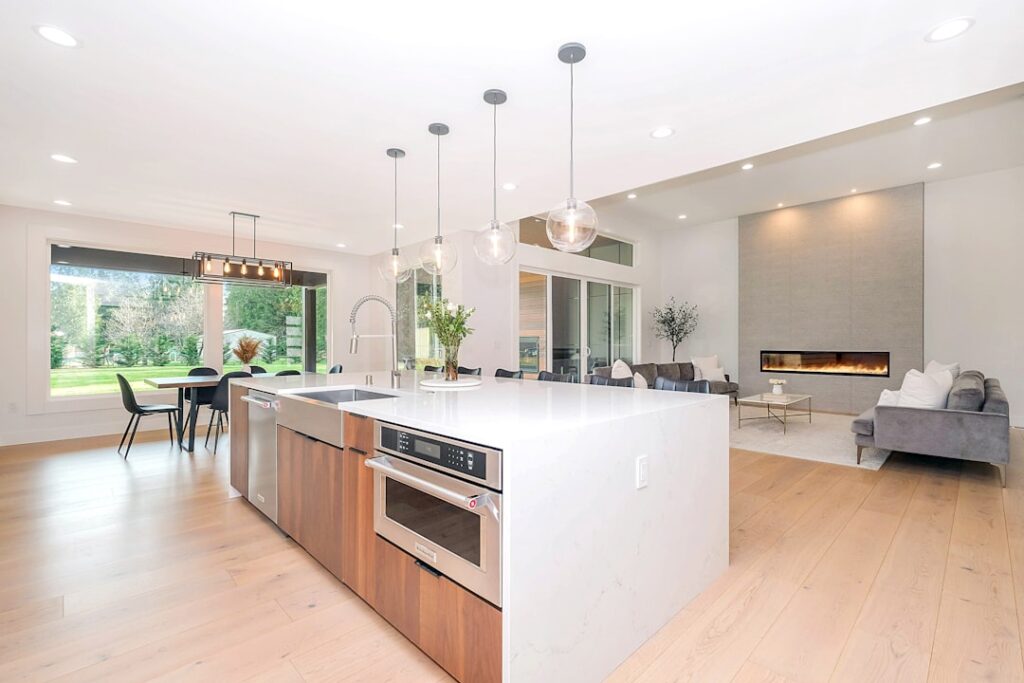
Viatera quartz countertops are LG’s line of engineered quartz surfaces, designed to give kitchens and bathrooms the look of natural stone with the consistency and low maintenance of a manufactured material. If you have been comparing slabs at a showroom and keep seeing the Viatera name, this guide will help you understand what the brand actually is, how it performs day to day, and whether it fits the way you live and cook.
Part of our Countertops guide — explore the full guide →
Engineered quartz has become one of the most popular countertop choices in American homes, and for good reason. It blends crushed natural quartz with resins and pigments to create a hard, nonporous surface. Viatera is LG Hausys’s entry in that category, and it competes directly with other well-known quartz brands you have likely heard of.
What Exactly Is Viatera Quartz?
Viatera is an engineered, or manufactured, quartz product. Rather than being quarried as a single piece of stone, it is made by combining ground natural quartz with polymer resins and color pigments, then compacting and curing the mixture into solid slabs. The result is a surface that mimics the depth and movement of granite or marble while offering more predictable coloring from slab to slab.
Because the manufacturing process binds everything together, the finished material is dense and nonporous. That nonporous quality is the single biggest practical difference between engineered quartz and many natural stones, and it shapes almost everything about how the countertop behaves in a busy kitchen.
Patterns and Design Options
One reason homeowners gravitate toward Viatera is the breadth of looks available. LG groups the line into several design families that range from clean, near-solid colors to dramatic, marble-inspired veining. You will generally find:
- Solid and subtle tones that read as a single color from across the room, ideal for minimalist or modern kitchens.
- Speckled and granular patterns that echo the flecked appearance of granite.
- Veined, marble-look designs with flowing movement for a more luxurious, organic feel.
Because the patterns are engineered, you can preview how a given design will look across a large run without the surprises that sometimes come with one-of-a-kind natural slabs. That said, always view a full-size sample or the actual slab in person before committing, since lighting and scale change how a pattern reads in your space.
Durability and Everyday Performance
Quartz is one of the hardest minerals on earth, and engineered quartz surfaces inherit much of that toughness. Viatera resists scratches and chips well under normal household use, and its nonporous surface does not require sealing the way many natural stones do. For families who want a low-fuss countertop, that maintenance-free sealing is a meaningful advantage.
The nonporous structure also means the surface does not readily absorb liquids, so spills from wine, coffee, or oil are far less likely to leave a permanent mark if wiped up promptly. Keep in mind, though, that no countertop is indestructible. Like other engineered quartz, Viatera can be damaged by sudden or sustained high heat, so you should always use trivets and hot pads rather than placing pots straight from the stove onto the surface.
Is Viatera Food Safe and Hygienic?
Engineered quartz is widely valued in kitchens because its sealed, nonporous surface gives bacteria and moisture few places to hide. Viatera carries NSF certification, an independent standard often referenced for materials used in food-contact and food-preparation environments. For homeowners, that translates into a surface you can keep clean with routine wiping and that does not trap grime in pores the way an unsealed stone might.
Even with a hygienic surface, basic kitchen habits still matter. Use cutting boards rather than slicing directly on the counter, and clean up raw-food spills promptly with mild soap and water.
How to Care for Viatera Countertops
Day-to-day care is refreshingly simple. For most cleaning, warm water, a soft cloth, and a mild dish soap are all you need. To keep your countertops looking their best:
- Wipe spills as they happen, especially anything acidic or deeply pigmented.
- Use a nonabrasive cleaner and a soft cloth or sponge for routine cleaning.
- Avoid harsh chemicals such as bleach, oven cleaners, or products with high or low pH, which can dull the finish over time.
- Skip abrasive scouring pads that could scratch the polished surface.
- Always protect the surface from direct heat with trivets and hot pads.
For specific cleaning recommendations and anything beyond routine maintenance, follow the manufacturer’s published care instructions, since using the wrong product can affect both the appearance and any coverage that came with your purchase.
What Do Viatera Countertops Cost?
Pricing for engineered quartz varies widely based on the design you choose, the thickness of the slab, your region, edge profiles, and the complexity of your installation. As a general estimate, installed quartz countertops in many markets fall somewhere in the range of roughly $60 to $120 or more per square foot, with premium patterns and intricate layouts landing at the higher end. Treat any figure you see as a starting point rather than a quote.
Because so many factors move the final number, the only reliable way to budget is to get itemized quotes from local fabricators that include the slab, fabrication, edge work, sink cutouts, and installation. Comparing two or three written estimates will tell you far more than any online average.
How to Buy and Install Viatera
Viatera is sold through authorized dealers and fabricators rather than as a typical off-the-shelf product, so the buying process usually starts at a kitchen showroom or stone yard. Selecting and templating your slabs, then having them cut and installed, is precision work that is best left to an experienced fabricator. A professional will template your space accurately, plan seam placement thoughtfully, and ensure the slabs are supported and leveled correctly.
When you vet a fabricator, ask to see examples of their completed work, confirm they are authorized to work with the brand, and get the full scope in writing. Good installation protects your investment as much as the material itself does.
Is Viatera Right for Your Kitchen?
If you want a surface that pairs the natural-stone aesthetic with low maintenance, strong durability, and consistent patterning, Viatera quartz countertops are worth serious consideration. They suit busy households that value easy cleanup and do not want to fuss with annual sealing. Just remember the trade-offs common to all engineered quartz: protect it from high heat, avoid harsh chemicals, and budget for professional fabrication.
Take time to view full slabs in person, gather multiple quotes, and read the manufacturer’s care and coverage details before you sign. With realistic expectations and proper installation, Viatera quartz countertops can deliver years of beautiful, hardworking surface in the heart of your home.