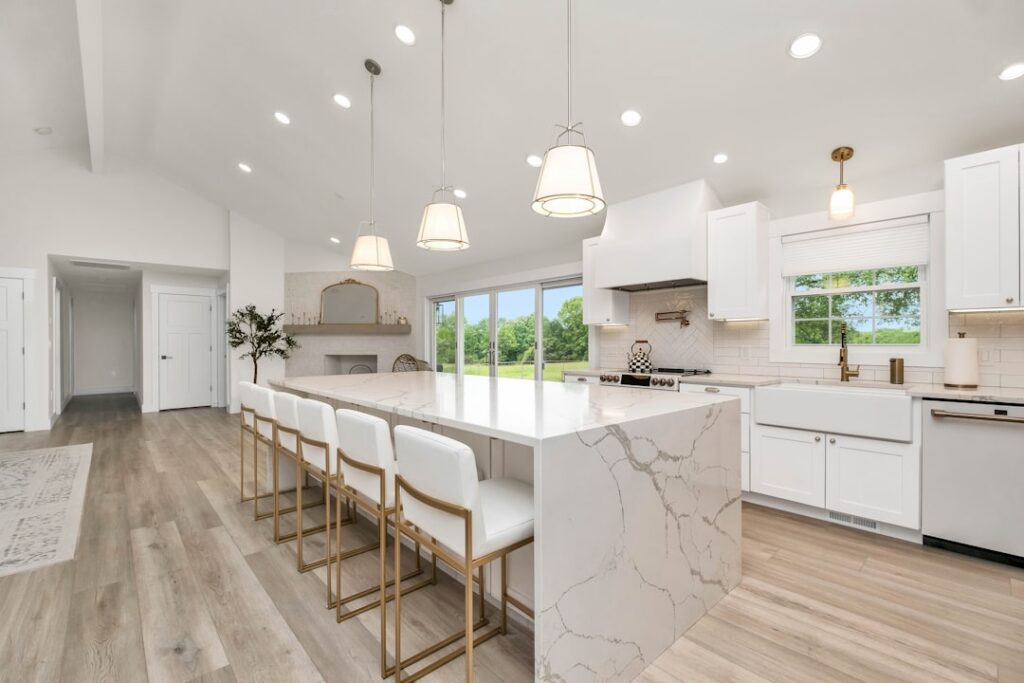
When homeowners want the clean, bright look of a light stone countertop with the durability and low maintenance that only engineered quartz can offer, one name that comes up is Viatera Clarino quartz. Viatera is the quartz surfacing brand produced by LX Hausys, and Clarino is one of its light, elegant designs favored for kitchens and bathrooms that call for an airy, timeless feel. In this guide we will walk through what makes this surface appealing, how it performs, where to use it, and how to care for it, along with pairing and cost guidance to help you decide whether it belongs in your home.
Part of our Countertops guide — explore the full guide →
What Is Viatera Quartz?
Viatera is a line of engineered quartz surfaces, meaning the slabs are made by combining a very high percentage of natural ground quartz with resins and pigments under heat and pressure. This manufacturing process yields a non-porous, highly durable material that requires no sealing, resists stains and scratches well, and offers consistent color and pattern from slab to slab, an advantage over natural stone, which varies piece to piece. Viatera comes in a wide range of designs, from solid colors to marble-inspired veining and speckled granite-like looks. Clarino sits among the lighter, cleaner offerings, chosen by homeowners who want a bright, understated surface that reads as fresh and elegant.
The Look of Clarino
Clarino is prized for its light, airy appearance. Like many pale quartz designs, it is well suited to creating a clean, bright, and open feeling in a kitchen or bathroom, pairing beautifully with white, gray, and natural wood cabinetry. Because it is engineered, the pattern is consistent and predictable, so what you see in the sample is very close to what you get across the whole slab, which makes planning seams and layout easier than with natural stone. Its neutral, light palette is versatile and timeless, working across traditional, transitional, and modern designs. Since exact appearance can vary by production and lighting, it is always best to view a current sample or full slab in person before finalizing your choice.
Why Choose Engineered Quartz?
Quartz surfaces like Viatera Clarino offer several practical advantages over natural stone and other countertop materials:
- Non-porous: No sealing required, and excellent resistance to stains from wine, coffee, oil, and juice.
- Durable: Highly resistant to scratches, chips, and everyday wear.
- Consistent: Predictable color and pattern from slab to slab, unlike variable natural stone.
- Hygienic: The non-porous surface resists bacteria and is easy to keep clean.
- Low maintenance: Simple soap-and-water cleaning keeps it looking new.
- Wide design range: Available in looks from solid colors to marble and stone imitations.
These qualities make quartz one of the most popular countertop choices for busy modern households.
Best Uses for Viatera Clarino Quartz
The bright, durable nature of this surface suits many applications throughout the home. It is most popular for kitchen countertops and islands, where its stain resistance and easy care handle daily cooking and gathering, and its light tone keeps the space feeling open. It also works beautifully on bathroom vanities, where the clean look complements a spa-like atmosphere, and as a backsplash for a seamless, integrated appearance. Quartz is a strong choice for laundry rooms, bar tops, and built-in desks as well. One consideration: like most engineered quartz, it is not intended for outdoor use or areas of intense, prolonged sun exposure, since UV can affect the resins over time. Indoors, though, it is remarkably versatile.
Pairing Ideas
Clarino’s light, neutral character makes it easy to coordinate with a range of styles:
- White cabinets: Create a bright, timeless, monochromatic kitchen that feels clean and spacious.
- Gray cabinets: Offer a soft, sophisticated contrast that reads modern and calm.
- Natural wood cabinets: Balance the cool lightness of the quartz with warm, organic tones.
- Navy or dark cabinets: Provide a striking contrast, letting the light countertop pop.
- Mixed metals and neutral backsplashes: Complement the surface without competing with it.
Because the surface is light and neutral, it gives you tremendous freedom to change wall colors, hardware, and decor over time without clashing.
What It Costs
Engineered quartz occupies a mid-to-upper price tier among countertop materials, and Viatera is a well-regarded brand. Installed costs for quartz surfaces commonly range from around fifty to one hundred dollars or more per square foot, depending on the design, slab thickness, edge profile, layout complexity, and your region. That figure typically includes the slab, fabrication, edge work, and installation, though you should confirm exactly what any quote covers. Factors that raise the price include premium edge profiles, thicker slabs, waterfall island edges, and more cutouts and seams. Getting quotes from multiple certified fabricators and confirming the exact Viatera design and current pricing will help you budget accurately.
Care and Maintenance
One of the biggest advantages of Viatera Clarino quartz is how easy it is to maintain. Because the surface is non-porous, it never needs sealing, and daily cleaning is as simple as wiping with warm water and a mild dish soap or a gentle pH-neutral cleaner. Avoid abrasive scrubbing pads and harsh chemicals like bleach or strong solvents that can dull the finish over time. While quartz is heat-resistant, it is not heatproof, so always use trivets or hot pads rather than placing hot pots directly on the surface, as sudden extreme heat can potentially damage the resins. Wipe up spills promptly out of good habit, though the non-porous surface gives you plenty of forgiveness. With this minimal care, the countertop stays looking new for many years.
Quartz vs. Granite and Marble
Many homeowners weighing Viatera Clarino are also considering natural stone, so it helps to understand the differences. Compared with granite, engineered quartz like Clarino offers a non-porous surface that never needs sealing and delivers consistent color and pattern, whereas granite provides unique natural variation and slightly better heat tolerance but requires periodic sealing. Compared with marble, quartz is dramatically more durable and stain-resistant; marble’s soft, porous surface etches from acids and stains easily, while a light quartz like Clarino can mimic a bright, marble-inspired look without that fragility, making it a favorite for busy kitchens that want the pale, elegant aesthetic without the upkeep. Consider these points as you compare:
- Maintenance: Quartz needs no sealing; granite and marble both benefit from regular sealing.
- Durability: Quartz and granite resist scratches and stains well; marble is the most delicate.
- Consistency: Quartz offers predictable patterning, while natural stone varies slab to slab.
- Heat: Natural stone tolerates heat slightly better, but trivets are recommended for all three.
- Look: Clarino delivers a clean, light, engineered elegance rather than the one-of-a-kind drama of natural stone.
If you love the bright, refined appearance of a light stone but want the reliability, hygiene, and easy care of an engineered surface, a quartz like Viatera Clarino often represents the best of both worlds, giving you the look you want with the low-maintenance performance that fits real family life.
Is Viatera Clarino Right for Your Home?
If you are drawn to a bright, clean, and elegant countertop that combines light, timeless good looks with the practical durability and low maintenance of engineered stone, Viatera Clarino quartz is well worth considering. Its non-porous, seal-free surface stands up to daily kitchen life, its consistent pattern simplifies planning, and its versatile light tone pairs effortlessly with white, gray, wood, and dark cabinetry alike. View a current sample or full slab in person, get quotes from certified fabricators, and confirm the design and pricing, and you will be equipped to decide whether this bright, low-fuss surface is the right foundation for your kitchen or bath.