Low maintenance landscaping around above ground pool setups solves the classic problem: the pool is fun, but the metal wall and exposed liner look like they were dropped into the yard by a crane. The goal is to nestle the pool into the landscape so it feels built-in, while choosing plants and materials that will not drop leaves in the water, spread roots into the base, or demand constant grooming. I have softened dozens of above-ground pools, and the same principles work every time.
- Start With the Right Surface Around the Base
- Build a Deck or Platform for Easy Access
- Choose Pool-Friendly, Low-Debris Plants
- Create Privacy Without High Maintenance
- Add Container Plantings for Flexibility
- Finish With Lighting and Mulch Details
- Bringing It All Together
- Protecting the Pool Base While You Plant
- Seasonal Care and Winterizing the Landscape
The trick is picking clean, tidy plants and durable, permeable surfaces that hide the pool’s hard edges without creating a maintenance headache. You want beauty and privacy, not a bed full of debris that ends up in your skimmer. Here is how to pull it off.
Start With the Right Surface Around the Base
The ground ringing the pool takes constant splash-out, foot traffic, and chlorine drips, so it needs to be tough and permeable. Skip grass right against the pool; mowing and trimming around curved walls is miserable and clippings blow into the water. Instead, ring the base with gravel or pavers.
A 2- to 3-foot-wide band of river rock or pea gravel over woven landscape fabric drains splash-out instantly, discourages weeds, and keeps mud from tracking onto the pool ladder. River rock runs $45 to $90 per ton, and one ton covers about 70 to 100 square feet at 3 inches deep. For a more finished look, set concrete pavers on a compacted base at $15 to $30 per square foot. Either surface keeps feet clean and gives you a stable place to stand.
Build a Deck or Platform for Easy Access
If budget allows, a partial deck transforms an above-ground pool from an eyesore into a resort feature. Even a modest 8-by-10-foot platform at the ladder gives you dry, safe access and a lounging spot. Composite decking at $30 to $60 per square foot installed never needs staining and shrugs off pool chemicals; cedar costs less but needs annual sealing.
Wrap decking or a lattice skirt around the pool’s exposed metal wall to hide it completely and create the built-in look. Leave an access panel to reach the pump and filter. Keep any structure well clear of the pool wall so you never trap moisture against the metal, which invites rust.
Choose Pool-Friendly, Low-Debris Plants
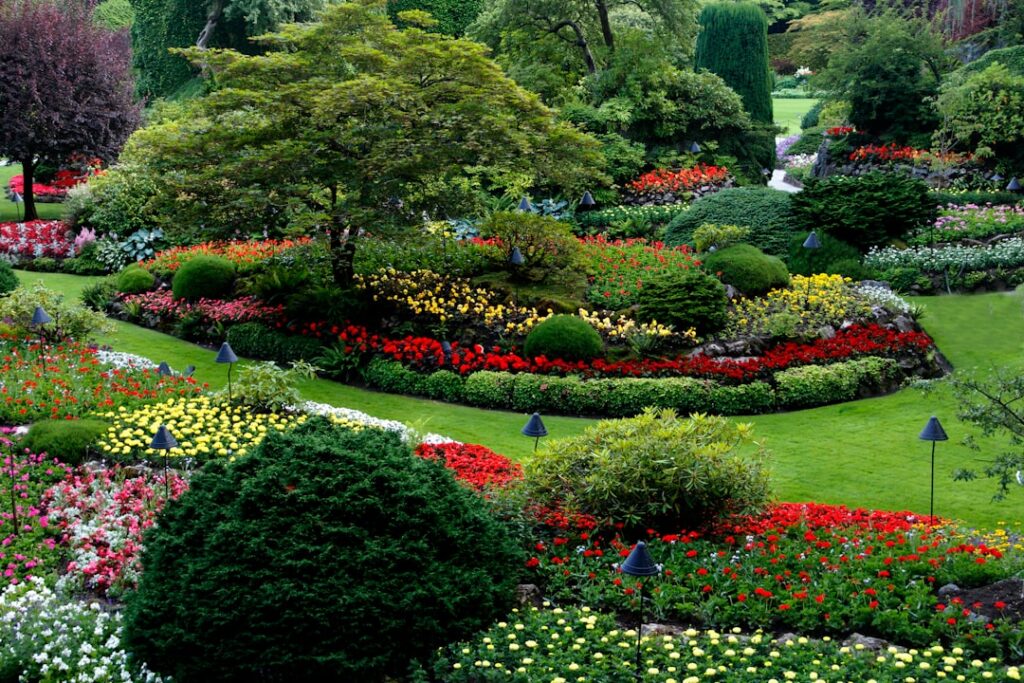
Plant selection makes or breaks pool landscaping. Avoid anything messy: no fruiting trees, no heavy flower-droppers, and nothing with invasive or thirsty roots that could reach the pool base. Prioritize evergreen, tidy, drought-tolerant plants that hold their leaves and need little pruning.
Ornamental grasses are ideal companions. They sway for a tropical feel, drop almost no debris, and need cutting back just once a year. Try ‘Karl Foerster’ feather reed grass (Zones 4-9), fountain grass (Zones 5-9), or maiden grass (Zones 5-9). For evergreen structure, dwarf boxwood (Zones 5-9), and compact junipers (Zones 3-9) stay neat with minimal shaping.
For color that will not litter the water, plant daylilies (Zones 3-9), coneflower (Zones 3-9), and sedum (Zones 3-11), all tough and self-sufficient. In containers you can move seasonally, tropical accents like canna and dwarf palms deliver a resort vibe without permanent commitment. Keep flowering plants a few feet back from the water’s edge so spent blooms land on gravel, not in the pool.
Plants to Avoid Near a Pool
- Deciduous trees that dump leaves and seeds, like maples, oaks, and sweetgum.
- Fruiting or berry plants that stain decking and attract wasps and bees.
- Bamboo and other aggressive spreaders whose roots can undermine the pool base.
- Cottonwoods and other fuzzy-seed trees that clog skimmers and filters.
Create Privacy Without High Maintenance
Most above-ground pools sit exposed, so privacy is a top request. The low-maintenance route is a mix of tall ornamental grasses, columnar evergreens, and a screen or trellis rather than a hedge that needs constant clipping. ‘Skyrocket’ juniper (Zones 4-9) and arborvitae ‘Emerald Green’ (Zones 3-7) grow into narrow evergreen columns that block sightlines with almost no pruning.
For faster, structural privacy, install a cedar or composite privacy panel or a lattice screen on one or two sides and let a tidy vine soften it. Position screening on the side facing neighbors or the street. Keep tall plantings far enough back that they do not shade the pool all day or drop needles into it.
Add Container Plantings for Flexibility
Containers are the secret weapon of low-maintenance pool landscaping. Large planters let you add lush greenery and seasonal color exactly where you want it, with zero risk to the pool base and no in-ground digging near the liner. Group three pots of varying heights for instant impact, and move them if you reconfigure the space.
Use self-watering containers or add drip emitters on a timer so you are not hand-watering daily in July. Plant them with drought-tolerant, tidy choices like agave, ornamental grasses, and trailing sedum. When a plant fades, swap the pot instead of reworking a whole bed.
Finish With Lighting and Mulch Details
Low-voltage LED landscape lighting extends pool evenings and highlights your plantings without a big electric bill. Set path lights along the deck access and uplight a few specimen grasses for drama at $80 to $150 per fixture. Use warm 2700K lamps for an inviting glow.
In any planting beds, mulch 2 to 3 inches deep with shredded hardwood to lock in moisture and suppress weeds, but keep loose mulch and fine bark a few feet back from the water so it does not blow in. Right at the pool’s edge, gravel is the cleaner choice. These finishing details are what make the whole setup read as a designed space rather than a pool with some plants around it.
Bringing It All Together
The formula for low maintenance landscaping around above ground pool areas is straightforward: a permeable gravel or paver band at the base, a partial deck or skirt to hide the wall, tidy evergreen and grass plantings that shed no debris, columnar screens for privacy, and containers for flexible color. Choose drought-tolerant plants matched to your USDA zone, run drip irrigation on a timer, and mulch the beds while keeping loose material away from the water.
Follow that approach and your above-ground pool stops looking like a temporary fixture and starts looking like an intentional backyard retreat, one that keeps its polish through the whole swim season without stealing the weekends you bought the pool to enjoy in the first place.
Protecting the Pool Base While You Plant
One rule governs every planting decision around an above-ground pool: never let roots or moisture compromise the base. The pool wall sits on a leveled bed of sand or a pad, and shifting soil or invasive roots can distort the ring and stress the liner. Keep all in-ground plantings at least 2 to 3 feet back from the pool wall, and avoid aggressive-rooted species like bamboo, willows, and poplars entirely.
When you dig planting holes near the pool, dig by hand rather than with power augers so you never disturb the compacted base or nick a buried plumbing line. Grade the surrounding soil to slope gently away from the pool so splash-out and rain drain off rather than pooling against the wall, which is the leading cause of premature rust on metal-walled pools. A gravel band right at the base, as described above, is the safest buffer of all because it drains instantly and hosts no roots.
Seasonal Care and Winterizing the Landscape
The landscape around a pool needs a light seasonal rhythm that matches the swim season. In spring, cut back ornamental grasses before new growth, refresh the gravel band where splash-out has thinned it, and check drip emitters in your containers and beds. Through summer, the plantings largely care for themselves; skim any stray leaves and deadhead the occasional bloom that lands near the water.
Come fall, cut back perennials, drain and store container plants that will not survive your winter, and blow leaves off the deck and gravel before they mat down. In cold zones where you close the pool, move frost-tender potted plants to a sheltered spot or garage, and blow out any drip irrigation lines before the first hard freeze to prevent split tubing. Handled this way, the whole setup wakes up clean and ready each spring, and the low-maintenance promise holds year after year with just a few hours of seasonal attention.