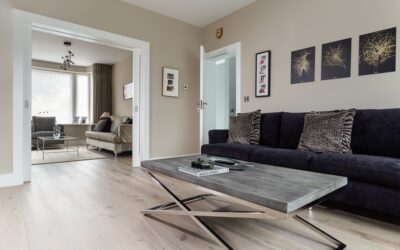
The correct term is LVP — Luxury Vinyl Plank — but searches for lpv flooring with the letters transposed happen by the thousands every month. The product is the same: rigid waterproof vinyl planks that look like hardwood, available in countless brands and quality tiers. This guide covers what separates premium LVP from budget LVP, the specifications that matter, and how to spot quality before installation reveals it.
The Specifications That Matter
LVP varies more by specification than by brand. Five specs determine quality:
- Wear layer thickness — clear topcoat above the print, measured in mils
- Core type — SPC (stone plastic composite) vs WPC (wood plastic composite) vs flexible PVC
- Total thickness — overall plank thickness, 4-8mm typical
- Locking system — click-lock mechanism strength and tolerance
- Pad attachment — built-in vs separate underlayment
Brands with strong specifications across all five command premium pricing. Brands with weak specifications in even one area produce flooring that fails within 5-10 years despite warranty claims of 25-30.
Wear Layer — The Most Critical Spec
The wear layer is the clear vinyl topcoat protecting the printed decor and core. Measurements in mils (thousandths of an inch):
- 6 mil — light residential, low-traffic only, 5-8 year life
- 12 mil — standard residential, 10-15 year life
- 20 mil — heavy residential, 15-20 year life
- 22 mil — premium residential, 20+ year life (Lifeproof, COREtec, mid-tier premium)
- 30 mil — heavy residential / light commercial, 25+ year life (premium)
- 40 mil+ — full commercial, 30+ years (rarely used residentially)
For kitchens, bathrooms, mudrooms, and high-traffic areas, 22 mil minimum. For bedrooms and offices, 12 mil acceptable. For commercial-grade residential (entryways, large families with pets), 30 mil is the safe choice.
Core Type — SPC vs WPC vs Flexible
The core determines dimensional stability, feel underfoot, and impact resistance:
| Core type | Composition | Pros | Cons |
|---|---|---|---|
| SPC | Limestone + PVC, rigid | Stable, dent-resistant, low expansion | Harder feel underfoot |
| WPC | Wood flour + PVC, semi-rigid | Softer feel, warmer | Less dent-resistant, more expansion |
| Flexible PVC | Pure flexible vinyl | Lower cost | Unstable, dents readily |
SPC has become the dominant residential core type since 2020. The rigidity helps with imperfect subfloors, dent resistance handles dropped pots and chair scrapes, and the dimensional stability prevents expansion-gap issues across temperature swings.
Total Thickness
Total plank thickness affects feel underfoot and tolerance for subfloor imperfections:
- 4mm — entry-level, requires very flat subfloor
- 5-6mm — standard residential, handles minor subfloor variation
- 6.5-8mm — premium residential, more forgiving of subfloor
- 8mm+ — luxury / commercial, best feel, premium pricing
Thicker isn’t automatically better — a 5mm SPC with 22mil wear layer outperforms a 7mm flexible vinyl with 12mil wear layer in nearly every metric. Match thickness to subfloor condition.
Locking System
The click-lock mechanism varies significantly by brand. Strong systems (Pergo UNICLIC, Mohawk SoftWood Lock) offer:
- Tight fit with minimal flex at seams
- Easy disassembly for repairs
- Resistance to lateral movement under foot traffic
- Multi-directional installation flexibility
Weaker systems develop visible seams over time, gap when temperature changes, and crack at corner joints. Lock quality is hard to evaluate from spec sheets — read installation reviews on specific products before committing.
Pad Attachment
Two options:
- Built-in attached pad — IXPE foam or cork, 1-2mm, eliminates separate underlayment requirement
- Separate underlayment — chosen for specific needs (acoustic, vapor barrier, thicker pad)
For most residential installs, built-in attached pad is sufficient and faster to install. For second-floor kitchens (acoustic concerns), basements (vapor barrier), or radiant floors (thermal compatibility), separate underlayment is preferable.
Top Premium LVP Brands
- COREtec — premium SPC and WPC lines, $4-9 per sq ft, Mannington-owned
- Karndean Korlok — high-end glue-down LVT and click LVP, $5-12 per sq ft
- Mannington Adura Max Apex — premium tier, $5-9 per sq ft
- Lifeproof — Home Depot exclusive, $2-5 per sq ft, surprisingly competitive
- Pergo Extreme — UNICLIC locking, $4-7 per sq ft
- Mohawk SolidTech Plus — Mohawk’s premium, $4-8 per sq ft
- Shaw Floorte Pro — Shaw’s premium, $4-9 per sq ft
- Audacity (Mannington) — designer LVP at $7-12 per sq ft
The best LVP value for residential is Lifeproof Rigid Core at $3-4 per sq ft with 22mil wear layer and SPC core. Premium tier (Karndean, COREtec Premium) makes sense for whole-house designer specifications where the difference matters.
Where to Compromise vs Where to Splurge
Cost-saving moves that don’t compromise performance:
- Skip the highest decor tiers — most homeowners can’t tell the difference between $3 and $7 LVP at six feet
- Buy on sale cycles — January, May, October closeouts offer 20-40% off premium product
- Match wear layer to room — 22mil for high-traffic, 12mil for bedrooms
- Standard widths — 6-7 inch wide planks cost less than oversized 9-inch widths
Where to splurge:
- Wear layer in kitchens and mudrooms — extra $0.50-1 per sq ft for 30mil over 22mil pays back
- Pad attachment on second floors — acoustic benefit worth the small premium
- SPC core in basements — dimensional stability matters more in temperature-variable spaces
Common Premium-Pricing Traps
Three patterns where homeowners overpay:
- Designer brand premium for similar specs — sometimes Karndean and COREtec Premium are 50% more for marginally better product
- Wide-plank surcharge — 9-inch widths often cost 30% more than 7-inch for the same product
- Hand-scraped texture — 10-20% premium for embossing that doesn’t survive cleaning long-term
Compare specifications carefully across price tiers. A $3 LVP with 22mil wear layer and SPC core often performs identically to a $5 LVP with the same specs in different decor.
Final Buying Checklist
Before purchasing LVP:
- Verify wear layer thickness matches room traffic
- Confirm SPC core for any residential install in 2026 (don’t accept flexible PVC)
- Check warranty terms (residential vs commercial transfer rules)
- Order samples and test in actual room lighting
- Compare across 3 retailers for best pricing
- Buy 10-15% overage
- Verify return policy on opened/uncut product
The right LVP at the right price is one of the best flooring values available. The wrong LVP at premium pricing wastes money and produces a floor that fails warranty expectations.
Prefer to explore on your own?
See how new flooring looks in your actual room in seconds — free, no signup.
Try the free Floor Studio →