If you want the look of hardwood without the price, the upkeep, or the worry about water, luxury vinyl planking has become the go-to answer for kitchens, basements, and busy family homes. Often abbreviated as LVP, luxury vinyl planking mimics real wood grain convincingly while standing up to spills, pets, and heavy foot traffic far better than the materials it imitates. It has surged in popularity for good reason, and this guide explains exactly how it works and whether it fits your home.
You will learn the difference between the main LVP types, realistic pricing, what installation involves, how durable it really is, and the simple care that keeps it looking new for years.
What Luxury Vinyl Planking Is
Luxury vinyl planking is a multi-layer flooring product shaped into long, narrow planks that resemble wood boards. Each plank is built from several layers: a backing for stability, a core that gives the plank its rigidity or flexibility, a printed design layer that carries the realistic wood image, and a clear wear layer on top that protects against scratches and scuffs. Many planks also have a textured surface that mimics the feel of wood grain.
The result is a floor that looks and feels surprisingly close to hardwood from a standing height but resists moisture, dents, and fading much better. Because the visual is a high-resolution print, you can find LVP in oak, hickory, walnut, and even stone looks, with finishes ranging from rustic to sleek.
Types of Luxury Vinyl Planking
Not all LVP is built the same way, and the core construction is the main thing that separates products.
- Flexible glue-down LVP: thinner planks that adhere to the subfloor, valued for stability in large rooms and commercial spaces.
- SPC (stone plastic composite): a rigid core blended with limestone, very dense, dent-resistant, and dimensionally stable.
- WPC (wood plastic composite): a rigid core with a slightly softer, warmer feel underfoot than SPC.
- Click-lock floating planks: planks that snap together and float over the subfloor without glue, the easiest type for do-it-yourself installation.
Rigid-core click-lock products in SPC or WPC are the most popular for homeowners because they install quickly and forgive minor subfloor imperfections.
Cost Considerations
Luxury vinyl planking sits comfortably between budget laminate and real hardwood on price. Material costs generally range from about $2 to $7 per square foot, with thicker rigid-core planks and thicker wear layers near the top of that range. Professional installation typically adds roughly $1.50 to $4 per square foot, depending on your region and how much subfloor prep the job requires.
Because click-lock floating LVP is genuinely DIY-friendly, many homeowners save the labor cost entirely on simple rooms. Budget a little extra material, around 10 percent, for cuts, mistakes, and future repairs. When comparing products, look at the wear layer thickness, often measured in mils, since a thicker wear layer resists scratches better and signals a longer-lasting floor. Treat all prices as estimates that vary by brand, quality, and local labor rates.
Where Luxury Vinyl Planking Shines
The standout advantage of LVP is water resistance, and most rigid-core products are fully waterproof, which opens up rooms where real wood would be a mistake. Kitchens, bathrooms, laundry rooms, basements, and entryways all suit LVP well because spills and humidity will not warp or stain the planks.
It is also a strong choice for homes with kids and pets. The tough wear layer shrugs off claw marks and dropped toys, and the printed pattern hides everyday dirt better than a solid color. Because rigid planks tolerate temperature swings, LVP works in spaces that see seasonal changes, such as sunrooms and finished basements, where many other floors struggle.
Installation Basics
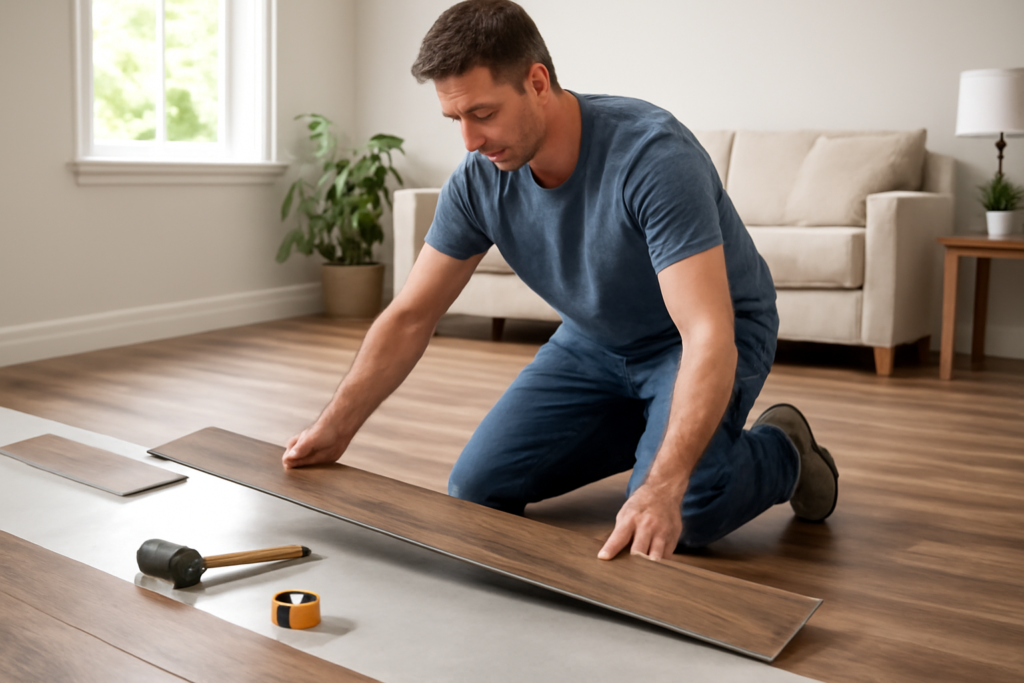
Click-lock floating LVP is among the most approachable flooring projects for a confident homeowner. The subfloor must be clean, dry, and flat, since bumps and dips telegraph through the planks and can stress the joints over time. Most floating installations allow the planks to sit over existing hard surfaces, which can save the cost of tearing out the old floor.
Planks click together at the edges and ends, and you stagger the seams from row to row for strength and a natural look. Leave a small expansion gap around the perimeter so the floor can move with temperature changes, then cover it with baseboard or quarter round. Glue-down LVP requires more precision and a properly prepared substrate, so it is better suited to experienced installers or pros. Always acclimate the planks in the room for the time the manufacturer specifies before installing.
Durability and Limitations
Luxury vinyl planking is tough, but it is not indestructible, and knowing its limits prevents disappointment. The wear layer resists scratches and scuffs well, and waterproof cores handle spills that would ruin hardwood or laminate. With normal household use, a quality LVP floor commonly lasts 15 to 25 years or more.
The main weaknesses are heat and sharp pressure. Direct, prolonged sunlight can fade some products over years, so check the fade rating for sunrooms, and very high heat can damage vinyl, so avoid placing it directly against certain heat sources. Heavy furniture and high heels can dent softer products, so use felt pads under furniture legs. Unlike hardwood, LVP cannot be sanded and refinished; a badly damaged plank is replaced rather than repaired, which is easier with floating floors than glued ones.
Cleaning and Maintenance
Caring for LVP is refreshingly simple. Sweep or vacuum regularly to keep grit from dulling the surface, and damp mop with a cleaner suited to vinyl floors. Avoid harsh abrasives, steam mops, and excessive water pooling, since these can damage the wear layer or work into the seams over time.
Place doormats at entries to catch grit, use felt protectors under furniture, and lift rather than drag heavy items across the floor. Wipe spills promptly even though the floor is water resistant, simply to keep it clean. With this light routine and no need for waxing or refinishing, luxury vinyl planking delivers a handsome, hardwood-look floor that asks very little in return over its long life.
Prefer to explore on your own?
See how new flooring looks in your actual room in seconds — free, no signup.
Try the free Floor Studio →