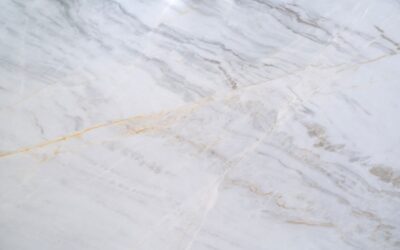
If you love the soft, flowing veins of Calacatta marble but not the staining and sealing that natural stone demands, a Lyra quartz countertop is one of the most requested marble-look alternatives on the market. Made by Silestone as part of their popular Eternal collection, a Lyra quartz countertop pairs a warm white background with gentle gray and taupe veining, delivering elegant looks with the bulletproof durability of engineered quartz. Homeowners choose it precisely because it captures high-end marble style while resisting the stains, etching, and maintenance that make real marble a gamble in a working kitchen. This guide covers Lyra’s design, pricing, care, and how it stacks up against similar patterns.
Part of our Countertops guide — explore the full guide →
What Lyra Looks Like
Lyra belongs to Silestone’s Eternal series, a lineup engineered to imitate natural marble. Its base is a warm, creamy white, not a stark bright white, giving it a softer, more inviting feel than some cooler marble-look quartzes. Across that background run delicate gray veins with subtle warm undertones, flowing in an organic, unhurried pattern that reads as authentic natural stone from across the room.
The veining is neither too busy nor too sparse, which is part of Lyra’s broad appeal. It works in both traditional and modern kitchens, complements warm and cool cabinet colors, and photographs beautifully, a reason it appears constantly in kitchen design galleries. Because it is engineered, the pattern is consistent and predictable across slabs, so the counter you approve is very close to what gets installed, unlike natural marble where every slab differs wildly.
Why Quartz Over Real Marble
The entire reason patterns like Lyra exist is to solve marble’s headaches. Natural marble is porous and calcium-based, so it stains from wine, coffee, and oil, and it etches, developing dull spots, wherever an acid like lemon juice or vinegar touches it. In a kitchen, that means constant vigilance and periodic professional restoration.
Lyra sidesteps all of it. Engineered quartz is about 90 percent ground natural quartz bound with resins and pigments, making it nonporous. It never needs sealing, resists stains from everyday kitchen spills, and shrugs off the acids that etch marble. You get the coveted Calacatta look with the practicality of a surface you can actually cook on without babying. For families who want white-marble elegance in a hardworking kitchen, that trade is the whole point.
What a Lyra Quartz Countertop Costs
Lyra sits in Silestone’s mid-to-upper price tier, as marble-look patterns command a premium over solid colors. Budget with these installed ranges:
- Material and fabrication: roughly $60 to $100 per square foot installed for standard edges and thickness.
- Premium edges or thicker slabs: $100 to $130-plus per square foot.
- Typical 40 to 50 sq ft kitchen: commonly $3,000 to $6,000 installed.
Pricing shifts with your region, slab thickness (2cm vs. 3cm), edge profile, and the number of cutouts and seams. Silestone-authorized fabricators quote the material, fabrication, and installation together. Always get a written quote that specifies thickness and edge, and ask to see the actual slabs in person; lighting in a warehouse reveals the true warmth of Lyra’s white far better than an online swatch.
Durability and Everyday Performance
Lyra earns its keep in daily use. Engineered quartz is one of the hardest countertop surfaces available, scoring around 7 on the Mohs scale, so it resists scratches from knives and dropped utensils far better than marble or even granite. It is nonporous, so bacteria and stains have nowhere to penetrate, an advantage in food-prep areas.
The one genuine limitation is heat. Like all quartz, Lyra’s resin binder can scorch or discolor under direct high heat, so never set a hot pan straight from the burner or oven onto the surface. Always use trivets or hot pads. Quartz also is not recommended for permanent outdoor installations, since prolonged UV exposure can fade the resins over years. Indoors, with basic care, Lyra holds its looks for decades.
How to Care for Lyra
Maintenance is delightfully minimal, which is much of the appeal. For daily cleaning, wipe the surface with warm water, a little mild dish soap, and a soft cloth or non-scratch sponge. That handles almost everything a kitchen throws at it.
A few rules keep Lyra pristine:
- Use trivets and hot pads; never place hot cookware directly on the surface.
- Wipe spills reasonably promptly, though quartz gives you far more grace than marble.
- Avoid harsh chemicals like bleach, oven cleaner, and high-pH degreasers, which can dull the finish over time.
- Skip abrasive scouring pads and powders that could scratch the polish.
- For dried-on messes, a plastic putty knife lifts residue without scratching.
Never sealing, no polishing, no special stone soap, that low bar is exactly why homeowners pick engineered quartz over the natural marble it imitates.
How Lyra Compares to Similar Patterns
Lyra competes with a crowded field of white marble-look quartzes, and knowing the neighbors helps you choose. Silestone’s own Eternal Calacatta Gold adds warmer gold veining, while Calacatta Nuvo from Caesarstone offers bolder, more dramatic veins. Cambria’s Brittanicca and MSI’s Calacatta lines chase the same aesthetic with their own vein character.
Lyra’s signature is its warm, understated softness, the veining is gentler and the white creamier than the high-contrast options, making it a safe, versatile pick that rarely clashes with a kitchen’s other elements. If you want maximum drama, a bolder-veined pattern may suit better; if you want timeless marble elegance that plays well with everything and never demands maintenance, a Lyra quartz countertop is a proven, popular choice that keeps looking current year after year.
Design Pairings That Make Lyra Shine
Because its background is a warm, creamy white rather than a cold bright white, Lyra plays especially well with a range of cabinet colors and finishes. It sits beautifully against soft white shaker cabinets for a bright, airy kitchen, and it warms up alongside natural wood, walnut, or oak cabinetry where a cooler quartz might clash. Painted cabinets in sage green, warm gray, and navy all read well next to Lyra’s gentle veining.
Hardware and fixtures are where you can push the look. The current warm-metal trend, brass and champagne bronze faucets and cabinet pulls, complements Lyra’s warm undertones far better than stark chrome. For backsplashes, homeowners often run the same Lyra slab up the wall for a seamless, high-end continuous look, or pair it with a simple white subway tile or a subtle marble-look ceramic that echoes the veining without competing. Flooring in warm-toned wood or a large-format porcelain tile completes a cohesive, magazine-ready kitchen.
2cm vs. 3cm and Edge Choices for Lyra
Like most quartz, Lyra is available in both 2cm and 3cm slab thicknesses, and the choice affects both look and cost. For kitchen counters and islands, 3cm (about 1.25 inches) is the American standard because it installs directly on cabinets without a plywood substrate and provides a substantial, premium edge. The thicker slab also lets the marble veining read more convincingly on the exposed edge.
For edge profiles, a simple eased square edge keeps Lyra looking modern and lets the veining take center stage, and it usually comes at no extra charge. A mitered waterfall edge on an island creates a dramatic, continuous flow of the marble pattern down to the floor, a favorite pairing for Lyra in contemporary kitchens. Traditional spaces suit a soft half-bullnose or ogee edge. Whichever you choose, ask the fabricator to lay out the seams and vein direction before cutting so the pattern flows naturally across the island and perimeter.
Is Lyra the Right Choice for You?
Lyra is an excellent pick if you want the look of white Calacatta marble in a kitchen that gets real daily use, from a family with kids to a passionate home cook who does not want to worry about wine, citrus, or coffee. It delivers that coveted soft-veined elegance without the sealing, etching, and staining anxiety that make natural marble a high-maintenance commitment. The main trade-offs to accept are quartz’s sensitivity to direct heat, so always use trivets, and its unsuitability for permanent outdoor kitchens.
Before you buy, view the actual slabs in person at your fabricator’s warehouse, since warehouse and showroom lighting reveal Lyra’s warm white and vein contrast far more truthfully than any online image. Confirm your quote specifies the Silestone brand, the slab thickness, the edge profile, and the number of cutouts and seams. With those details locked in and a reputable, Silestone-authorized fabricator handling the install, a Lyra quartz countertop gives you a durable, low-maintenance surface with the timeless beauty of marble, a combination that keeps it near the top of the most-requested quartz patterns year after year.