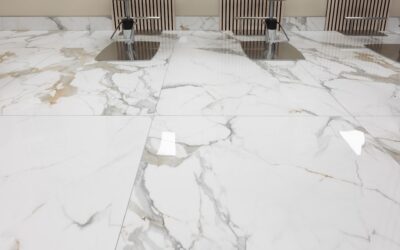
Real marble is stunning, expensive, cold, high-maintenance, and unforgiving of a dropped wine glass. For homeowners who love the look but not the headaches, marble look vinyl click flooring has become one of the smartest alternatives on the market, delivering the veined elegance of natural stone in a warm, waterproof, floating floor that clicks together without mortar or grout. It typically runs $2.50 to $5.50 per square foot installed as material.
Part of our Countertops guide — explore the full guide →
Marble-look vinyl suits powder rooms, entryways, and open kitchens where homeowners want the high-end stone aesthetic without the six-figure quotes and the maintenance calendar that real marble demands. Here is an honest look at what this product does well, where it falls short of the real thing, and how to buy and install it so the illusion holds up.
- What Marble Look Vinyl Click Flooring Is
- Pros: Luxury Look Without the Drawbacks
- Cons: Where It Falls Short of Real Stone
- Choosing the Right Product
- Installation Tips for a Convincing Result
- Best Rooms for Marble-Look Vinyl
- Cleaning and Keeping the Shine
- Matching Grout Lines and Transitions
- Is Marble Look Vinyl Click Flooring Worth It?
What Marble Look Vinyl Click Flooring Is
These are rigid-core vinyl tiles or planks, usually SPC (stone plastic composite), printed with a high-resolution photographic image of marble, then coated with a clear wear layer and finished with embossing that adds subtle surface texture. They lock together plank-to-plank with a click mechanism and float over an existing hard surface, no adhesive, no grout, no mortar bed.
The best products come in large-format tiles, often 12-by-24 inches or 18-by-18 inches, with veining that varies from tile to tile so the pattern does not obviously repeat. Some collections even offer a matching grout-strip look or micro-beveled edges to simulate real tile joints. The result, from standing height, is remarkably convincing, and unlike ceramic it is warm and slightly softer underfoot.
Pros: Luxury Look Without the Drawbacks
The headline benefit is cost. Genuine marble tile runs $10 to $40 per square foot for material plus expensive specialized installation, while marble-look vinyl delivers a similar visual at $2.50 to $5.50 per square foot with DIY-friendly click installation. That is often a five-to-tenfold saving on a bathroom or entry.
Beyond price, vinyl is 100 percent waterproof, warm underfoot, and far more forgiving than stone. Real marble is porous, etches from acidic spills like lemon or vinegar, stains easily, and needs periodic sealing; the vinyl version shrugs off all of that and cleans with a damp mop. It is also warmer and quieter than tile, and if a section is damaged you can pop out and replace individual planks rather than chiseling out mortar-set stone.
Cons: Where It Falls Short of Real Stone
The limits are worth stating plainly. From standing height marble-look vinyl is convincing, but up close and underfoot it lacks the true cool touch, the mineral depth, and the slight variation in reflection that real polished marble has. A discerning eye, or bare feet, will know it is not stone. If absolute authenticity is your goal and budget is no object, nothing replaces the real material.
Vinyl also cannot be refinished; once the wear layer abrades through, you replace planks, whereas marble can be honed and repolished for generations. Cheaper marble-look products suffer from an obvious repeating pattern if the collection has only a few unique tile faces, and a high-gloss printed finish can look plasticky under bright light. Buying a quality line with varied veining and a matte or satin finish avoids most of this.
Choosing the Right Product
Prioritize three specs. First, wear layer: 12 mils suits a low-traffic powder room, while 20 mils is smarter for a busy entry or kitchen. Second, pattern variety: count the unique tile designs in the collection, since more variation means a more believable, less repetitive floor. Premium lines offer a dozen or more veining variations; budget lines repeat every few tiles.
Third, finish and edge detail. A matte or satin finish reads far more like honed marble than a shiny gloss, and it hides micro-scratches and footprints. Micro-beveled edges or a printed grout line add realism by breaking the surface into tile-like units. If you want the true tiled-stone illusion, choose beveled large-format tiles over seamless planks, and confirm the product carries a FloorScore or GREENGUARD low-VOC certification for indoor air quality.
Installation Tips for a Convincing Result
Because marble-look vinyl often uses tile-format pieces, layout matters even more than with plank wood-looks. Dry-lay a few rows first and plan the grid so cut tiles at opposite walls are balanced and roughly equal, rather than a full tile on one side and a sliver on the other. A centered, symmetrical layout is what sells the tiled-stone look.
Prep the subfloor flat to within 3/16 inch over 10 feet, since rigid tiles bridging a dip will rock and stress the click joints. Acclimate the boxes flat in the room for 48 hours at 65°F to 75°F, and leave a 1/4-inch expansion gap at the perimeter, hidden by baseboard. Mix tiles from several boxes as you install to distribute the veining variations naturally and avoid clustering identical faces together.
Best Rooms for Marble-Look Vinyl
This product shines in powder rooms, full bathrooms, entryways, laundry rooms, and open kitchens where the stone aesthetic elevates the space but real marble’s maintenance would be a burden. The waterproof core makes it ideal for wet areas where natural marble’s porosity and etching are constant worries, and the warmth is a welcome contrast to cold ceramic or stone.
It is the wrong pick only in the highest-end renovations where authenticity is paramount and budget is unlimited, or in commercial lobbies demanding decades of refinishable service. For virtually every residential project chasing luxury on a realistic budget, it is an excellent fit that guests rarely question.
Cleaning and Keeping the Shine
Part of the appeal of the vinyl version is how little maintenance it demands compared to real marble. There is no sealing schedule and no fear of etching from an acidic spill, so a splash of lemon juice or a tipped wine glass that would permanently mar natural stone wipes right off the printed surface. Day to day, a dry dust mop to lift grit followed by a damp mop with a pH-neutral cleaner keeps it looking crisp.
Avoid the temptation to use wax, polish, or abrasive cleaners to boost the shine, because they leave a film that clouds the wear layer and attracts dirt, exactly the opposite of what you want on a floor meant to look like polished stone. Trapped sand is the real enemy; sweep entries regularly and place walk-off mats at doors so grit never grinds against the finish along walking paths. With that routine the surface holds its factory look for many years.
Matching Grout Lines and Transitions
To make the tiled-stone illusion truly convincing, pay attention to how the floor meets adjacent surfaces. Where marble-look vinyl transitions to carpet, wood-look plank, or an exterior threshold, use a color-matched T-molding or reducer rather than an off-the-shelf mismatched strip, because a jarring transition breaks the premium effect the floor is meant to create. Many collections sell matching trim for exactly this reason.
If your product includes a grout-strip accessory or beveled edges, take the extra time to align the joints across the room so the grid reads as continuous tile rather than random planks. In a bathroom, run a bead of color-matched silicone where the floor meets the tub or vanity, both to seal against water reaching the expansion gap and to give the clean, finished look real tile installations have. These small details are what separate a convincing marble-look floor from an obviously fake one.
Is Marble Look Vinyl Click Flooring Worth It?
For the overwhelming majority of homeowners, yes. You capture 90 percent of the visual impact of natural stone at a fraction of the cost, with none of the sealing, etching, staining, or coldness that make real marble a demanding material to live with. The waterproof, warm, easy-clean nature of vinyl suits real family life far better than porous stone.
Choosing marble look vinyl click flooring is about buying the look you love in a form that fits how you actually use your home. Select a quality line with varied veining, a matte finish, and a wear layer matched to your traffic, prep the subfloor properly, and lay it out symmetrically, and you will have a floor that turns heads without draining your budget or your weekends.
Prefer to explore on your own?
See how new flooring looks in your actual room in seconds — free, no signup.
Try the free Floor Studio →