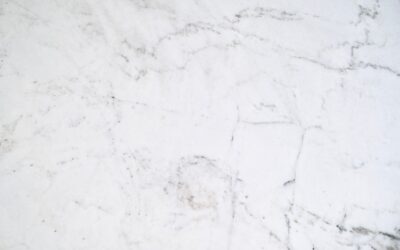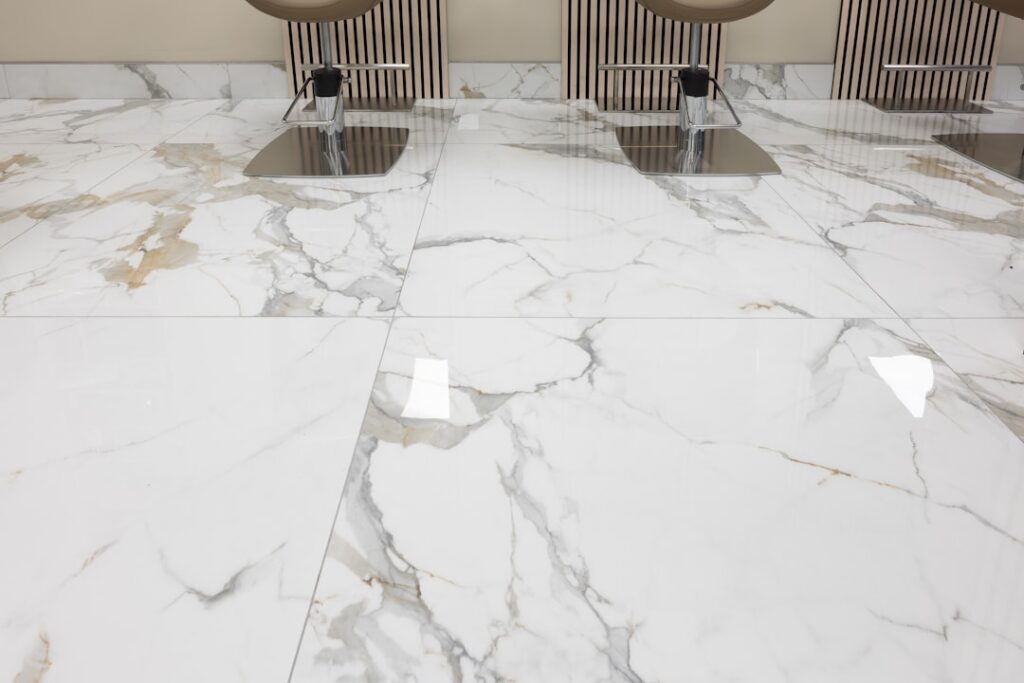
Real marble is stunning, and it’s a nightmare to live with, it etches from a splash of lemon juice, stains from red wine, and costs a fortune to install and seal. Marble look vinyl plank flooring gives you that veined, luxurious stone aesthetic without the fragility, the maintenance, or the five-figure price tag. Modern printing has gotten good enough that from a standing height, many buyers genuinely can’t tell it from the real thing. Here’s how to choose a convincing one.
Part of our Countertops guide — explore the full guide →
Why Choose Marble Look Vinyl Over Real Stone
Genuine marble is a soft, porous, acid-sensitive stone. Drop a knife, spill wine, or clean it with the wrong product and you’ll see a permanent mark. It also demands sealing every 6 to 12 months and runs $15 to $40 per square foot installed. Marble look vinyl flips every one of those weaknesses: it’s waterproof, stain-resistant, warm underfoot, and a fraction of the cost, while capturing the dramatic veining that makes marble special.
You’ll typically find it in two formats: wide planks and large-format tiles (LVT) that better mimic marble slabs, often 12×24 or 18×36 inches with the option of grout lines for a true stone-floor look.
The technology that makes this possible has improved dramatically in just the last several years. High-definition digital printing now captures the fine, feathery veining and subtle color shifts of real marble, while embossed-in-register texturing adds surface relief that follows the printed veins, so the floor doesn’t just look like marble, it catches light like it too. Pair that with beveled edges and a grout-line option, and a large-format marble-look LVT can pass for a genuine honed marble slab floor from a standing height. The days of obviously fake, plasticky stone-look vinyl are largely behind us, which is why designers who once dismissed vinyl now specify it confidently in high-end bathrooms.
The Advantages
- Waterproof: A 100 percent waterproof core makes it ideal for bathrooms, kitchens, and entryways where real marble struggles.
- Stain and etch resistant: No acid etching from citrus or vinegar, no wine stains, no sealing schedule.
- Warm and quiet: Far warmer and softer underfoot than cold, hard stone, and quieter too.
- Affordable: $2 to $6 per square foot versus $15 to $40 for natural marble.
- DIY-friendly: Click-lock systems install without mortar, grout, or a wet saw.
- Low maintenance: Just sweep and damp-mop, no polishing or resealing.
The Drawbacks to Consider
It’s still vinyl, so it won’t add the resale prestige of genuine marble, and it can’t be refinished, once the wear layer is gone, planks get replaced. The biggest aesthetic risk is a repeating pattern: cheaper products cycle through only a few printed marble faces, so a large floor reveals the same veining every several planks, which breaks the illusion. Look for products with a high number of unique tile faces.
Very glossy finishes can also look artificial and show scuffs, and intense direct sunlight can fade vinyl over time. These are manageable, but worth knowing before you buy.
Popular Marble Looks
Vinyl replicates the most sought-after marble varieties, so you can match a specific design vision:
- Carrara: Soft white-gray background with fine, feathery gray veining. The most classic and versatile.
- Calacatta: Bright white with bold, dramatic gold or gray veins for a high-end statement.
- Statuario: Crisp white with striking dark-gray veining, very contemporary.
- Nero Marquina: Deep black with sharp white veins for a bold, modern floor.
- Emperador: Warm brown tones with lighter veining for a richer, traditional look.
What to Look For When Buying
Realism and durability both come down to a few specs:
- Wear layer: 20 mil for busy homes, 12 mil minimum for lighter use.
- Core: SPC (stone plastic composite) for rigidity and dent resistance, especially in large tile formats.
- Finish: A matte or low-satin sheen looks far more like honed marble than high gloss.
- Unique faces: The more distinct printed patterns, the less obvious the repeat.
- Beveled or micro-beveled edges plus grout-line options: These sell the individual-tile illusion.
- Embossed texture: A subtle surface texture that follows the veining adds depth.
Installation Tips
Large-format marble-look LVT demands a flatter subfloor than narrow planks, because any dip shows as lippage between big tiles. Get the subfloor within 3/16 inch over 10 feet, and use self-leveling compound if needed.
- Acclimate the material in the room for 48 hours.
- Dry-lay a section to plan the veining, mixing planks from several boxes so repeats scatter randomly instead of clustering.
- For a grouted look, use the manufacturer’s compatible vinyl grout in the beveled seams after installation.
- Leave a 1/4-inch expansion gap at all walls.
- Stagger seams and vary the pattern so the print repeat isn’t obvious.
That mix-from-multiple-boxes habit is the single most effective trick for a natural-looking marble floor.
What It Costs
For a 300-square-foot bathroom or foyer:
- Budget marble-look vinyl: $600 to $1,200 in materials.
- Mid-grade SPC, 20 mil: $1,000 to $1,800 in materials.
- Professional installation: $2 to $6 per square foot on top.
Even fully installed, you’ll typically spend a third to a quarter of what natural marble would cost, with none of the sealing and etching headaches.
Matching Grout and Trim for a Convincing Look
The single detail that separates a convincing marble-look floor from an obvious vinyl one is how you handle the seams. If your product offers a grout-line groove and a compatible vinyl grout, use it, a thin, color-matched grout line sells the illusion that each tile is a separate marble slab. For Carrara looks, a light-gray grout reads most natural; for Nero Marquina black marble, a dark charcoal grout keeps the drama intact.
Transitions and trim matter too. Where the floor meets other rooms, a color-matched T-molding or reducer keeps the eye from snagging on an abrupt edge. At the walls, tuck the expansion gap under the baseboard or add quarter-round in a complementary tone. These finishing touches cost little but make the difference between a floor that looks intentional and one that looks like a rushed weekend project.
Caring for Marble-Look Vinyl
Unlike genuine marble, this floor asks almost nothing of you, no sealing, no polishing, no panic over a spilled glass of wine. Sweep or dry-mop regularly to keep grit from dulling the finish, and damp-mop with a pH-neutral vinyl cleaner. Avoid abrasive pads and harsh chemicals that can strip the surface sheen, and skip steam mops, which can drive moisture into the seams. Put felt pads under furniture and walk-off mats at entrances to catch grit, and in bright rooms choose a UV-stable product to prevent fading. That’s the whole routine, and it’s why so many homeowners choose the look-alike over the real stone.
Is It Right for You?
Consider your long-term plans, too. If you intend to sell soon and you’re renovating a high-end home where buyers expect genuine stone, real marble or a marble-look porcelain may serve the resale story better despite the maintenance. But if you’re staying put, or outfitting a family home, a rental, or a bathroom that sees daily splashing, marble-look vinyl is the pragmatic winner every time, you get the coveted look without the etching, staining, and sealing that make natural marble a daily worry.
Marble look vinyl plank flooring is the smart choice if you love the veined, luxurious stone aesthetic but need a floor that survives real life, spills, kids, pets, and daily traffic. It shines in bathrooms and kitchens where genuine marble is a poor fit. Buy a matte-finish SPC product with a 20-mil wear layer and plenty of unique faces, mix your boxes during layout, and you’ll get a floor that looks like a designer splurge and cleans up with a damp mop.
Prefer to explore on your own?
See how new flooring looks in your actual room in seconds — free, no signup.
Try the free Floor Studio →