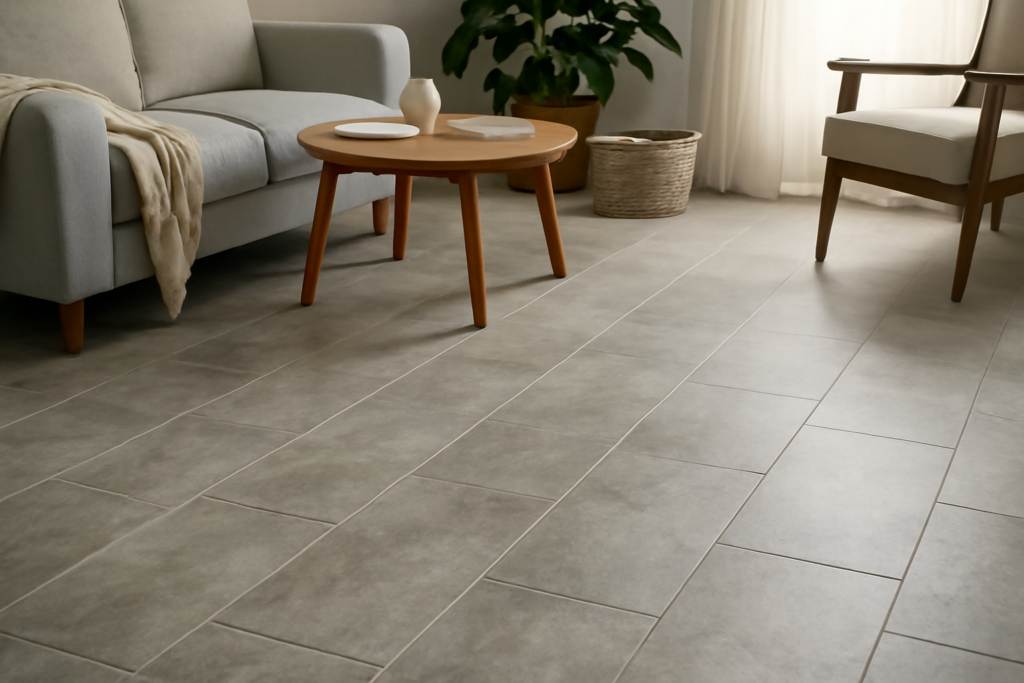
Real marble runs $15 to $40 per square foot installed and cracks if you drop a cast-iron pan on it. Stone look vinyl plank flooring mimics that same marble, slate, or travertine for $3 to $7 per square foot, stays warm underfoot, and shrugs off the dropped pan without a chip. Today’s high-definition printing and embossed textures have gotten good enough that guests genuinely can’t tell it from the real thing until they crouch down and touch it.
It isn’t a perfect substitute, though. Here’s an honest breakdown of where stone-look vinyl shines and where it falls short, so you buy with open eyes.
What Stone Look Vinyl Actually Is
Stone-look vinyl comes in two main formats. The rigid-core versions, SPC (stone plastic composite) and WPC (wood plastic composite), are the ones you want for a convincing stone imitation. SPC has a dense limestone-and-PVC core that stays flat and hard, close to the feel of real tile. Most stone-look products come as large planks or square tiles, often 12×24 inches, with beveled edges and even grout-line effects to sell the illusion.
The Pros
- Waterproof. 100% waterproof SPC and WPC handle bathrooms, kitchens, laundry rooms, and basements without worry.
- Warmer and quieter than stone. Real tile is cold and hard. Vinyl feels softer underfoot and doesn’t turn your bathroom floor into an ice rink in January.
- Easy DIY installation. Most click-lock floating floors go down over the weekend with no thinset, no grout, and no wet saw.
- Cheaper by a mile. You save 60% to 80% versus natural stone once you factor in labor.
- Low maintenance. No sealing, no special stone cleaners, just sweep and damp mop.
- Comfortable and quieter. A good pad-backed plank cuts echo and is more forgiving if you drop dishes.
The Cons
- It’s not real stone. Up close and under raking light, repeated print patterns can give it away. Buy a product with more pattern variation to minimize this.
- Resale value. Natural stone and porcelain still command more appeal with some buyers, though quality vinyl no longer scares people off.
- Can dent. Heavy furniture legs and dropped sharp objects can leave marks in softer products. Use felt pads.
- Sun fading. Cheaper vinyl can fade in a sunroom or by big south-facing windows over years.
- Hard to repair one plank. Floating floors mean you may have to unclick a row to swap a damaged board.
How to Judge Quality
Not all stone-look vinyl is created equal. Focus on two specs that predict real-world durability:
- Wear layer thickness: Measured in mils. Go 12 mil minimum for a home, 20 mil or higher for busy households with kids and pets.
- Overall plank thickness: 5mm to 8mm rigid core resists dents and hides minor subfloor imperfections. Thin 4mm products telegraph every flaw below.
Also look at how many unique plank designs are in the box. A product with 12 or more variations reads far more realistically than one recycling four patterns across the whole floor.
Popular Products and Prices
- COREtec Stone: Premium rigid core with grout-line looks, roughly $4 to $6 per sq ft.
- Shaw Paragon Tile Plus: Realistic stone visuals with a 20-mil wear layer, around $4 to $5 per sq ft.
- LifeProof (Home Depot): Budget-friendly stone looks near $3 per sq ft with a decent 12-mil layer.
- Karndean Knight Tile: High-end glue-down slate and stone visuals, $5 to $7 per sq ft.
Where It Works Best
Stone-look vinyl earns its keep in wet, cold, or high-traffic spaces. Bathrooms and mudrooms benefit from the waterproofing. Basements love it because it tolerates concrete slab moisture better than wood-based flooring. Kitchens get the marble aesthetic without the etching worries that plague real marble around lemon juice and wine. In a sunroom, choose a fade-resistant premium product and add UV-blocking window film.
Installation Tips
Acclimate the planks in the room for 48 hours before installing so they adjust to temperature and humidity. The subfloor must be flat within 3/16 inch over 10 feet; grind down high spots and fill low spots, because rigid core planks can crack or flex over voids. For the most realistic grout-line effect, some tile-format products accept a matching acrylic grout you press between the tiles, which sells the stone illusion completely. Leave a 1/4-inch expansion gap around the perimeter and cover it with baseboard or quarter round.
For homeowners who want the drama of marble or slate without the price, the cold, or the fragility, stone-look vinyl plank flooring is one of the smartest values in the category right now. Buy a thick wear layer, pick a design with plenty of variation, and you’ll get a floor that looks high-end and takes daily abuse for 15 to 25 years.
Stone Look Vinyl vs Real Porcelain Tile
The honest comparison is against porcelain, since that’s the tile most stone-look vinyl imitates. Porcelain wins on authenticity, heat resistance, and resale appeal, and it never dents. But it’s cold, hard, slow to install, and unforgiving when you drop a glass. Vinyl wins on comfort, warmth, DIY installation, and cost, typically running half the installed price of tile. If you’re finishing a basement, a rental, or a busy family kitchen, the practical edge goes to vinyl. If you’re building a high-end forever home and authenticity matters for resale, porcelain still has the edge. Both are waterproof, so that’s a wash.
Cleaning and Maintenance
One of the quiet advantages of stone-look vinyl is how little it asks of you. Sweep or vacuum to keep grit off the wear layer, then damp mop with a mild cleaner and warm water. Skip the steam mop, which heat can warp the planks and void the warranty, and skip wax and polish, which build up and dull the surface. For grout-line tile formats, the acrylic grout wipes clean like the planks themselves, with none of the sealing and scrubbing real grout demands. Add felt pads under furniture legs to prevent dents, and you’ve covered nearly all the maintenance this floor will ever need.
Prefer to explore on your own?
See how new flooring looks in your actual room in seconds — free, no signup.
Try the free Floor Studio →