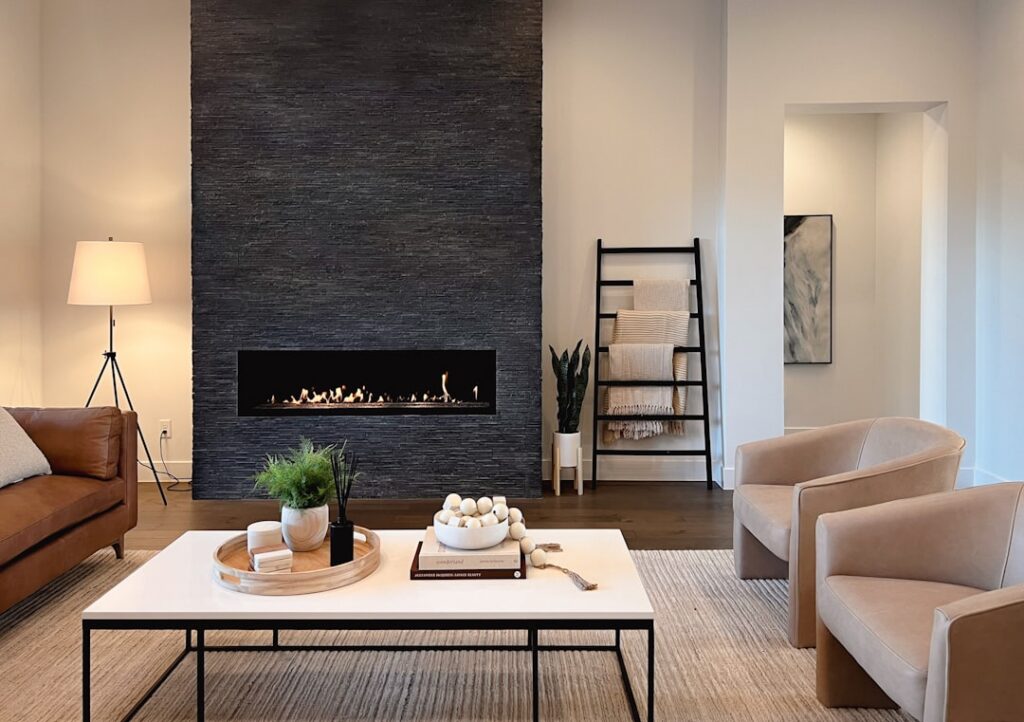
Nothing anchors a living room quite like stone, and a marble tile fireplace brings a sense of timeless luxury that few materials can match. The natural veining, soft sheen, and cool elegance of marble turn an ordinary hearth into a focal point. This guide covers marble types, the heat-safety considerations that matter most, sealing and care, and how to plan an installation that’s both beautiful and code-compliant.
Part of our Countertops guide — explore the full guide →
Why Marble Suits a Fireplace
Marble has surrounded fireplaces for centuries, and the reason is simple: it’s a natural stone with classic beauty and good resistance to heat in the radiant zone around a firebox. Each slab carries unique veining, so no two marble fireplaces look exactly alike. The material reads as upscale and enduring, complementing both traditional and modern interiors.
Beyond looks, marble tile is a practical format for the surround, the decorative facing around the firebox opening, and the hearth, the floor area in front of it. Tiles are easier to handle and install than massive solid slabs, and they let you create patterns, borders, and clean lines around the opening.
Choosing Your Marble
Marble comes in many varieties, each with a distinct personality. Popular directions include:
- Carrara: Soft white-gray with delicate, feathery veining. A widely loved, versatile classic.
- Calacatta: Whiter background with bolder, more dramatic veining for a luxurious statement.
- Emperador: Rich brown tones with fine veining that bring warmth and depth.
- Nero Marquina: Deep black with striking white veins for a bold, contemporary look.
Finish matters too. Polished marble has a glossy, reflective surface that emphasizes veining, while honed marble offers a softer matte look that hides minor wear better. For a fireplace surround, both work well; the choice is largely aesthetic.
Heat and Safety: The Part You Can’t Skip
A fireplace is a heat source, and that demands careful attention to materials and clearances. The single most important rule is to use heat-rated, non-combustible materials and to follow the clearance specifications from your fireplace or insert manufacturer along with your local building code. These specs dictate how close combustible materials, such as a wood mantel, can sit to the firebox opening.
Keep these safety principles front of mind:
- Marble tile itself is non-combustible, but the substrate, adhesive, and surrounding materials must be appropriate for the heat zone. Use products rated for fireplace applications.
- Maintain the manufacturer’s required clearances around the firebox. Never reduce them for the sake of design.
- Local code may impose additional requirements for hearth dimensions and material thickness. Check before you build.
- Have gas units inspected and serviced by a qualified professional, and address any drafting or venting issues before finishing work begins.
Polished marble can become slick, so think carefully about finish on a hearth floor where people walk. When in doubt about clearances, venting, or structural support, consult a licensed installer or your local building department rather than guessing.
Sealing: Marble Is Porous
Marble is a porous, relatively soft stone that can stain and etch. Soot, ash, smoke residue, and the occasional spilled drink can all leave marks if the surface is unprotected. Sealing is not optional for a fireplace; it’s an essential step that helps the stone resist staining and makes cleanup easier.
Apply a quality stone sealer made for marble after installation, following the product’s directions, and plan to reseal periodically based on use and the sealer’s recommendations. Even sealed marble benefits from prompt cleanup of spills and ash, since the sealer slows absorption rather than stopping it entirely.
Installation Overview
Installing a marble tile fireplace is detailed work, and the specifics depend on your firebox, substrate, and local code. The general flow looks like this:
- Confirm clearances and prepare a sound, non-combustible substrate suitable for the heat zone.
- Dry-lay the tiles to plan your layout, centering the pattern on the firebox and minimizing awkward cuts.
- Use a heat-appropriate thinset and spread it with a notched trowel, setting tiles with consistent spacing.
- Cut marble with a wet saw for clean edges, taking care, as marble can chip.
- Let the thinset cure, then grout with a suitable grout and clean haze from the polished surface promptly.
- Seal the marble once everything has cured.
Because of the heat-safety and code considerations, many homeowners hire a professional for at least the planning and clearance verification, even if they handle some of the finish work. There’s no shame in bringing in expertise where safety is involved.
Design Ideas and Layouts
The way you arrange marble tile shapes the entire character of the fireplace. A full-height surround that runs from hearth to ceiling makes a dramatic, gallery-like statement and emphasizes the stone’s veining. A simpler facing that frames just the firebox opening reads as more restrained and traditional, often paired with a wood or stone mantel above.
Layout patterns add another layer of personality. A classic stacked or grid layout feels clean and modern, while a herringbone or chevron arrangement introduces movement and visual interest. Large-format marble tiles minimize grout lines for a near-seamless slab look, whereas smaller tiles or mosaic accents create texture. Mixing a bold marble like Calacatta on the surround with a quieter hearth can balance drama with calm.
Caring for a Marble Fireplace
Day-to-day care is straightforward once the stone is sealed. Dust regularly and wipe spills quickly. Clean with a pH-neutral stone cleaner; avoid acidic products like vinegar or citrus cleaners and harsh abrasives, which can etch and dull the surface. For soot near the firebox, gentle cleaning is better than aggressive scrubbing.
Inspect the surround periodically for any cracked grout or loose tile, especially given the heat cycling a fireplace endures. With proper sealing, gentle cleaning, and occasional resealing, a marble fireplace stays striking for decades.
Final Thoughts
A marble tile fireplace combines natural beauty with the warmth of a hearth, creating a room’s centerpiece that feels both luxurious and enduring. Choose a marble that fits your palette, respect the manufacturer’s clearances and your local code, use heat-rated materials, seal the porous stone, and have any gas appliance serviced by a professional. Handle those fundamentals well, and you’ll enjoy a fireplace that’s as safe as it is stunning.
Prefer to explore on your own?
See how new flooring looks in your actual room in seconds — free, no signup.
Try the free Floor Studio →