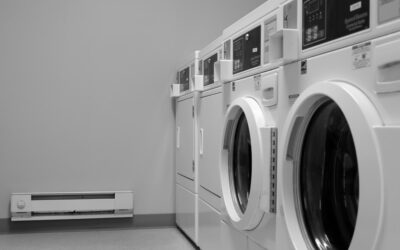
Limited laundry space does not mean you have to settle for limited performance. A Maytag stackable washer and dryer gives you full-size cleaning power in roughly half the floor space, and Maytag’s reputation for durability means these machines are built to handle years of heavy use. This guide breaks down current models, key specs, installation requirements, and what to watch for before you buy.
Why Maytag for Stackable Laundry
Maytag has positioned itself as the workhorse brand in the Whirlpool Corporation family. Where LG and Samsung compete on smart features and flashy cycles, Maytag focuses on build quality and raw cleaning performance. Their front-load washers — the only type that can be stacked — consistently rank among the most reliable in Consumer Reports testing.
Every Maytag washer and dryer also comes with a 10-year limited parts warranty on the motor and wash basket, which is one of the strongest warranties in the laundry appliance market. Most competitors cap their warranty at 3-5 years on those components.
Current Maytag Stackable Models Worth Considering
Maytag offers several front-load washer and dryer pairs that support stacking. Here are the standout options as of early 2026.
Maytag MHW5630HW Washer + MED5630HW Dryer
This is Maytag’s mid-range workhorse. The washer offers 4.5 cu. ft. capacity with an Extra Power button that boosts stain-fighting performance on any cycle. The matching electric dryer has 7.3 cu. ft. capacity with a moisture sensor that prevents over-drying. Expect to pay around $900-$1,100 per unit, or $1,800-$2,200 for the pair before installation.
Maytag MHW6630HC Washer + MED6630HC Dryer
The step-up model adds a 24-hour Fresh Hold option that tumbles and circulates air for up to 24 hours after the wash cycle ends, keeping clothes from smelling musty if you forget to move them. Capacity stays at 4.8 cu. ft. for the washer and 7.3 cu. ft. for the dryer. Price runs $1,100-$1,300 per unit.
Maytag MHW8630HC Washer + MED8630HC Dryer
The top-of-the-line set features 5.0 cu. ft. washer capacity, the largest in Maytag’s lineup, plus an overnight wash and dry cycle that handles a small load without transferring between machines. This pair costs $1,300-$1,500 per unit. Best for families of four or more.
Stacking Kit: What You Need to Know
You cannot simply set a dryer on top of a washer. A stacking kit is required for safe installation. Maytag’s stacking kit (model W10869845) runs about $25-$40 and includes a metal bracket that bolts the dryer securely to the top of the washer.
- The washer always goes on the bottom — it is heavier and has a lower center of gravity during spin cycles.
- Only front-load washers can be stacked. Top-load models are not designed for stacking.
- Total stacked height is approximately 76-80 inches. Measure your space, including clearance for the dryer vent at the back.
- The floor must be level and sturdy. A stacked pair weighs 350-400 lbs total, and the spin cycle adds dynamic force.
Space and Installation Requirements
A Maytag stackable washer and dryer pair typically needs a footprint of about 27 inches wide by 31-33 inches deep. Add 4-6 inches behind the unit for the dryer vent hose and water supply connections. You also need at least 1 inch of clearance on each side to prevent vibration noise against walls or cabinetry.
Electrical requirements depend on the dryer type. Electric dryers need a dedicated 240-volt, 30-amp circuit with a 4-prong outlet (NEMA 14-30). Gas dryers use a standard 120-volt outlet but require a gas line with a shutoff valve within 6 feet. The washer runs on a standard 120-volt, 15-amp circuit.
If you are converting a closet into a laundry space, make sure you have adequate ventilation. Dryer vent runs should not exceed 35 feet for efficient drying, and every 90-degree elbow in the vent path reduces that by about 5 feet.
Gas vs. Electric Dryer: Which to Stack
Both gas and electric Maytag dryers are stackable. The choice usually comes down to your existing hookups.
- Electric dryers cost $50-$100 less upfront but cost roughly $0.50-$0.70 per load to operate depending on local electricity rates.
- Gas dryers have a higher purchase price but cost about $0.15-$0.30 per load to run. Over a 10-year lifespan with 5 loads per week, gas saves approximately $800-$1,200 in utility costs.
- Installing a new gas line costs $150-$300 if you do not already have one. Running a new 240-volt circuit for an electric dryer costs $250-$500.
Common Issues and Troubleshooting
Even reliable machines have occasional problems. Here are the most frequently reported issues with Maytag stackable units and how to address them.
- Excessive vibration when stacked: Recheck that the stacking bracket is fully tightened, and verify the washer’s leveling feet are properly adjusted. An out-of-level washer amplifies vibration through the entire stack.
- Dryer not heating: On electric models, check both breakers — a 240-volt circuit uses a double breaker, and if only one side trips, the dryer will tumble but produce no heat.
- Musty smell from washer: Front-loaders are prone to mold around the door gasket. Run an Affresh cleaning tablet monthly and leave the door cracked open between loads.
- Long dry times: Clean the lint trap after every load and inspect the exterior vent flap quarterly. Crushed or kinked vent hoses behind a stacked unit are the number one cause of poor drying performance.
Where to Buy and How to Save
Major retailers like Home Depot, Lowe’s, and Best Buy carry Maytag stackable washer and dryer sets. Holiday weekends — Memorial Day, Fourth of July, Labor Day, and Black Friday — typically bring the deepest discounts, often $200-$400 off per pair. Some retailers also offer bundle pricing that includes the stacking kit and delivery at no additional charge.
Consider purchasing floor models or open-box units from big-box stores. These are often $300-$500 below retail with the same manufacturer warranty. Verify the model number matches current production to ensure parts availability down the road.