
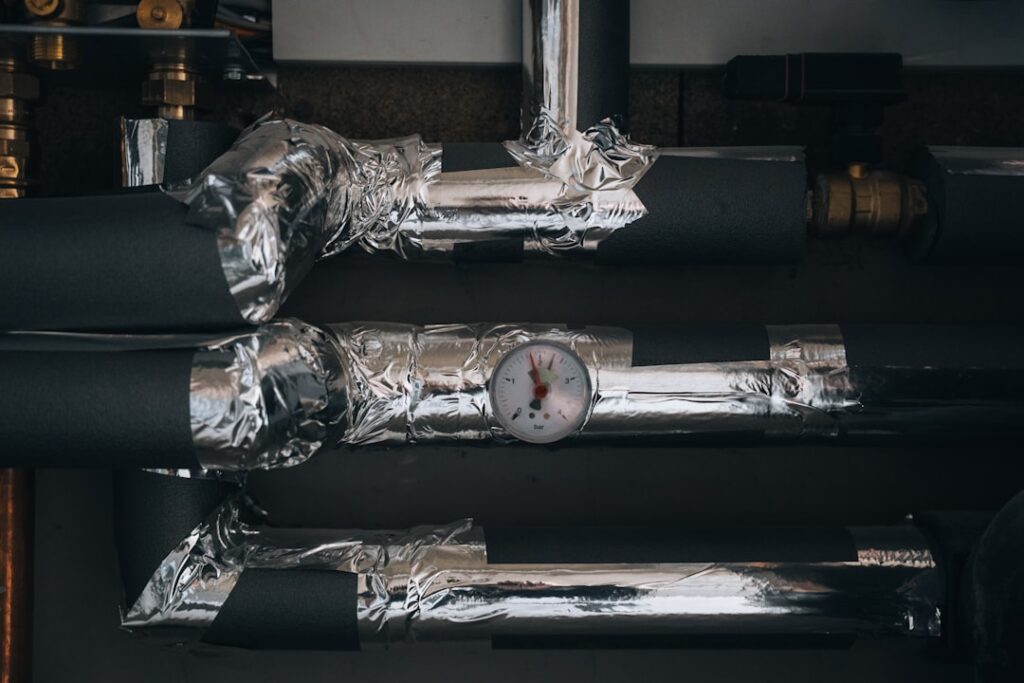
Most people picture pink batts in an attic when they hear “insulation,” but there is an entire discipline devoted to wrapping the working guts of a building. Mechanical insulation covers the pipes, ducts, tanks, boilers, and equipment that move heat and water through a home or facility, and it is one of the most cost-effective energy measures available — often paying for itself within a year or two. An uninsulated hot water line bleeds heat into the crawlspace the whole way to your faucet. An uninsulated cold duct sweats and drips. Wrapping these systems fixes both problems at once and keeps the energy where you actually want it.
Defining Mechanical Insulation
The term draws a line between building insulation and system insulation. Building insulation goes in walls, roofs, and floors to slow heat loss through the structure. Mechanical insulation, by contrast, is applied to the mechanical systems themselves — anything that carries heat, cold, or fluid. That includes hot and chilled water pipes, HVAC ductwork, water heaters, boilers, refrigerant lines, and industrial process equipment.
The goal is to control heat transfer at the source. When a pipe carries 130°F water, every foot of bare pipe dumps heat into the surrounding air. Insulate it, and that heat stays in the water where it belongs, arriving hot at the tap and cutting the energy needed to reheat it.
Why It Matters: Four Core Benefits
Mechanical insulation earns its place through a handful of concrete, measurable wins that stack up fast in any building.
- Energy savings: insulating hot pipes and ducts cuts standby and distribution losses, often the fastest-payback efficiency upgrade in a building
- Condensation control: wrapping cold pipes and ducts stops the sweating that drips water, rots materials, and breeds mold
- Personnel safety: insulation keeps the surface of a hot pipe or tank cool enough to touch, preventing burns
- Process and comfort control: water arrives at the intended temperature, and the equipment runs less to maintain it
Freeze protection is a fifth, often-overlooked benefit — insulated pipes in unheated spaces resist freezing far longer than bare ones, though insulation alone slows heat loss rather than adding heat.
Common Materials and Where They Fit
No single material does every job, because a chilled water line, a boiler flue, and a hot water pipe face very different conditions. The main families each suit a temperature range and application.
Fiberglass
Molded fiberglass pipe wrap and duct board are the workhorses for moderate temperatures, common on hot water and HVAC systems. They are inexpensive, easy to cut, and typically wrapped with a foil-kraft facing that adds a vapor barrier.
Elastomeric Foam
Flexible closed-cell rubber tubing, the black foam sleeves you see on refrigerant and chilled water lines. Its closed-cell structure resists moisture, making it the go-to for cold applications where condensation is the enemy. It slips over pipe and self-seals with adhesive at the seams.
Mineral Wool
Spun stone fiber that handles high temperatures — boilers, steam pipes, and flues — where fiberglass would fail. It is also highly fire-resistant and a strong sound absorber.
Polyethylene and Foam Sleeves
Low-cost split foam tubes for residential hot and cold water pipes, the kind homeowners buy at the hardware store for a few dollars per length and snap on themselves.
The Role of the Jacketing
The insulation is only half the system; the outer covering, called jacketing, protects it and often provides the vapor barrier. On cold lines, an unbroken vapor barrier is essential — if humid air reaches the cold pipe surface through a gap, it condenses inside the insulation, ruins its performance, and grows mold. That is why seams, fittings, and valve covers must be sealed continuously.
Jacketing also handles the real world: PVC or aluminum covers shield insulation from physical damage, UV, and moisture on exposed runs and outdoors. In a mechanical room, a neat aluminum or PVC jacket is not just cosmetic — it keeps the insulation dry and intact for decades.
Where You’ll Find It
Mechanical insulation shows up anywhere systems move heat or fluid, from a modest house to a hospital. In a typical home, the prime targets are the first several feet of hot water pipe off the water heater, any pipes or ducts running through unconditioned crawlspaces and attics, and the water heater tank itself if it lacks a modern integral jacket.
- Hot water distribution pipes — the highest-value residential wrap, saving heat on every draw
- HVAC ducts in unconditioned space — insulated duct wrap stops massive energy loss in attics
- Chilled water and refrigerant lines — elastomeric foam prevents condensation drips
- Water heaters and boilers — reduce standby losses
- Commercial and industrial equipment — tanks, chillers, and process piping
Sizing and Thickness
Getting the thickness right is where mechanical insulation goes from decorative to effective. Thickness is specified by pipe diameter and fluid temperature — the hotter or colder the contents and the larger the pipe, the more insulation it takes to control losses. Industry tables and energy codes publish recommended thicknesses, and cutting them short leaves easy savings on the table.
Fit matters just as much. Pipe insulation is sized to the actual pipe outside diameter, and a sleeve that is too large leaves an air gap that convects heat, while one forced onto too small a pipe compresses and loses R-value. Buy the size that matches your pipe and seal every joint.
The Payback: Why It’s Worth It
Few building upgrades pay back as quickly as mechanical insulation, which is why it is a standard measure in energy audits. An uninsulated hot water pipe or valve continuously radiates heat you paid to create, and the losses add up around the clock, every day of the year. Insulating those surfaces captures that heat, and the savings often recoup the modest material cost within one to two years — sometimes faster on high-temperature systems.
Consider a simple home example: insulating the first six feet of hot water pipe off a water heater keeps water hotter longer, gets hot water to the tap faster, and reduces the energy the heater burns to maintain temperature. Across a whole building’s worth of pipes, ducts, and equipment, the cumulative effect is substantial. On the cold side, preventing condensation avoids not just energy loss but water damage, mold remediation, and premature equipment failure — costs that dwarf the price of the insulation. When you factor in personnel safety and freeze protection, the case becomes overwhelming.
Common Mistakes to Avoid
Mechanical insulation only performs when it is installed correctly, and a few recurring errors quietly cancel its benefits. The most damaging is a broken vapor barrier on cold-line insulation — any gap at a seam, fitting, or valve lets humid air reach the cold surface, where it condenses inside the insulation, ruins the R-value, and grows mold. Continuous sealing is not optional on chilled systems.
- Undersized thickness: using too thin a wrap leaves easy energy savings on the table
- Poor fit: oversized sleeves leave convecting air gaps; over-compressed insulation loses R-value
- Skipping fittings and valves: uninsulated elbows and valves become concentrated heat-loss points
- Wrong material for the temperature: fiberglass on a high-temp steam line or foam on a hot flue is a failure waiting to happen
- No jacketing on exposed runs: unprotected insulation absorbs moisture and gets damaged
Insulate the whole run — including the awkward fittings people skip — seal every seam, and match the material to the operating temperature, and the system delivers its full rated benefit.
DIY vs. Professional Application
Snapping foam sleeves onto accessible household hot water pipes is a genuine DIY win — a few dollars per pipe, a utility knife, and an afternoon can trim your water heating bill and get you hot water faster at the tap. Sealing duct joints and wrapping attic ductwork is likewise a reasonable homeowner project with foil tape and duct wrap.
Larger systems, high-temperature piping, chilled water with strict vapor barriers, and jacketed mechanical-room work are jobs for insulation professionals, who size the material, achieve continuous vapor barriers, and finish with proper jacketing. Whether you do it yourself or hire out, the principle is the same: the energy you have already paid to heat or cool should not leak out of a bare pipe on its way to doing its job. Wrapping those systems is quiet, unglamorous, and among the smartest efficiency money a building can spend.


