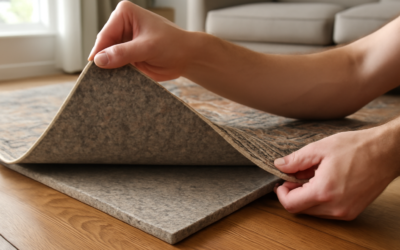
A memory foam rug pad turns an ordinary area rug into something you actually want to stand and sit on. By adding a layer of soft, cushioning foam beneath the rug, it delivers a plush, sink-in feel that thin rugs simply cannot provide on their own. For living rooms, bedrooms, and nurseries where comfort matters more than heavy traffic, it is one of the easiest upgrades you can make.
That said, memory foam is not the right pad for every situation. Knowing how it compares to felt and rubber pads, and where each type shines, helps you spend wisely and protect your floors.
A rug pad is one of the most overlooked purchases in a room, yet it shapes how the rug feels, how long it lasts, and how safe it is underfoot. Skip the pad and even a thick rug can feel thin over a hard floor, slide around dangerously, and wear out faster as the fibers grind against the surface below. Memory foam addresses the comfort side of that equation better than almost any other material, which is exactly why it has become such a popular choice for the rooms where people actually relax.
What a Memory Foam Pad Does
Memory foam is a viscoelastic material that compresses under pressure and slowly rebounds. Under a rug, that means it cradles your feet, softens hard floors, and adds a noticeable layer of warmth and quiet. Footsteps feel cushioned, and the rug gains a luxurious depth it would not have over bare floor or a thin pad.
The same softness that makes memory foam comfortable, however, makes it less suited to holding a rug perfectly still under heavy use. It excels at comfort, not anchoring.
Memory Foam vs. Felt vs. Rubber
The three most common rug pad materials serve different goals:
- Memory foam: maximum plush comfort and cushioning; best for low-traffic rooms where you want softness underfoot.
- Felt: dense and supportive; protects floors, adds stability and a bit of cushion, and holds up under furniture and traffic.
- Rubber (natural): the best grip; keeps rugs from sliding on hard floors and is ideal for smaller rugs and high-traffic zones.
Many of the best all-around pads combine layers, pairing a memory foam or felt top for comfort with a natural rubber bottom for grip. If you want both plushness and a rug that stays put, a foam-and-rubber combination pad is usually the smart choice.
Choosing the Right Thickness
Rug pad thickness is a balance between comfort and practicality. Common options run from about a quarter inch up to half an inch or more.
- 1/4 inch: a good general-purpose thickness that adds comfort without raising the rug enough to trip on or block a door.
- 3/8 to 1/2 inch: plusher and warmer, ideal for bedrooms and living areas where comfort is the priority.
- Thicker than 1/2 inch: very cushioned but can make a rug feel unstable and create a noticeable lip at the edges.
Consider door clearance and transitions between rooms. A thick pad under a rug near a door can stop the door from swinging freely.
Protecting Your Floors
This is where pad choice matters most, especially over hardwood, luxury vinyl, or laminate. Some inexpensive foam and rubber pads use adhesives or PVC and clay fillers that can react with floor finishes, leaving sticky residue or discoloration over time, particularly under sunlight and heat.
- Look for pads labeled safe for hardwood and sealed floors.
- Favor natural rubber over cheaper synthetic backings that may off-gas or stick.
- Lift and air the rug and pad occasionally so moisture does not get trapped underneath.
- Avoid solid waterproof pads on hardwood, since they can prevent the floor from breathing.
When in doubt, choose a reputable pad designed specifically for your floor type rather than the cheapest option available.
Where Memory Foam Pads Work Best
Memory foam shines in spaces where soft comfort is the goal and foot traffic is moderate:
- Bedrooms, where you step out of bed onto a cushioned surface.
- Living rooms used for lounging, reading, or floor play.
- Nurseries and kids’ rooms, where a softer surface adds comfort for tummy time and play.
- Under accent rugs in low-traffic corners.
For entryways, hallways, kitchens, and other high-traffic areas, a denser felt-and-rubber pad will hold up better and keep the rug flatter. Memory foam can compress and flatten faster under constant heavy traffic.
Comfort, Warmth, and Sound
The benefits of a memory foam pad go beyond a soft step. That cushioning layer also acts as insulation, adding a noticeable barrier between your feet and a cold floor in winter, which makes it especially welcome over tile, concrete, or a chilly basement slab. The same density that traps warmth also absorbs sound, dampening footsteps and reducing the echo in rooms with hard surfaces and minimal furniture.
For apartments and upstairs rooms, that sound dampening is a real perk; a thick pad under a rug muffles the impact noise that travels to the unit or floor below. It also reduces wear on the rug itself. Without a pad, a rug grinds directly against the floor, and foot traffic crushes the fibers against a hard surface, accelerating matting. The cushion of foam lets fibers compress and rebound, extending the life of an expensive rug.
One tradeoff to keep in mind: very soft, thick foam can feel unstable under a chair or a heavy piece of furniture, which may sink in and tip. In rooms with such furniture, a firmer felt-and-rubber pad provides better support where it counts.
Buying and Sizing Tips
A few practical pointers make for a better purchase. Size the pad about one inch smaller than the rug on all sides so it stays hidden beneath the edges and the rug can taper cleanly to the floor. Pads cut easily with scissors or a utility knife, so buying slightly large and trimming to fit is common and fine. Check whether the product lists both comfort and grip features, since a pure foam pad may need a separate non-slip layer on slick floors.
Used in the right room, a memory foam rug pad is a small, affordable change that makes a space feel dramatically more comfortable. Pair it with a grippy backing, size it correctly, and confirm it is floor-safe, and you get plush comfort without sacrificing safety or your floor finish.