Most people buy a rug and stop there, never realizing that the unglamorous layer underneath does half the work. A quality felt rug pad adds plush cushioning underfoot, protects your floor from scratches and indentations, and helps the rug lie flat and wear evenly. Felt pads are prized for their dense, supportive feel, making them a favorite for large area rugs in living rooms and bedrooms. Knowing how felt compares to other pad types and how to choose the right thickness will help you get the most from any rug you own.
- What a Felt Rug Pad Does
- Felt vs. Rubber vs. Combination Pads
- Choosing the Right Thickness
- Protecting Your Floors
- Sizing Your Rug Pad
- Care and Longevity
- Felt Pads for Different Floor Types
- Signs You Need a Better Pad
- How to Cut a Felt Pad to Size
- Is a Felt Rug Pad Worth It?
- Is a Wool Rug Pad Worth Choosing Over Synthetic Felt?
What a Felt Rug Pad Does
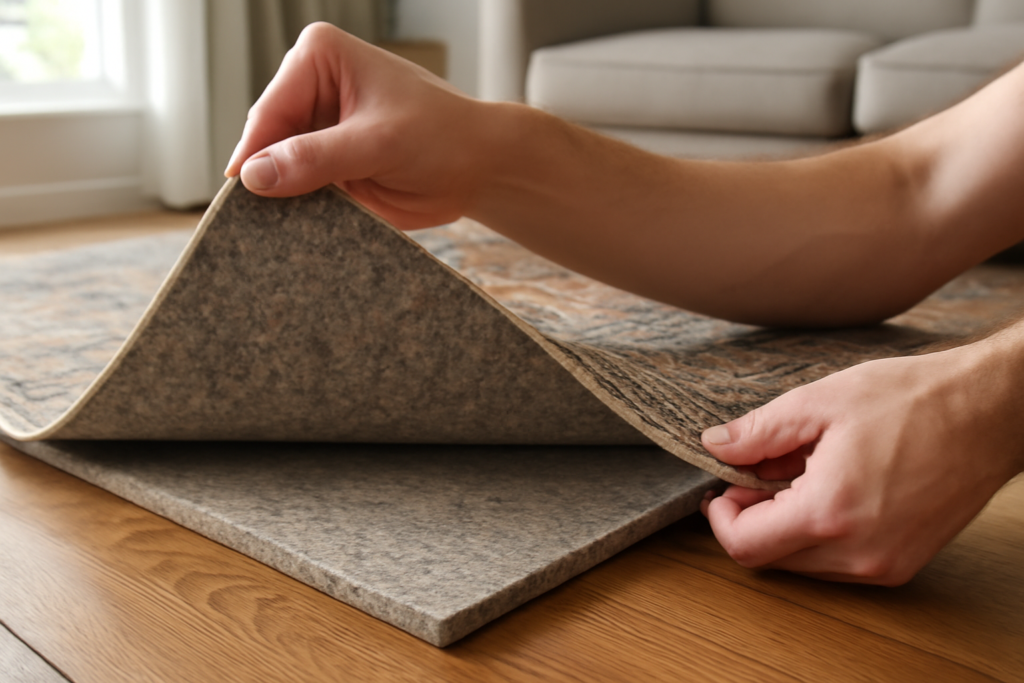
A felt pad serves several jobs at once. First, it adds cushion, turning a thin rug into something soft and comfortable to stand and sit on. Second, it absorbs impact, reducing the wear that traffic puts on the rug’s backing so the rug lasts longer. Third, it acts as a barrier between the rug and the floor, preventing scratches on hardwood and dye transfer that can stain light surfaces.
It also adds a small amount of sound dampening and insulation, which is why rooms with rugs over felt pads feel quieter and warmer.
Felt vs. Rubber vs. Combination Pads
Rug pads generally fall into three camps, and the differences matter depending on your floor and rug size:
- Pure felt: Thick, dense, and cushioning. Excellent for large or heavy rugs that stay put on their own, and gentle on hardwood. Offers less grip on its own.
- Rubber (natural): Thin and grippy, designed to keep small rugs from sliding on hard floors. Less cushion, more anti-slip.
- Felt-and-rubber combination: The best of both worlds for many homes. Felt provides cushion on top while a natural rubber bottom grips the floor. Ideal for mid-size rugs that need both comfort and slip resistance.
A large, heavy rug often does fine on pure felt, while a smaller rug that tends to wander benefits from a felt-rubber combo.
Choosing the Right Thickness
Felt pads come in varying densities, often measured in ounces per square yard, and in thicknesses typically ranging from about 1/8 inch up to 1/2 inch. Thicker pads feel more luxurious but can be too tall under doors or in transition areas. As a general guide:
- Thin (around 1/4 inch): A good all-purpose choice that adds noticeable comfort without raising the rug too high.
- Thick (3/8 to 1/2 inch): Maximum plushness for bedrooms and living rooms where comfort is the priority and door clearance is not an issue.
Match the pad to where the rug lives, accounting for door swing and any height-sensitive transitions.
Protecting Your Floors
One of the biggest reasons to use felt is floor protection. On hardwood, certain rubber and synthetic pads can react with floor finishes over time and leave marks or discoloration. A felt pad or a felt-natural-rubber combination is generally the safest choice for sealed wood floors. Always confirm the pad is labeled safe for your specific floor type, and avoid cheap plasticky pads that can off-gas or stick to finishes.
Sizing Your Rug Pad
Cut or order the pad slightly smaller than the rug, typically about an inch in from each edge on all sides. This keeps the pad invisible and prevents the edges of the rug from curling up over a pad that sticks out. Most felt pads can be trimmed easily with sharp scissors or a utility knife, so a non-standard rug size is no obstacle.
Care and Longevity
Felt rug pads are low-maintenance and long-lasting. Vacuum the rug normally; the pad does its work underneath without attention. If you lift the rug for cleaning, let any trapped moisture dry before laying it back down. Quality felt pads can outlast several rugs, so it is worth buying a good one rather than the thinnest option on the shelf.
Felt Pads for Different Floor Types
The floor underneath your rug should guide your pad choice. On hardwood and other sealed wood floors, a pure felt or felt-natural-rubber pad is the safest option, since some synthetic and adhesive-backed pads can react with the finish and leave marks. On tile and stone, felt adds cushion over the hard, cold surface and a combo pad keeps the rug from sliding. Over existing carpet, a thin felt pad can add stability and comfort, though some homeowners skip a pad in that case.
Whatever the floor, confirm the pad is labeled compatible with your surface, and avoid bargain plastic pads that can stick to or discolor finishes over time.
Signs You Need a Better Pad
A few telltale signs mean your current pad, or lack of one, is letting you down:
- The rug slides or bunches: You need more grip, often a felt-rubber combination.
- The rug feels thin and hard: A thicker felt pad will add the cushion you are missing.
- The rug edges curl: The pad may be too small or too thin to keep the rug flat.
- Floor marks appear: A non-safe pad may be reacting with your finish; switch to felt or a floor-safe combo.
Addressing these early protects both your rug and your floor.
How to Cut a Felt Pad to Size
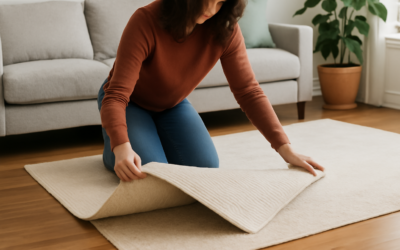
Trimming a felt pad to fit is a simple DIY task. Lay the pad flat on the floor and unroll the rug on top of it, centered. Trace the rug’s outline lightly, then move the rug aside and cut the pad about an inch inside that line on all sides so the pad stays hidden under the rug edges. Sharp household scissors handle thinner felt, while a utility knife works better on dense or thick pads. Cut slowly and in straight strokes for clean edges. Because felt does not fray, you do not need to finish the cut edges, which makes custom sizing for odd-shaped rugs quick and forgiving.
Is a Felt Rug Pad Worth It?
For comfort, floor protection, and extending the life of your rug, a felt rug pad is one of the best small investments you can make. Choose pure felt for large, stable rugs, a felt-rubber combination for rugs that need grip, and a thickness that suits the room and door clearance. Size it an inch in from the rug’s edges, confirm it is safe for your flooring, and you will feel and see the difference every time you walk across the room.
Is a Wool Rug Pad Worth Choosing Over Synthetic Felt?
Most felt pads on the market are made from recycled synthetic fibers pressed into a dense mat. A wool rug pad uses natural sheep’s wool, sometimes blended with jute or cotton, and it behaves differently underfoot and over time. Knowing those differences helps you decide whether the higher price makes sense for your rug and room.
What Sets Wool Apart
Wool fibers are naturally crimped, so a wool pad springs back after furniture or foot traffic compresses it. That resilience means fewer permanent dents under sofa legs and a cushion that keeps its loft for many years. Wool also absorbs and releases humidity, which helps keep the space between rug and floor from staying damp after spills or seasonal changes. It is naturally slow to ignite and tends to self extinguish, and a pure wool pad usually has little to no chemical odor when unrolled, which appeals to households sensitive to off gassing.
Where a Wool Pad Makes the Most Sense
- Hand knotted and antique rugs: the gentle, breathable cushion reduces wear on knots and foundation threads, and many rug restorers prefer natural fibers under valuable pieces.
- Wool rugs: pairing like with like lets both layers handle moisture the same way.
- Bedrooms and nurseries: spaces where low odor and natural materials are a priority.
- Radiant heated floors: a thinner wool pad lets warmth pass through while still adding comfort. Check the floor system’s guidance for maximum pad thickness.
Drawbacks to Plan For
Wool costs noticeably more than synthetic felt, often double or more for the same size. Pure wool has little grip, so smaller rugs still need a version with a natural rubber backing to stay in place. Wool can attract moths and carpet beetles if the area stays dark and undisturbed, so vacuum under the rug edges and lift the rug to inspect the pad once or twice a year, especially in closets or rarely used rooms. Heavy saturation, such as a pet accident that soaks through, should be blotted and dried quickly with fans, since wool holds liquid longer than dense synthetic felt.
Shopping Checks Before You Buy
- Read the fiber content. Some pads advertised as wool contain only a small percentage blended with synthetic fiber.
- Ask about density. A heavier weight per square yard indicates more fiber and longer lasting cushion.
- Look for third party certifications covering emissions or organic sourcing if indoor air quality matters to you.
- Confirm any rubber layer is natural rubber, not PVC or adhesive coatings that can mark finished wood.
For a valuable or heirloom rug, a wool pad is a sensible way to protect the investment. For a budget rug in a busy room, quality synthetic felt usually delivers similar comfort for less.