
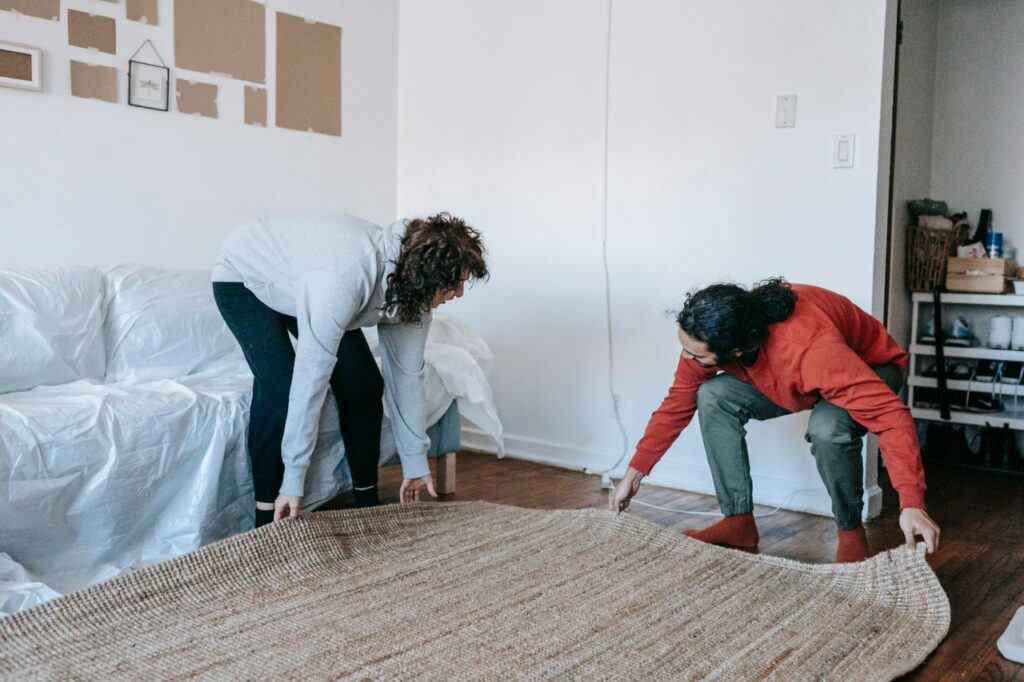
The wrong rug pad can destroy a hardwood floor faster than pet accidents or water damage. Cheap PVC pads discolor wood finishes within a year, and bargain foam pads break down into powder that never vacuums out. The best rug pad is felt-and-rubber hybrid, matched to your floor type, and sized 1 inch smaller than the rug on all sides. Getting this right protects the floor, the rug, and your neck when someone slips on an unpadded runner.
Why a Rug Pad Actually Matters
Four functions justify the $40-$200 cost of a quality pad:
- Grip – keeps the rug from sliding and bunching underfoot
- Floor protection – prevents rug backing from scratching or discoloring the floor
- Rug longevity – cushions the pile from foot pressure, doubling rug lifespan
- Comfort and insulation – adds R-value and softness underfoot
Skipping a pad saves $80 and costs you a $3,000 area rug 5 years earlier than necessary. Not a good trade.
The Four Main Rug Pad Types
- Felt-and-natural-rubber hybrid: Dense felt top bonded to natural rubber backing. The premium standard for hardwood and high-traffic areas. Brands: Rug Pad USA Superior, Mohawk Dual Surface, Gorilla Grip Premium.
- 100 percent natural rubber: Thin, grippy, no cushion. Best under thin kitchen or entry rugs.
- Pure felt (no rubber): Zero grip but maximum cushion. Best under wall-to-wall area rugs or in rooms where furniture holds the rug in place.
- PVC waffle pads: The hardware-store cheap option. Avoid on hardwood – PVC plasticizers migrate and discolor polyurethane wood finishes within 6-12 months.
Best Overall: Felt-and-Rubber Hybrid
For 90 percent of households, a 1/4-inch or 3/8-inch felt-and-rubber pad is the right answer. It grips the floor, cushions the rug, and is safe on every common floor finish. Expected lifespan is 10-15 years.
Top picks:
- Rug Pad USA Superior Lock: 100 percent natural rubber bottom, recycled felt top. 1/4 or 3/8 inch. $80-$200 for an 8×10.
- Mohawk Home Dual Surface: Widely available at big-box, good mid-price option. $40-$90 for an 8×10.
- RugPadUSA Anchor Grip: Thinner profile for under doors, strong grip.
Rug Pad Material Safety by Floor Type
Hardwood (oil or poly finish): felt-and-natural-rubber only. No PVC, no synthetic rubber, no adhesive-backed pads.
LVP and laminate: felt-and-natural-rubber is safe. Some premium LVP manufacturers (COREtec, Karndean) note that certain rubber compounds can leave marks – check the specific rug pad’s floor-safety statement.
Tile: any pad type is safe. Natural rubber grips best on tile.
Radiant-heated floors: use a thin (1/8-inch) felt-rubber hybrid rated for radiant heat. Thick pads insulate the heat and reduce efficiency.
Thickness and Cushion
Thickness options: 1/8 inch (low profile, door clearance), 1/4 inch (standard), 3/8 inch (premium cushion), 1/2 inch (luxury, reduces door clearance significantly).
Thicker pads cushion the rug pile longer but may prevent doors from closing. Measure the gap under interior doors before buying a 3/8-inch pad. For dining rooms, thicker is better because dining chairs distribute pressure over the rug – 3/8 or 1/2 inch is ideal.
Sizing the Pad Correctly
Size the pad 1 inch smaller than the rug on all sides. This hides the pad completely while supporting the rug’s edges. An 8×10 rug needs a 7’10” x 9’10” pad.
Custom sizing: order a pad slightly larger than needed and cut with a sharp utility knife and straightedge. Felt-and-rubber pads cut cleanly. Measure twice, cut once.
Best Rug Pad for Specific Situations
Under an expensive wool rug: pure felt (7 oz per sq yard or heavier). No rubber bottom to trap moisture or react with wool.
Runner on hardwood stairs or hallway: thin felt-and-rubber, 1/8 inch. Full grip, minimal bulk.
Kitchen anti-fatigue: a dedicated gel or foam kitchen mat is better than an area rug pad. Different products for different needs.
Rug on carpet: thin grip-only pad (Mohawk Rug-on-Rug Gripper). The carpet provides cushion.
Pet households: choose a pad with waterproof or moisture-barrier construction. Rug Pad USA Anchor Grip 2 in 1 has a fluid-resistant barrier to protect the hardwood below.
What to Avoid
- PVC waffle pads – stain hardwood finish
- Adhesive-backed pads – leave residue on floors
- Foam pads (open-cell) – crumble within 1-2 years
- Pads labeled “natural rubber” without a clear manufacturer (some are synthetic rubber mislabeled)
- Free pads from rug retailers – almost always PVC or low-quality foam
Installation Tips
Vacuum the floor thoroughly before laying the pad. Debris trapped under a pad causes point wear on the floor finish. Unroll the pad rubber-side-down. Let it relax 24 hours before placing the rug. Place the rug centered on the pad and smooth from center outward.
Rotate the rug and flip the pad (if symmetrical) every 6 months to even out compression and wear.
Maintenance
Vacuum the rug on top of the pad normally. Every 6-12 months, lift the rug, shake the pad outdoors, and vacuum the floor underneath. Pads do not need washing unless they get wet from a spill – in which case, air dry flat before reinstalling.
Replace pads every 10-15 years for felt-rubber, or when the rubber becomes crumbly or the felt compresses flat.
Budget Benchmarks
2×3 scatter: $15-$35
4×6: $30-$70
5×8: $50-$110
8×10: $80-$180
9×12: $120-$250
Custom or oversize: add 20-30 percent
Bottom Line
The best rug pad is a felt-and-natural-rubber hybrid, 1/4 or 3/8 inch thick, sized 1 inch smaller than the rug. Rug Pad USA and Mohawk dominate the premium and mid-market tiers. Avoid PVC, foam, and adhesive-backed pads. A $100 pad under a $2,000 rug extends rug life, protects the floor, and prevents slips. It is the cheapest insurance policy in the home.


