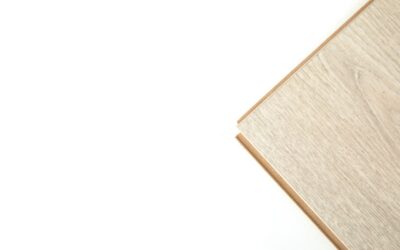
Run your thumbnail along the edge of a modern hardwood or laminate plank and you will feel a faint groove between boards. That groove is a micro bevel, and it has quietly become the dominant edge profile in residential flooring over the last fifteen years. Micro bevel flooring sits between traditional square-edge and old-school full-bevel construction, offering the visual definition of individual planks without the dust-trap reputation of a deep V-groove. The trade-off, though, is real, and not every room is a good fit.
- What Counts as a Micro Bevel
- Why Manufacturers Switched to Micro Bevels
- The Dust and Grit Question
- Visual Effect in Different Rooms
- Pros of the Micro Bevel Profile
- Cons to Weigh Before Specifying
- Price Premium Versus Square Edge
- Brand and Product Picks
- Cleaning and Maintenance Routine
- Is Micro Bevel the Right Choice
What Counts as a Micro Bevel
A true micro bevel is a chamfered edge between 0.5 mm and 1.5 mm deep, machined at roughly a 30 to 45 degree angle along both long edges of the plank. Some manufacturers add a matching micro bevel on the short ends; others leave the ends square. The width of the visible groove from above runs about 1/64 to 1/32 inch, which is enough to read as a defined plank line without becoming a maintenance liability.
Compare that to a full or pillowed bevel at 2 to 4 mm deep, which casts a visible shadow line and creates a noticeable channel between boards. Square edge has zero bevel and reads as a flat unbroken plane.
Why Manufacturers Switched to Micro Bevels
Modern click-lock floating floors do not lay perfectly flat over imperfect subfloors. A subfloor with 1/8 inch dip over 6 feet will telegraph as a slightly raised edge between two adjacent planks. Square-edge construction makes that height difference visible as a glare line under direct light. A micro bevel hides minor height mismatches because the eye reads the chamfer as intentional rather than a defect. The bevel forgives roughly 1/64 inch of height variation that would otherwise look like a flaw.
Pergo TimberCraft, Mohawk RevWood, Shaw Floorte Pro, and most premium laminate SKUs ship with micro bevels on all four sides for exactly this reason. Engineered hardwood from Bruce, Mannington, and Mullican often offers a choice between square edge and eased (micro bevel) versions at the same price.
The Dust and Grit Question
The single most common objection to beveled flooring is the assumption that crumbs and grit fall into the grooves and create cleaning nightmares. That is true of full bevels at 2 to 4 mm depth. It is largely false of micro bevels at 0.5 to 1.5 mm. The groove is too shallow to retain debris that a standard upright vacuum cannot lift out. The exception is sand and fine grit tracked in from outside, which can pack into the bevel and dull the finish along the edge over time. A walk-off mat at every exterior door eliminates 80 percent of the problem.
Liquid spills are a different story. Water and pet urine can wick along a micro-beveled edge into the joint slightly faster than a tight square-edge floor. The difference is measured in seconds, not minutes, and any spill cleaned up within 5 minutes is a non-issue.
Visual Effect in Different Rooms
Micro bevels exaggerate the perception of plank width and length. A 7 inch wide by 60 inch long plank with a micro bevel reads as larger than the same plank with a square edge because the eye separates each plank cleanly. This is a feature in great rooms and open-concept spaces where you want the wide-plank look to register. It can be a downside in small rooms where the line work makes the space feel busier than it is.
Hand-scraped and wire-brushed visuals benefit from micro bevels because the chamfer reinforces the rustic aesthetic. Smooth, minimalist contemporary visuals sometimes work better in square-edge construction where the floor reads as one continuous plane.
Pros of the Micro Bevel Profile
- Forgives 1/64 inch subfloor variation that telegraphs on square-edge floors
- Defines each plank visually without the dust-trap depth of full bevels
- Hides micro-gapping during seasonal humidity swings
- Available on most major hardwood, laminate, and LVP product lines
- Looks cleaner over imperfect concrete or plywood subfloors
Cons to Weigh Before Specifying
Refinishing solid hardwood with a micro bevel is harder than refinishing a square-edge floor. Drum sanders cut the bevel edge first and can either eliminate the chamfer or create scallop marks if the operator is inexperienced. Most refinishers recommend leaving the bevel intact and sanding only to the bevel shoulder, which limits how much material you can remove on each refinish cycle.
Tight grout-like grout lines do not work with micro bevels. If you want a porcelain-tile aesthetic with grouted joints, specify square-edge LVT or tile rather than fighting the bevel geometry.
Price Premium Versus Square Edge
There is almost no price premium between square-edge and micro-beveled versions of the same product line. Most factory tooling cuts both edges in the same milling pass, and SKUs run within $0.10 per sq ft of each other. Hand-scraped premium hardwoods sometimes charge $0.50 per sq ft more for the eased edge because the bevel is shaped to follow the scraping pattern.
For a typical 800 sq ft installation, the bevel decision adds at most $80 to materials. That is a no-brainer compared with the install forgiveness it buys on imperfect subfloors.
Brand and Product Picks
Pergo Outlast Plus runs 0.8 mm micro bevels on all four sides across most SKUs and is the budget benchmark at $2.69 to $3.99 per sq ft. Mohawk RevWood Premier offers 1.0 mm micro bevels with a water-resistant core at $3.49 to $4.99. COREtec Pro Plus LVP runs 0.5 mm enhanced micro bevels with painted edges that match the plank visual, available at $4.50 to $6.50 per sq ft. Mannington Restoration Collection laminate ships with deeper 1.2 mm bevels that lean into the rustic aesthetic for traditional and farmhouse rooms.
Cleaning and Maintenance Routine
A weekly soft-bristle broom or microfiber sweep clears anything that lands in the bevel. Monthly vacuum with a hard-floor setting (beater bar off) lifts deeper grit. For sticky residue, a damp microfiber mop with a pH-neutral cleaner like Bona Hardwood Floor Cleaner or Bruce Hardwood and Laminate Cleaner works without flooding the joints. Avoid steam mops on any beveled floor, hardwood, laminate, or LVP. Steam pushes moisture into the bevel and over time degrades the finish at the edge.
Is Micro Bevel the Right Choice
For 90 percent of residential installs over wood-framed subfloors or imperfect concrete, micro bevel flooring is the smarter pick than square edge. The small chamfer hides install variability, defines the plank visually, and adds almost nothing to the cost. Save square edge for showroom-flat slabs and minimalist designer projects where the budget includes a perfect substrate. For everyone else, the bevel is doing quiet work every day to make the floor look better than the subfloor underneath would otherwise allow.
Prefer to explore on your own?
See how new flooring looks in your actual room in seconds — free, no signup.
Try the free Floor Studio →