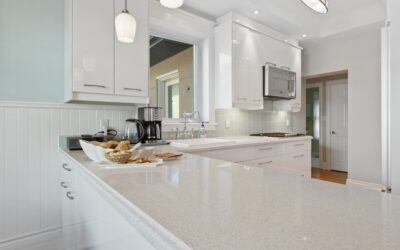
White and light-toned stone has dominated kitchen design for a decade, and homeowners who want the look without the fragility of marble keep circling back to one option. Mirage White granite delivers a bright, airy surface with the durability of natural granite, giving you the clean backdrop of a white kitchen while standing up to real cooking. It reads as soft and neutral from across the room, then reveals subtle gray and beige movement up close, which is exactly the balance many buyers are after.
Part of our Countertops guide — explore the full guide →
This guide covers what Mirage White granite actually looks like, where it comes from, what it costs installed, how to care for it, and which cabinets, backsplashes, and finishes make it shine. If you are chasing a light, timeless counter that will not etch the first time someone squeezes a lemon, read on.
What Mirage White Granite Looks Like
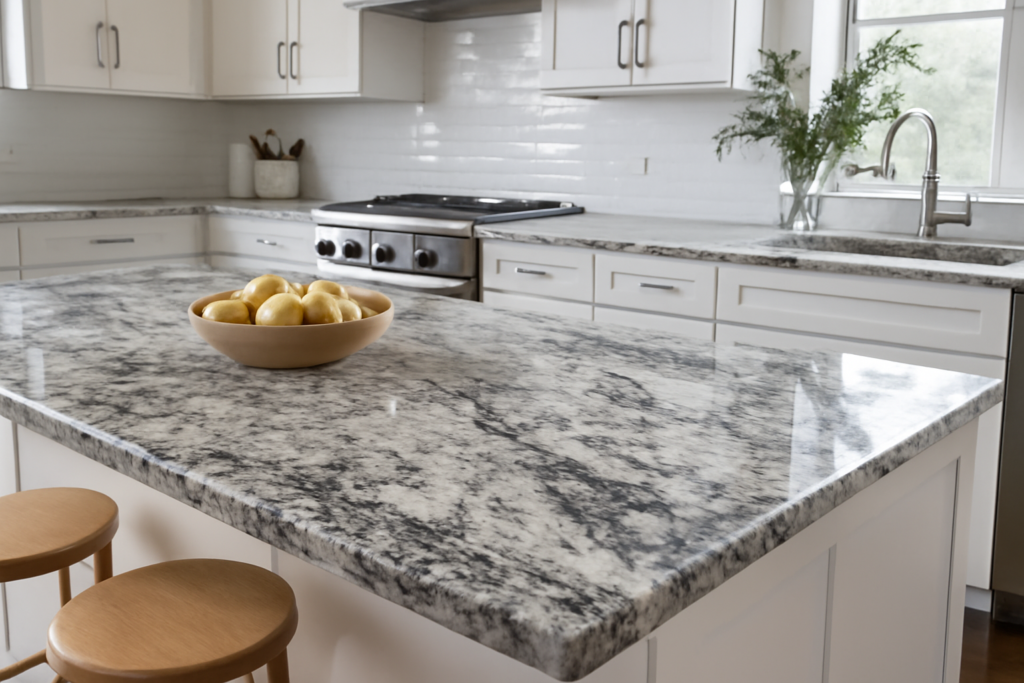
Mirage White is a light granite characterized by a creamy white to pale gray background woven with soft veins and flecks of gray, beige, and occasional darker mineral specks. Unlike bold, high-contrast granites, its pattern is gentle and flowing, which is why it is often chosen as a marble alternative. The overall effect is calm and cohesive rather than busy.
Because it is a natural stone, every slab varies. Some pieces lean cooler and grayer, while others carry warmer beige undertones and more visible movement. This is a genuine advantage over uniform engineered surfaces if you want character, but it also means you should always inspect the actual slabs before purchase rather than relying on a small sample. Ask your fabricator to lay out the full slabs so you can see how the veining will run across your island and perimeter.
Where It Comes From and How It Performs
Like most granite sold in the United States, light stones marketed under names like Mirage White are typically quarried from major stone-producing regions such as Brazil and India, then imported as slabs. Naming can vary between suppliers, so the same or similar stone may appear under slightly different trade names at different fabricators.
Performance is where granite earns its keep. It rates around 6 to 7 on the Mohs hardness scale, making it highly resistant to scratching from knives and everyday tools. It handles heat well, so a hot pan set down briefly will not scorch it the way it can damage engineered quartz. The one caveat common to all natural granite is porosity: lighter stones can absorb liquids more readily than dense dark granites, which makes sealing especially important on a white surface where a coffee or wine stain would show.
Mirage White Granite Cost
Light granites like this generally fall in the mid-range of the granite market. Expect roughly $45 to $100 per square foot installed, depending on slab quality, thickness, edge profile, and your local fabrication rates.
- Material only: $25 to $60 per square foot
- Fabrication and standard edge: $20 to $40 per square foot
- Sink and faucet cutouts: $100 to $300 total
- Premium edges (ogee, mitered): add $10 to $40 per linear foot
A typical 40-square-foot kitchen therefore lands somewhere between $1,800 and $4,000. Pricing climbs with rarer slabs that show more dramatic veining and with thicker 3-centimeter stone, which most fabricators recommend for durability and a substantial edge.
Sealing and Maintenance
A white granite counter looks best when you stay ahead of stains, and that starts with sealing. Have the fabricator seal the stone at installation, then reseal roughly once a year, or whenever a water-drop test shows the surface no longer beads. To test, leave a few drops of water on the counter for a few minutes; if it darkens or soaks in, it is time to reseal.
Daily care is simple. Wipe spills promptly, especially acidic ones like citrus juice, wine, and tomato sauce, since a light surface shows discoloration more than a dark one. Clean with warm water and a pH-neutral stone cleaner or a drop of mild dish soap, and skip harsh acids, bleach, and abrasive scrubbers that dull the polish and strip the sealer. With sealing kept current, Mirage White resists staining well and holds its bright appearance for years.
Design Pairings That Work
The neutral palette of this stone makes it remarkably flexible. It pairs cleanly with almost any cabinet color, but a few combinations stand out.
Cabinet Colors
White or light gray cabinets create a bright, seamless, expansive kitchen that feels larger and airy. Navy or deep green lower cabinets set against the pale counter deliver a fresh, modern contrast that has become a designer favorite. Warm wood tones bring out any beige undertones in the stone for a softer, more traditional feel.
Backsplash and Fixtures
A classic white subway tile keeps the look timeless, while a marble-look tile amplifies the luxury feel. For hardware and faucets, brushed nickel and matte black both complement the gray flecks, and warm brass adds a touch of elegance if the stone carries beige tones. Because the granite is subtle, you have freedom to make the backsplash or fixtures the accent.
Mirage White Granite vs. Marble and White Quartz
Most people considering this stone are really choosing between three light surfaces, and the differences are practical rather than cosmetic. Against marble, Mirage White wins on toughness by a wide margin. Marble is calcium carbonate, so it etches dull spots the moment acidic liquids touch it, even when sealed, whereas granite shrugs off the same lemon juice or wine as long as you wipe it up. If you love the marble look but cook with real ingredients, a light granite gives you a far more forgiving daily surface.
Against white quartz, the trade is maintenance for character. Engineered quartz never needs sealing and offers perfectly consistent color, which some buyers prefer, but it can scorch under a hot pan and its uniform pattern can read as flat. Mirage White brings genuine natural movement and better heat tolerance at the cost of a simple yearly seal. There is also a price angle: light granite frequently lands below premium marble-look quartz, so it can be the value pick when you want a real stone surface without the top-tier bill.
Choosing and Comparing Slabs
Because natural granite varies from slab to slab, the selection step carries more weight here than with any manufactured surface. Visit the stone yard and view full slabs upright in daylight rather than approving a hand sample, since a four-inch chip cannot show how the veining flows or how gray or beige the background truly reads. If your project needs more than one slab, ask to see them side by side and confirm they were cut from the same block, or bundle, so the color and movement match across your island and perimeter.
A few practical checks separate a good slab from a problem one. Run your hand across the surface to feel for pits or fissures, which are natural in granite but should not be excessive on a white stone where they collect grime. Ask about the finish, since a polished surface resists staining better and looks brighter than a honed or leathered one, though honed hides water spots. Finally, have the fabricator mark where seams and the sink cutout will fall on the actual slab, so a bold vein or a busy cluster does not end up in the most visible stretch of counter.
Is Mirage White Granite Right for You?
Choose Mirage White granite if you want the light, clean look of marble with the toughness of natural stone and are comfortable with a simple yearly sealing routine. It suits busy kitchens where a durable, heat-resistant, scratch-resistant surface matters, and its neutral movement flatters a wide range of cabinet and backsplash choices. The main commitments are keeping the seal current and wiping acidic spills quickly, small tradeoffs for a bright, timeless counter. See the actual slabs in person, opt for 3-centimeter thickness, and pair it with cabinets and fixtures you love, and this stone will anchor a kitchen that feels fresh for well over a decade.