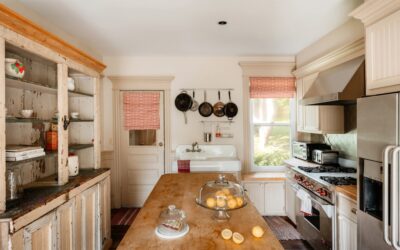
The farmhouse trend has matured. What once meant a wall of generic white subway tile and a barn star above the stove now leans toward a refined mix of texture, warm metals, and natural materials. A great modern farmhouse backsplash reads as collected rather than themed, with details that hold up to a decade of cooking without looking dated. The key is balancing rustic texture with cleaner lines, and avoiding the design clichés that telegraph 2017 Pinterest boards. These are the materials, layouts, and combinations that work in 2026 and beyond.
Part of our Kitchen Remodeling guide — explore the full guide →
- What Defines a Modern Farmhouse Backsplash
- Subway Tile, Reimagined
- Natural Stone for the Range Wall
- Shiplap Backsplash: When to Use It
- Color Palettes That Age Well
- Mixing Materials Without Overdoing It
- Hardware and Lighting That Complete the Look
- Realistic Budget Ranges
- Installation Pitfalls to Avoid
- Keeping the Look Fresh
What Defines a Modern Farmhouse Backsplash
Modern farmhouse is a hybrid style that pulls from traditional country, Scandinavian minimalism, and industrial loft aesthetics. The backsplash carries that vocabulary in three ways. Texture from natural stone or handmade tile. Color in soft neutrals like warm white, sage, and matte black. Metal accents in unlacquered brass, oil-rubbed bronze, or aged nickel.
What separates modern farmhouse from straight farmhouse is restraint. Less distressed wood, more clean grout lines. Less wrought iron, more matte black or brushed brass. The result feels lived-in but intentional.
Subway Tile, Reimagined
Standard 3 by 6 subway tile is still the foundation of most farmhouse backsplashes, but the way you use it matters. The dated version is glossy white subway in a perfect running bond from counter to upper cabinet. The modern version uses one of these variations.
- Handmade or zellige-style subway: Slight color variation and irregular edges deliver depth. Cle Tile and Bedrosians both carry strong options in the $9 to $25 per square foot range.
- Vertical stack: Subway tiles installed vertically in a straight stack feel more contemporary than horizontal running bond.
- Herringbone: Adds movement without breaking the simple material palette.
- Elongated subway: 2 by 8 or 3 by 12 sizes feel updated compared to the standard 3 by 6.
Pair white subway with a contrasting grout in light gray or warm beige. Pure white grout reads sterile and shows every drip. Skip dark gray grout against bright white tile because the contrast feels harsh in person.
Natural Stone for the Range Wall
A focal stone slab behind the range elevates the entire kitchen. The current direction is honed marble, soapstone, or limestone in a single full-height slab rather than smaller cut tile. Honed Carrara marble runs $50 to $80 per square foot installed for a 4 by 5-foot slab. Soapstone runs $75 to $120 per square foot and develops a darker patina with use. Both look authentically old-house without crossing into kitsch.
The slab approach reads as one continuous surface from countertop to underside of the hood, which removes grout lines from the visual cluttered zone above the cooking surface. It is also easier to clean than tile in the splash zone.
Shiplap Backsplash: When to Use It
Painted shiplap as a backsplash is the most divisive material in the modern farmhouse playbook. Done right, in a butler’s pantry or a secondary bar area, it adds texture without competing with the main backsplash. Done wrong, behind a wet kitchen sink or stove, it warps and stains within two years.
If you want shiplap, use it in dry zones only. PVC shiplap from brands like NewTechWood handles moisture better than painted pine and costs $4 to $7 per square foot. Skip MDF shiplap in any wet area, since it swells with the first big spill.
Color Palettes That Age Well
Color choice is where the modern farmhouse backsplash succeeds or fails. The palettes that hold up through multiple kitchen refreshes share a common trait, which is warm neutrals rather than crisp white.
- Warm white tile + Old World gray grout: The most enduring combination. Reads timeless rather than trendy.
- Soft sage green tile + matte black hardware: Current and likely to age well through 2030.
- Creamy beige zellige + unlacquered brass: The most luxe direction, develops character over time.
- Charcoal black slate or honed quartzite + brushed nickel: Moody and dramatic without feeling dated.
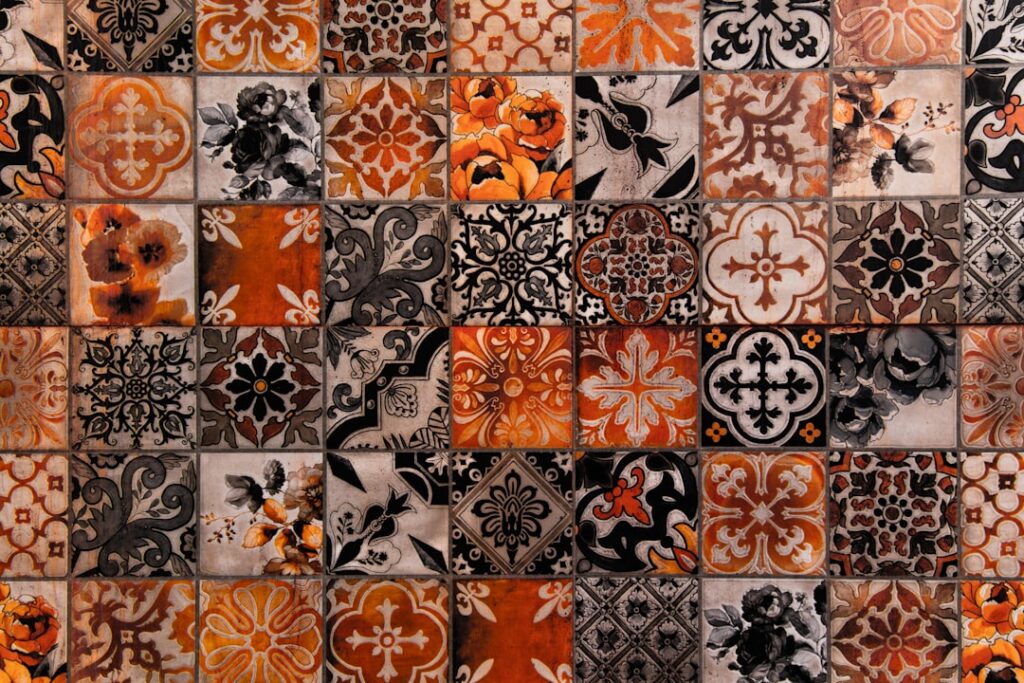
Avoid the cobalt blue, mint, and burnt orange tile colors that flared up briefly. They lock the kitchen to a narrow moment in design history.
Mixing Materials Without Overdoing It
A common modern farmhouse misstep is using too many materials. The rule of thumb is two materials maximum on a single backsplash, with one playing the supporting role.
Examples that work include white handmade subway across the entire space with a single soapstone slab framing the range. Or zellige tile from the counter to mid-wall transitioning to painted shiplap above an open shelf. Or honed marble across the entire backsplash with no secondary material at all.
Avoid combining subway tile, shiplap, stone, brick, and a focal mural in the same kitchen. The result reads as a sample showroom rather than a coherent design.
Hardware and Lighting That Complete the Look
The backsplash material is half the equation. The metal finish of the hardware around it is the other half. The strongest modern farmhouse kitchens commit to one or two metal finishes and repeat them.
- Unlacquered brass faucet + matte black pendant lights + brass cabinet pulls: Mixed metals done with restraint
- Polished nickel faucet + black sconces + brushed brass knobs: Three-metal mix anchored by warm neutrals
- Matte black faucet + black sconces + brass pulls: Two-metal palette with high contrast
Sconces flanking the range hood or above open shelves replace the recessed cans typical of standard kitchens and add a layer of warmth that fluorescent or LED downlights cannot match.
Realistic Budget Ranges
A modern farmhouse backsplash for an average 30 square foot kitchen runs the following budgets installed by a tile contractor.
- Standard ceramic subway: $400 to $900
- Handmade or zellige tile: $1,500 to $3,500
- Natural stone slab focal area: $1,800 to $4,000
- Full marble or quartzite backsplash: $3,500 to $7,500
- Mixed materials with custom carpentry: $4,000 to $10,000
DIY tile cuts labor by 50 to 60 percent if you are comfortable with a wet saw and basic substrate prep, but a full stone slab installation needs professionals because of slab weight and seam matching.
Installation Pitfalls to Avoid
The most common installation mistake is starting the bottom row from the countertop without leaving a 1/8 inch expansion gap. The tile will crack at the corner within the first winter as the framing moves. Use a tile spacer and fill the gap with color-matched silicone caulk, not grout.
Second mistake is grouting handmade tile too tightly. Zellige and other irregular tile need a 1/16 to 1/8 inch grout line minimum to accommodate the size variation between pieces. A tighter joint means cracked grout and crooked rows.
Keeping the Look Fresh
A modern farmhouse backsplash holds up well to design cycle changes if the materials themselves are timeless. Swap hardware finishes when fashion shifts. Replace open-shelf styling with the season. The tile or stone itself should remain the constant, which is why the upfront investment in natural materials pays off over multiple kitchen refreshes.