Paint can only do so much, and a flat accent wall often feels unfinished no matter how trendy the color. A modern wall panel changes the equation entirely by adding depth, texture, and architectural interest that photographs love and guests notice immediately. I’ve installed everything from slat wood to PVC fluted panels, and the difference a single paneled wall makes in a living room is hard to overstate. This guide breaks down the materials, real costs, and installation steps so you can transform a wall in a weekend.
What Counts as a Modern Wall Panel
Today’s panels look nothing like the dark faux-wood paneling of the 1970s. The modern category covers slatted wood, fluted MDF, 3D geometric PVC, upholstered acoustic felt, and large-format stone or concrete-look composites. What unites them is clean, repeating lines and a finish that reads contemporary rather than rustic.
Most come in panel sections roughly 24 inches wide by 94 to 106 inches tall, designed to cover standard 8- and 9-foot walls with minimal seams. That tall format is a big reason they install faster than tiling or shiplapping board by board.
Popular Materials Compared
Each material has a clear sweet spot, so match it to the room’s moisture level and the look you want.
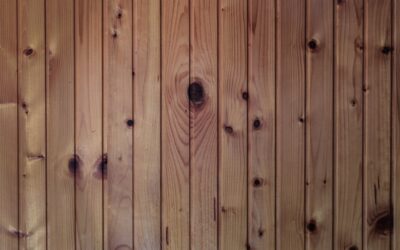
- Slat wood (oak or walnut veneer on felt backing): Warm, premium, and acoustic-friendly. Runs $8 to $20 per square foot. Best for living rooms and bedrooms.
- Fluted MDF: The vertical-groove look everyone wants right now. Affordable at $4 to $9 per square foot, but keep it out of bathrooms since MDF swells when wet.
- PVC 3D panels: Fully waterproof and lightweight, $3 to $7 per square foot. Ideal for bathrooms, basements, and accent walls behind a TV.
- Acoustic felt panels: Slats mounted on sound-dampening polyester. Great for home offices and media rooms, around $6 to $12 per square foot.
Where Panels Make the Biggest Impact
A bed’s headboard wall is the classic spot, since the texture frames the bed and replaces a bulky physical headboard. Living rooms benefit most when you panel the wall behind the television, which hides cables and breaks up a large blank surface.
Don’t overlook hallways and stairwells. These transitional spaces are usually neglected, and a run of vertical fluted paneling instantly makes a narrow corridor feel intentional and designed rather than leftover.
What It Costs to Panel a Wall
For a typical 10-foot by 9-foot accent wall (90 square feet), budget the following. Mid-range fluted MDF panels run about $5 per square foot, so $450 in material. Add $40 for construction adhesive and finishing trim. If you hire a handyman, installation labor adds roughly $300 to $600 depending on your region.
That puts a professionally installed accent wall in the $800 to $1,100 range, while a confident DIYer can finish the same wall for under $500. Premium walnut slat systems push material costs to $1,500 or more for the same square footage.
Installing a Panel Yourself
Most modern panels are within reach of an intermediate DIYer with a weekend and a few tools. Here’s the basic sequence.
- Measure the wall and acclimate the panels in the room for 48 hours so wood doesn’t expand after install.
- Find and mark the studs, then locate outlets and switches.
- Apply a zigzag bead of construction adhesive to the back, press the panel to the wall, and pin it with 18-gauge brad nails every 16 inches into studs.
- Use a level on every panel; a quarter-inch drift compounds across a wall and ruins the parallel-line effect.
- Cap the top and bottom with matching trim and caulk the seams for a seamless finish.
A pro tip that saves headaches: dry-fit the entire wall on the floor first to plan your cuts around outlets before any adhesive touches the wall.
Cutting Around Outlets and Corners
Outlets are the number-one DIY stumbling block. Turn off the breaker, remove the cover plate, and measure twice before cutting the panel with a jigsaw or oscillating multi-tool. You’ll need box extenders, which cost about $2 each, to bring the outlet flush with the new panel surface so the cover plate sits flat.
For inside corners, butt one panel tight to the wall and overlap the second to hide the seam, then caulk. Outside corners look cleanest with a matching corner trim piece rather than a mitered joint.
Matching Panels to Your Room’s Style
Not every panel suits every room, so let the space guide your choice. Vertical fluted panels make a low-ceilinged room feel taller because the lines draw the eye upward, which is why they shine in basements and entryways. Horizontal slats, by contrast, visually widen a narrow space and work well in tight hallways.
Consider the color and tone too. Warm walnut and oak veneers add coziness to bedrooms and living rooms, while crisp white or charcoal fluted panels lean contemporary and pair beautifully with minimalist furniture. In a small room, a lighter panel keeps the space feeling open, whereas a dramatic dark slat wall makes a large room feel intimate and grounded.
Common DIY Mistakes to Avoid
A few errors trip up first-timers. Skipping the 48-hour acclimation step is the biggest, because wood panels installed too soon can expand and buckle at the seams once they adjust to your home’s humidity. Forgetting box extenders at outlets leaves cover plates floating awkwardly above the new surface.
Another frequent miss is failing to plan the layout so a full panel lands in the most visible spot, leaving an awkward sliver in the center of the wall. Dry-fit everything first, start your layout from the focal point, and push the cut pieces toward the corners where they’re least noticeable.
Finishing and Maintenance
Pre-finished panels need nothing more than a microfiber dusting. If you install raw MDF fluted panels, prime with a quality bonding primer and apply two coats of satin paint; flat paint shows fingerprints on the high ridges. Wipe PVC and felt panels with a damp cloth as needed, and avoid abrasive cleaners that scratch the surface.
A well-installed modern wall panel wall should hold up for a decade or more with almost no upkeep, making it one of the highest-impact, lowest-maintenance upgrades you can make in a single weekend.