A deck-mounted tub filler is one of the few faucets where the rough-in you choose today locks in your trim options for the next 20 years. The moen roman tub faucet lineup handles this better than most brands thanks to the MPACT common valve system — set the valve once, and you can swap trim styles from builder-grade Adler to high-end Weymouth without opening the deck again. This guide walks through the model families worth considering, how the valve system works, what installation really involves, and the cartridge repairs that keep these faucets serviceable for decades.
- What Makes a Faucet "Roman Tub"
- The MPACT System: Why the Valve Comes First
- Top Moen Roman Tub Collections
- Installation Overview
- Flow, Spout Reach, and Sizing Details
- Repairs: Cartridges Keep These Alive
- Buying Advice
- Troubleshooting the Three Most Common Complaints
- How Moen Stacks Up Against Delta and Kohler Here
- Moen Tub Filler Options: Deck, Wall Mount and Freestanding
What Makes a Faucet “Roman Tub”
Roman tub faucets mount on the tub deck or surrounding ledge rather than the wall, with a high-arc spout and two separate handles spread across three (or four, with a hand shower) deck holes. Standard drilling uses 8 to 16 inch centers on the outer holes. Because everything mounts through the deck, the water connections live underneath — which is why these installs depend on a separate rough-in valve and why access panels matter more than with any wall-mount faucet.
The MPACT System: Why the Valve Comes First
Moen splits Roman tub faucets into two purchases:
- Rough-in valve: The MPACT Roman tub valve (9992 for 1/2 in. CC/IPS connections, 9993 PEX version, 9982 with hand-shower diverter capacity vary by generation) runs $90-$150 and gets installed below the deck during rough plumbing.
- Trim kit: The visible spout, handles, and escutcheons, sold per collection, typically $250-$700.
The payoff is future-proofing. Ten years from now, when the oil-rubbed bronze phase passes, you buy only a new trim kit in brushed nickel and swap it in an afternoon — no deck demolition, no plumber. When ordering, confirm the trim requires the MPACT valve generation you have; older Moen tub valves (pre-MPACT 4792/4796 era) do not accept current trim.
Top Moen Roman Tub Collections
Adler and Banbury — builder budget
Basic two-handle trims around $180-$280 in chrome or Spot Resist brushed nickel. Simple lever or knob handles, moderate arc. Fine for rentals and flips.
Brantford — traditional favorite
The T943 series trim (about $350-$500) with graceful curves and porcelain-look lever options; pairs with Brantford widespread lavatory faucets for a matched bath. Available in chrome, brushed nickel, and oil rubbed bronze.
Eva — transitional bestseller
The T933 trim, roughly $330-$480, is Moen’s do-everything style: soft modern lines that work in both contemporary and classic rooms. The T934 adds a hand shower on the fourth hole.
Genta LX and Align — modern
Crisp geometric spouts and thin lever handles, $350-$600, strongest in matte black and chrome. Align’s cylindrical spout (T393 series) is the pick for a spa-modern freestanding-look deck install.
Weymouth and Wynford — premium traditional
Weymouth’s T9302 with cross-handle options lands between $550 and $800 and reads convincingly vintage. If the bathroom has a clawfoot aesthetic on a modern drop-in tub, this is the trim.
Finishes across the line include chrome, Spot Resist brushed nickel, matte black, oil rubbed bronze, polished nickel, and brushed gold, with finish availability varying by collection. Most carry Moen’s limited lifetime warranty for the original homeowner.
Installation Overview
A Roman tub faucet install is a moderate-skill plumbing job — very doable for an experienced DIYer at rough-in, harder as a retrofit. The sequence:
- Plan access. Before anything, ensure there is (or will be) an access panel below or behind the valve. Working blind under a mortared-in tub deck is the single biggest cause of abandoned DIY installs.
- Drill the deck. Three holes, typically 1-3/8 in. diameter, at 8-16 in. centers. On tile or stone decks use a diamond core bit with water; on acrylic, a hole saw at slow speed.
- Set the MPACT valve. Mount it to blocking below the deck within the height range on the spec sheet — the valve body must sit within about 3 in. of the deck underside for the trim to reach (check your model’s range). Sweat or crimp supply connections, hot on left.
- Pressure test. Cap and test before closing anything. Deck valves leak into ceilings, and ceilings are expensive.
- Install trim. Spout shank and handle assemblies drop through the deck onto the valve; hand-tighten mounting nuts, seal escutcheon bases with a thin silicone bead, and attach the quick-connect hoses per the trim instructions.
Hiring it out, expect $250-$600 labor for a trim-only swap and $700-$1,500 for full rough-in plus trim on a new deck, varying by market and access.
Flow, Spout Reach, and Sizing Details
Moen Roman tub valves flow up to roughly 13-16 GPM at 60 PSI depending on model — a real consideration if you are filling a 70-gallon soaker from a 40-gallon water heater. Match spout reach to the tub: most Moen Roman spouts reach 6 to 8.5 inches, and the stream should land well inside the tub rim, not on the ledge. On extra-wide decks (common with drop-in whirlpools), measure from hole center to inside tub wall before choosing trim, and remember the hand-shower models need a fourth 1-1/4 in. hole.
Repairs: Cartridges Keep These Alive
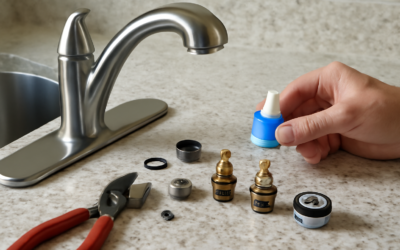
Drips and stiff handles trace to the 1224 cartridge on two-handle MPACT tub valves (about $15-$25 each, and covered under warranty — Moen’s 1-800 line routinely ships them free). The repair is a 20-minute job: shut off supplies, pull the handle and trim cap, remove the retaining clip, and swap the cartridge, greasing O-rings with silicone plumber’s grease. If the spout drips only when the hand shower diverts, the diverter cartridge in the spout shank is the culprit instead. Keep the model number from your trim’s box or the underside of the spout; it makes parts lookup painless decades later.
Buying Advice
Three rules serve buyers well. First, buy the valve and trim together at the start of a remodel so the plumber roughs in the exact generation your trim needs. Second, stick to widely stocked collections — Eva, Brantford, Genta — if long-term parts and finish-matching matter; boutique finishes in discontinued lines are hard to extend later. Third, verify the box says MPACT and buy from authorized channels; Moen’s lifetime warranty applies to authorized-retailer purchases, and marketplace gray-market trims are the usual warranty dispute. Do those three things and a Moen Roman tub faucet is about as low-regret as deck-mount plumbing gets: serviceable cartridges, swappable style, and parts support that outlasts most bathrooms.
Troubleshooting the Three Most Common Complaints
Low flow from the spout
Roman tub fillers have no aerator to clog, so weak flow usually traces to debris in the valve inlets or partially closed stops under the deck. Kill the supplies, pull the cartridges, and flush the valve body into a bucket by cracking the stops briefly — construction debris after a remodel is the classic culprit. On hand-shower models, a kinked quick-connect hose under the deck throttles the diverted side and takes two minutes to fix through the access panel.
Handles feel loose or misaligned
Trim handles index onto splined cartridge stems; if a handle points the wrong way at the off position, pull it and re-seat one spline over. Persistent wobble is almost always the mounting nut under the deck backing off — snug it by hand plus a quarter turn with a basin wrench, not gorilla-tight, or the escutcheon can crack stone decks.
Water under the deck with no visible drip
Before condemning the valve, flood-test the escutcheon seals: pool water around each trim base for ten minutes and watch below with a flashlight. Deck water wicking past unsealed escutcheons mimics a valve leak and is fixed with a $6 tube of clear silicone. True valve-body weeps show as drips from the casting itself with the faucet running, and warrant a warranty call before any parts spending.
How Moen Stacks Up Against Delta and Kohler Here
All three majors run a valve-plus-trim architecture for Roman tubs, so the honest comparison is ecosystems. Delta’s R2707 rough with T27 trims mirrors the MPACT concept and its ceramic-disc cartridges are excellent; Kohler’s K-300 valve family skews higher-priced with more luxury trim styles. Moen’s edges are the lifetime cartridge support culture — the 1224 is stocked at every hardware store in America — and the breadth of mid-price trims between $300 and $500, where Kohler is thin. If the bathroom already carries Moen shower valves and lavatory faucets, staying in-brand also keeps finishes matched; “brushed nickel” is not the same color across manufacturers, and a mixed-brand bathroom shows it in raking light.
Moen Tub Filler Options: Deck, Wall Mount and Freestanding
A Moen tub filler comes in three mounting styles: deck-mount Roman tub trims, wall mount tub fillers that come out of the wall behind the tub, and freestanding floor-mount fillers that rise from the floor beside it. Each one pairs a visible trim with a separate rough-in valve or riser, so the choice has to be made at rough plumbing, not after the tile is finished. The deciding factor is usually the tub itself.
Which Style Fits Your Tub
| Style | Best for | What goes in the wall or floor | Main watch-out |
|---|---|---|---|
| Deck mount (Roman) | Drop-in and alcove tubs with a wide ledge | Valve under the deck | Needs an access panel |
| Wall mount | Freestanding tubs set close to a wall, undermount decks | In-wall valve, sold separately | Spout reach must clear the tub rim |
| Freestanding floor mount | Freestanding tubs in open floor space | Floor riser or rough-in kit | Supply lines run under the finished floor |
Planning a Moen Wall Mount Tub Filler
A Moen wall mount tub filler is sold as trim that installs over a separate in-wall valve, and Moen’s own listings note that a valve is required. The wall must be open during rough-in so the plumber can set the valve and spout supply at the right depth, which is why this style suits remodels that already include new tile or drywall.
- Reach: measure from the finished wall to the point where water should land, well inside the rim, then compare against the spout reach on the trim spec sheet.
- Height: set the spout a few inches higher than the tub rim so the outlet stays clear of the bath water. Follow the maker’s rough-in sheet for the exact range.
- Valve match: confirm the trim and valve are listed as compatible before ordering, since wall-mount, deck and floor systems do not share parts.
Freestanding Fillers Need Floor Work
Floor-mount fillers bolt to a riser that ties into joists or blocking, with hot and cold lines brought up through the subfloor. On a slab, that means cutting concrete, so price that labor into the decision. Many floor-mount models add a hand shower on a hose, which helps rinse a freestanding tub that has no wall to hold a shower.
Whatever style you pick, buy valve and trim together and keep the model numbers, so replacement cartridges and finish-matched parts stay easy to find later.