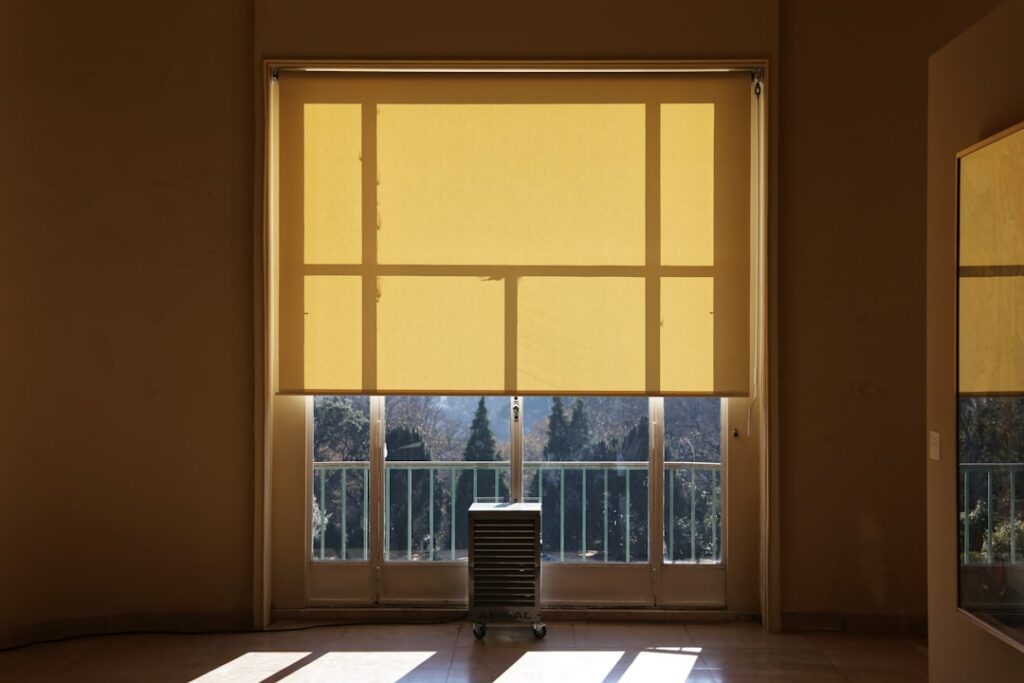
Motorized roller shades take the single most common window covering and cut the cords entirely: a small tubular motor inside the roller raises and lowers the fabric at the tap of a remote, a phone app, a schedule, or a voice command. They are the easiest entry point into automated windows, and prices have fallen far enough that they are no longer a luxury-only feature.
This guide breaks down how motorized roller shades work, the battery-versus-hardwired decision, fabric openness factors, and what a real installation costs so you can automate a room or a whole house without surprises.
How the motor works
A tubular motor, roughly 1.5 inches in diameter, slides inside the shade’s roller tube and turns it to wind or unwind the fabric. Limits (the fully-open and fully-closed stopping points) are set once during setup and remembered. Control comes by radio frequency remote, a wall switch, a hub that bridges to WiFi, or directly over Bluetooth. Better systems support intermediate stops so a single button sends the shade to a favorite height every time.
Battery vs hardwired motors
This is the first real decision, and it shapes the whole project.
- Rechargeable battery motors: a built-in lithium pack or a wand of AA cells powers the shade for 6 to 12 months per charge on a few cycles a day. No wiring, so they install in minutes and suit retrofits and renters. You recharge with a USB cable once or twice a year.
- Hardwired (low-voltage DC) motors: a concealed wire runs to a plug-in transformer or a wired power supply. Never needs charging, ideal for hard-to-reach or high windows, but you either fish a wire during construction or accept a visible cord.
- AC line-voltage motors: used for large or heavy commercial shades, these need an electrician and a junction box; overkill for most homes.
For most homeowners retrofitting existing windows, rechargeable battery motors are the practical winner. Choose hardwired when you have many shades, tall windows you cannot reach to recharge, or a new build where wiring is easy.
Fabric openness and light control
The roller mechanism is only half the shade; the fabric determines how much light and view you keep. Fabrics are rated by openness factor, the percentage of the weave that is open:
- Blackout (0% openness): blocks essentially all light, best for bedrooms and media rooms. Pair with side channels to kill the light gap at the edges.
- Light-filtering (3 to 10% openness): softens glare while keeping a glow and daytime privacy; the everyday living-room choice.
- Solar / sheer (1 to 14% openness): cuts heat and UV while preserving the view; a 5% solar screen blocks about 95% of incoming glare yet you still see outside.
Openness is a trade-off: the more you see out, the more others see in at night, so many homes layer a solar shade for day and a blackout for night on a dual roller bracket.
Control options and smart-home tie-in
At minimum you get a handheld RF remote that pairs to one shade or a group. Add a hub and the shades join your WiFi so you can control them from a phone anywhere, set schedules, and link them to Amazon Alexa, Google Home, or Apple HomeKit for voice and automation. Popular ecosystems include Lutron Serena, Hunter Douglas PowerView, and lower-cost SwitchBot and Eve MotionBlinds. Scheduling is the feature people love most: shades that lower automatically at sunset for privacy and open at sunrise, or drop on the west side during afternoon heat to cut cooling load.
What they cost
Budget battery-motor roller shades from IKEA, SwitchBot, and similar run $60 to $150 per window. Mid-range custom shades with better fabrics and quieter motors land at $200 to $450 per window. Premium systems like Lutron and Hunter Douglas run $400 to $900 or more per window, plus a hub. A hub adds $60 to $200 once for the whole house. Professional measuring and installation, if you use it, adds $50 to $150 per shade. Doing a whole main floor of six to eight windows in the mid-range typically totals $1,800 to $3,500.
Measuring for a clean fit
Decide inside-mount (shade sits within the window frame for a tidy recessed look, needs adequate depth, usually 2 to 3 inches) or outside-mount (shade covers the whole opening and overlaps the trim for better light blocking). Measure width in three places and use the narrowest for inside mounts; for outside mounts add 2 to 3 inches per side and 4 or more inches at top for light control. Battery shades are lighter and forgiving; heavy blackout fabrics on wide windows may need a larger tube and motor, so give the supplier accurate dimensions.
Installation basics
- Mount the brackets level; even a slight tilt makes the fabric telescope to one side over time.
- Clip the shade into the brackets and charge or connect power.
- Pair the remote or app, then set the upper and lower limits so the shade stops exactly where you want.
- Program a favorite intermediate position and, if using a hub, add the shade to your smart-home app and any schedules.
Battery models are genuinely a 15-minute DIY job per window. Hardwired models add time for routing the low-voltage wire and are still within reach of a handy homeowner, though many buyers hire out the wiring.
Noise, speed, and motor quality
Motor quality is what separates a shade you enjoy from one that jolts you awake. Cheap motors are loud and jerky; better ones move smoothly at a quiet 38 to 44 decibels, about the level of a soft conversation, and offer adjustable speed so the shade glides rather than snaps. Premium ecosystems like Lutron are known for near-silent operation, which matters most in bedrooms and media rooms where the shade runs on a schedule while you sleep. If quiet operation is a priority, read reviews specifically for noise and look for the decibel rating; the difference is very noticeable at 6 a.m.
Recharging and battery life
Battery-motor shades are the easiest to live with as long as you plan for the recharge. A typical lithium pack lasts 6 to 12 months on a few cycles per day, and recharging takes 2 to 4 hours over a USB-C cable. To avoid dragging a ladder to a tall window, many owners buy a spare battery wand or add a small solar panel that clips to the window and trickle-charges the shade indefinitely. The app or a light on the motor warns you when the charge drops below about 20 percent, so you get plenty of notice. Blackout fabrics and wide shades draw more power per cycle, so expect the shorter end of the range on big windows.
Choosing the right control ecosystem
Pick your ecosystem before you buy hardware, because switching later is expensive. If you already use Apple HomeKit, Google Home, or Amazon Alexa, choose shades that natively support it so voice control and automations work without a workaround. Lutron and Hunter Douglas offer the most polished, reliable systems but cost the most and use their own hubs; SwitchBot, Eve, and MotionBlinds deliver strong smart-home integration at a lower price. Consider whether you want the shades to trigger with other events, lowering when the security system arms, or with a sunset schedule, and confirm the platform supports those scenes. A hub bought once for the whole house is cheaper than discovering your shades will not talk to the assistant you already own.
Are they worth it?
Motorized roller shades pay off most on windows that are hard to reach, in bedrooms where automated schedules improve sleep and morning light, and on sun-facing glass where scheduled solar shades cut cooling bills. If cords are a safety concern with young children, going motorized also removes the strangulation hazard of pull cords entirely. For a single easy-to-reach window the manual version is cheaper, but across a house the convenience, energy savings, and safety make motorized the upgrade most owners are glad they made.