The mudroom is the hardest-working floor in the house — it absorbs wet boots, dropped backpacks, dog paws, road salt, and spring mud, all in a space smaller than most bathrooms. That’s why the best mudroom tile floor ideas start with tile that can shrug off water and abuse while still looking sharp enough to greet you every time you walk in. Tile is the near-unanimous choice for mudrooms because it’s waterproof, scratch-resistant, and easy to mop, but the specific tile, pattern, grout color, and slip rating you choose determine whether the room looks fresh for 20 years or shows every scuff by next winter.
Part of our Tile & Grout guide — explore the full guide →
Why Tile Beats Everything Else Here
Before the design fun, understand why tile dominates this room. Wood swells and stains when wet boots sit on it, laminate’s seams swell, and vinyl can dent under dropped gear. Porcelain and ceramic tile are impervious to all of it — water rolls off, salt wipes up, and a heavy planter won’t scratch the glaze.
Tile also handles temperature swings from an exterior door and pairs beautifully with electric radiant heat mats, so your feet hit warm floor instead of a cold shock in January. And because a mudroom is small, you can splurge on a premium patterned tile without breaking the budget — the square footage is tiny compared to a whole kitchen.
Porcelain: The Workhorse Choice
If you want one recommendation that never disappoints, it’s porcelain. Porcelain tile is denser and less porous than ceramic, rated for heavy traffic, and available in styles that mimic wood, stone, and concrete. A wood-look porcelain plank gives you the warm farmhouse feel of a wood floor with zero water worry — ideal for mudrooms that flow into a kitchen.
Look for a PEI rating of 4 or 5, which certifies the tile for heavy residential and even commercial traffic. Choose a matte or textured finish rather than high-gloss; matte hides scuffs and dust, and it grips better underfoot when wet. Large-format porcelain in a 12×24-inch plank reads modern and means fewer grout lines to scrub.
Patterned Cement and Encaustic Looks
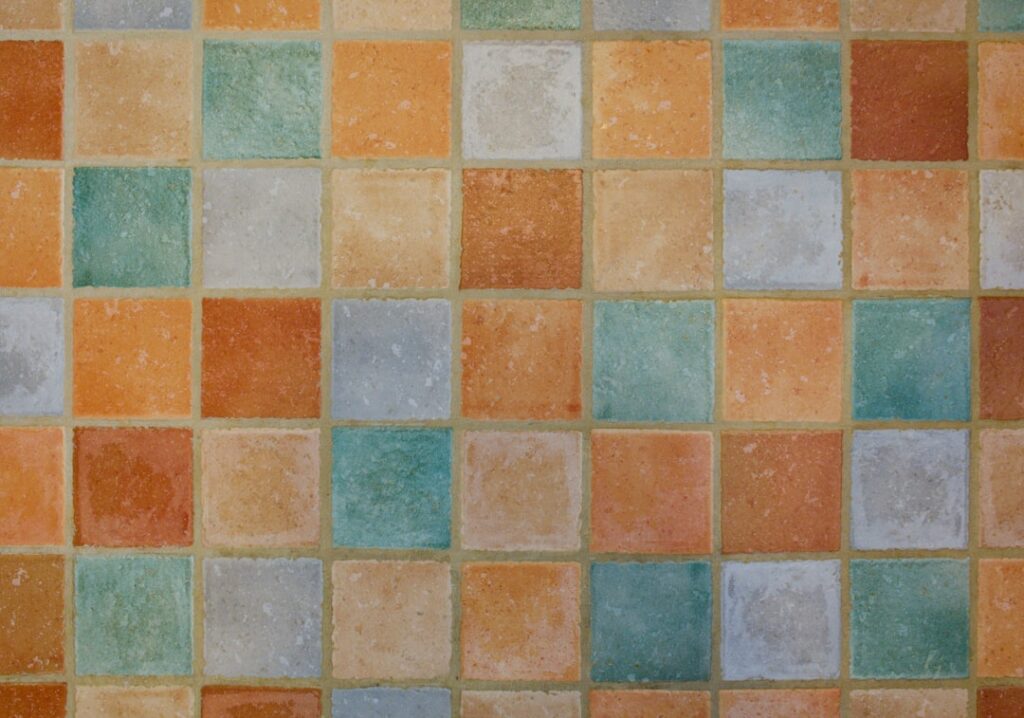
For homeowners who want the mudroom to make a statement, patterned tile turns a utilitarian space into a design moment. Encaustic-look cement tiles — bold geometrics, Moroccan stars, or Victorian florals in navy, black, terracotta, and sage — create a stunning “entry rug” effect that hides dirt between cleanings.
True cement tiles need sealing and gentle care, so for a mudroom most designers recommend porcelain versions printed with the same encaustic patterns. You get the vintage look with porcelain’s durability and no sealing. A busy pattern is a practical secret weapon here: it camouflages the inevitable dirt, paw prints, and salt residue far better than a plain light tile.
Slate, Stone, and Natural Texture
Natural stone brings unmatched texture and a rugged, timeless feel that suits mudrooms perfectly. Slate leads the pack — its naturally cleft, non-slip surface handles wet boots gracefully, and its charcoal, rust, and green tones hide dirt beautifully. Tumbled travertine and split-face stone also work for a more rustic entry.
The trade-off is maintenance. Natural stone is porous and needs sealing every year or two to resist staining from salt and mud. If you love the stone look but not the upkeep, slate-look and travertine-look porcelain deliver the appearance with no sealing required. Reserve genuine stone for homeowners who don’t mind the periodic sealer.
Small-Format and Mosaic Options
Small tiles bring a classic, cozy character and extra slip resistance because all those grout lines add traction. A few standout mudroom tile floor ideas in this category:
- Hexagon tile in 2 to 4-inch sizes for a farmhouse or vintage feel — black-and-white hex is a timeless combination.
- Penny round mosaics for a playful, cottage-style entry with lots of grip.
- Basketweave or herringbone mosaics for a detailed, upscale look in a compact footprint.
- Subway tile laid on the floor in a herringbone pattern for a clean transitional style.
The extra grout does mean more cleaning, so seal it well and pick a mid-tone grout that won’t show every footprint.
Grout, Layout, and Slip Safety
The tile gets the attention, but grout choice makes or breaks a mudroom floor. Never use bright white grout here — it will look filthy within weeks. Choose a mid-to-dark gray, greige, or charcoal grout that hides dirt and salt, and use epoxy or a high-performance stain-resistant grout that resists staining and doesn’t need sealing.
Layout adds interest at no extra material cost. Herringbone and diagonal layouts feel intentional and hide the room’s slightly-off angles. A tile “rug” — a bordered patterned inset framed by plain field tile — defines the entry zone stylishly. For safety, prioritize a Dynamic Coefficient of Friction (DCOF) rating above 0.42, which the industry considers slip-resistant for wet areas. Matte and textured tiles clear that easily; polished tiles often don’t.
Radiant Heat Under the Tile
One of tile’s few drawbacks is that it feels cold underfoot, and in a mudroom that’s exactly where you shed wet socks and boots. The fix is an electric radiant heat mat installed under the tile, and a mudroom’s small size makes it one of the most affordable rooms to heat this way.
A thin heating mat or cable embeds in the thinset beneath the tile and connects to a programmable thermostat with a floor sensor. For a typical mudroom you’re looking at $10 to $20 per square foot for the mat plus the thermostat, and because the room is small the total often lands between $300 and $700 in materials. Beyond the comfort of warm tile on a January morning, radiant heat dries wet boots and melted snow faster, which cuts down on the puddles and salt residue that plague this room. Set the thermostat to warm the floor during your morning and evening peak hours and it costs little to run. Just plan it into the tile job from the start, since it has to go in before the tile.
Sealing, Cleaning, and Long-Term Care
A mudroom floor earns its keep only if it’s easy to maintain, and a little upfront effort keeps it that way. If you chose porcelain or ceramic, the tile itself never needs sealing — but the grout does unless you used epoxy grout. Seal cement-based grout after installation and re-seal it once a year so salt and mud don’t stain the lines.
Natural stone tile needs its own sealer on the surface every one to two years to stay stain-resistant; test by dripping water and resealing when it stops beading. For everyday cleaning, sweep or vacuum grit regularly since sand and salt crystals act like sandpaper underfoot, then damp-mop with a pH-neutral cleaner. Skip acidic cleaners like vinegar on natural stone, which can etch it, and avoid oil-based soaps that leave a dulling film. In winter, wipe up de-icing salt promptly, because the white residue is not only unsightly but can slowly attack grout. A boot tray by the door and a washable runner over the tile catch the worst of it and make the whole floor easier to keep clean.
Pulling the Look Together
Coordinate the floor with the rest of the mudroom for a finished result. A bold patterned floor pairs best with simple, solid-colored bench seating and lockers so the room doesn’t feel busy. A calm wood-look or stone-look porcelain lets you go bold on wall color, a fun runner, or painted cabinetry instead.
Add a radiant heat mat under the tile if your climate warrants it — it’s inexpensive to install during a tile job and dries wet boots faster. Finish with a low-profile boot tray and a washable runner over the tile for the muddiest months. With the right tile, dirt-hiding grout, and a slip-safe finish, these mudroom tile floor ideas give you a floor that laughs off winter’s worst while making the hardest-working room in your home genuinely beautiful.
Prefer to explore on your own?
See how new flooring looks in your actual room in seconds — free, no signup.
Try the free Floor Studio →