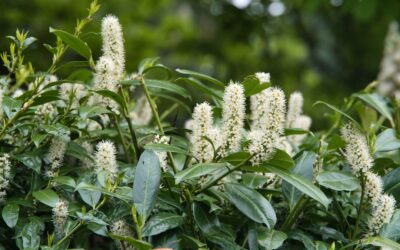
Few plants pull their weight in the landscape the way a nandina shrub does, giving you feathery foliage that shifts from lime green to fiery red as the seasons turn. Often sold as “heavenly bamboo,” it is not a bamboo at all but a broadleaf evergreen in the barberry family, Nandina domestica. Gardeners love it because it tolerates neglect, shrugs off drought once established, and looks good in almost any light. There is one honest caveat you should hear up front: the red berries on older varieties are toxic to birds, and that changes how you should choose and prune the plant.
Where Nandina Grows Best
Nandina is reliably hardy in USDA zones 6 through 9, and in the warmest parts of zone 10 it stays fully evergreen. In zone 6 the foliage may drop in a hard winter and the top growth can die back, but the roots usually push new canes in spring. If you garden in the South or the mild West Coast, you get the full evergreen effect and the richest fall and winter color.
This shrub is genuinely forgiving about light. Plant it in full sun and you get the most intense red foliage and the heaviest berry set. Tuck it into part shade and the leaves lean greener and softer, which some designers actually prefer for a woodland look. It will even survive fairly deep shade, though it grows leggier and colors up less there. Aim for at least four hours of direct sun if fall color matters to you.
Mature Size and Spacing
Size depends entirely on the variety, so read the tag before you dig. The standard species form reaches 6 to 8 feet tall and 3 to 4 feet wide, growing as a clump of upright canes rather than a dense ball. Dwarf selections like ‘Firepower’ and ‘Gulf Stream’ top out around 2 to 3 feet. Mid-size types such as ‘Moon Bay’ settle in near 3 to 4 feet.
- Standard nandina: space 3 to 4 feet apart for a screen, 5 feet as specimens
- Mid-size (3-4 ft): space 24 to 30 inches apart for a low hedge
- Dwarf (2-3 ft): space 18 to 24 inches apart for a solid mass
Growth rate is moderate. Expect roughly 12 to 24 inches of new cane growth a year on the taller forms once the plant is settled, less on the compact ones. Container-grown plants transplant almost anytime the ground is workable, though early fall and early spring give roots the best head start.
Planting Step by Step
Dig a hole twice as wide as the root ball but no deeper. Nandina hates sitting in a hole that later settles, which buries the crown and invites rot. Set the top of the root ball a half inch above the surrounding grade, backfill with the native soil you removed, and firm it gently. Skip the temptation to dump a bag of rich compost in the hole; roots that grow lazy in fluffy amended soil struggle to push into the surrounding clay.
Water deeply right after planting, then lay down 2 to 3 inches of shredded bark mulch, keeping it a couple inches off the canes. For the first full growing season, water once or twice a week during dry stretches. After that, nandina is impressively drought tolerant and often needs no supplemental water at all in a climate with normal rainfall.
Soil, Feeding and Water
Nandina is not fussy about soil. It handles clay, sand, and everything between, and it tolerates a pH range from mildly acidic to slightly alkaline. What it will not forgive is standing water, so avoid low spots where puddles linger after rain. If your site drains poorly, plant on a slight mound.
Feeding needs are minimal. A single application of a balanced slow-release shrub fertilizer in early spring is plenty. Overfeeding pushes soft green growth and mutes the red tones you planted the shrub for in the first place. If the leaves look pale and yellow between the veins, that usually signals an iron or general nutrient shortfall in alkaline soil, and a fertilizer formulated for acid-loving plants corrects it.
Pruning for Shape and Fresh Color
Here is the technique that separates a great-looking nandina from a bare-legged one. Because it grows on upright canes, you cannot shear it like a boxwood without creating an awkward, thin top. Instead, prune from the bottom. In late winter, cut the tallest one-third of the canes down close to the ground, cut the middle third to about knee height, and leave the shortest canes untouched. This staggered cut keeps foliage all the way down and triggers fresh growth that colors up beautifully.
Do this every year or two and the plant stays full and youthful indefinitely. Old, neglected nandina that has gone leggy can be renovated hard, cutting every cane to 6 inches in late winter; it looks bare for a couple months but rebounds vigorously.
Berry Toxicity and Bird Safety
The bright red berries that make nandina so ornamental in winter contain cyanogenic compounds. Cedar waxwings and other birds that gorge on them in flocks have been found dead from cyanide poisoning, and the berries are also mildly toxic to cats, dogs, and grazing livestock. This is a real concern, not internet myth.
You have two good options. Choose a modern sterile or low-fruiting cultivar such as ‘Firepower’, ‘Gulf Stream’, ‘Obsession’, or ‘Blush Pink’ that sets little or no fruit, or simply clip the berry clusters off the fruiting types before they ripen. Many gardeners in wildlife-conscious areas do the latter and keep only the foliage show. A handful of states now list the species form as invasive because birds spread the seed, so responsible planting matters.
Best Varieties to Plant
Match the cultivar to the job and you will rarely go wrong:
- ‘Firepower’: compact 2-foot mound, brilliant crimson winter foliage, sterile
- ‘Gulf Stream’: tidy 3-foot dome, blue-green summer leaves turning red, low fruit
- ‘Moon Bay’: mid-size with lime-green new growth and strong red winter color
- ‘Obsession’: dwarf with intensely red new shoots all season, non-fruiting
- Standard Nandina domestica: the tall 6-to-8-foot form for screening, berries and all
Companion Plants and Design Ideas
Nandina’s fine, ferny texture and shifting color make it an easy shrub to design around. Its upright, airy form pairs beautifully with rounded, coarse-leaved companions that provide contrast. Underplant a row of dwarf nandina with low evergreen groundcovers, or set the taller species form behind mounding perennials so the leggy lower canes are screened. The red winter foliage plays especially well against silver-and-blue companions like blue star juniper, dusty miller, and lavender, while gold-foliage plants such as golden spirea heighten the warm autumn tones.
Because nandina holds its structure through winter, it earns its spot in a foundation planting where deciduous shrubs would leave a bare gap for months. Use dwarf types like ‘Firepower’ as a low ribbon along a walkway, the mid-size forms as a soft informal hedge, and a cluster of three standard plants as a screening backdrop near a fence or corner. In a mixed border, nandina bridges the seasons, echoing the reds of fall-blooming perennials and then carrying color alone deep into the cold months when little else in the bed has anything to offer.
Pests and Common Problems
Nandina is refreshingly pest resistant. Deer usually leave it alone, and insect trouble is rare. The problems you may see are cultural rather than biological. Yellowing leaves point to poor drainage or high soil pH. Sparse, leggy growth means too much shade or skipped pruning. In cold-edge zones, winter dieback of the top canes is normal, and cutting the damaged wood in spring restores the plant.
Give a nandina shrub decent drainage, a few hours of sun, and one thoughtful pruning session a year, and it will reward you with color in every season while asking for almost nothing in return. Just handle those berries responsibly, and both your landscape and the birds passing through it will be better for it.