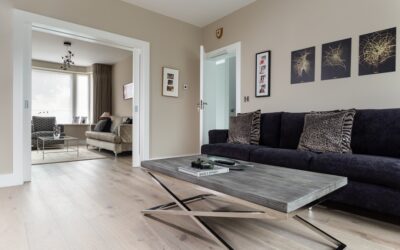
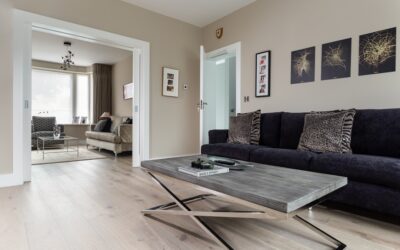
Wide planks dominate showroom displays, but narrow boards still win plenty of projects. Narrow laminate flooring typically runs 3 to 5 inches wide and 36 to 48 inches long, mimicking traditional strip hardwood. It costs $1.49 to $3.99 per square foot, installs over uneven subfloors more forgivingly than wide planks, and reads correctly in older homes built before the wide-plank era. If you own a 1920s bungalow or a Cape Cod, narrow laminate often looks more authentic than 9 inch boards.
- Why Narrow Planks Still Make Sense
- Pros That Drive Buyer Interest
- Cons to Weigh Honestly
- Brands and Lines Worth Considering
- Spec Numbers That Actually Matter
- Installation Tips for Narrow Planks
- Cost for an Average Room
- Best Use Cases
- Where Narrow Falls Short
- Maintenance Routine
- How Narrow Laminate Holds Up to Pets
- Final Buying Advice
Why Narrow Planks Still Make Sense
Subfloor tolerances are the practical reason. Wide laminate planks at 7 or 9 inches require subfloor flatness within 3/16 inch over 10 feet. Narrow 3.25 inch boards tolerate roughly 3/16 inch over 6 feet, a much easier target in an older home with sagging joists. The visual reason is proportion. A 3,200 square foot great room handles 9 inch oak beautifully. A 110 square foot 1950s dining room often looks better with 3 inch strips that match the original baseboard scale.
Narrow boards also pair naturally with herringbone and chevron patterns, where the small piece dimensions create tight, intricate geometry that wider planks cannot replicate without looking clumsy.
Pros That Drive Buyer Interest
- Authentic traditional and Craftsman-era aesthetics
- Better tolerance on imperfect subfloors
- Lower waste percentage during install, typically 5 to 7 percent versus 8 to 12 percent on wide planks
- Easier to maneuver in small rooms, hallways, and closets
- Lower entry pricing because narrow SKUs target the value market
Cons to Weigh Honestly
Install time is longer per square foot because there are more boards to handle. A 200 square foot room in 3.25 inch laminate takes roughly 30 percent more time than the same room in 7 inch planks. Joint count is also higher, which means more potential failure points if humidity swings outside the manufacturer’s range.
Visual selection is thinner. Mohawk RevWood, Pergo Outlast, and Quick-Step Studio each carry a handful of narrow SKUs, but the bulk of new product development focuses on 7.5 inch and wider boards. Plan to commit to the SKU you find rather than expecting deep collection options.
Brands and Lines Worth Considering
Pergo Outlast+
3.93 inch wide oak and hickory looks with SpillProtect24 water resistance. $2.99 to $3.69 per square foot. AC4 wear rating handles family traffic.
Mohawk RevWood Plus
5 inch wide planks with attached underlayment and Uniclic locking. Better embossed-in-register texture than entry products. $3.29 to $3.99 per square foot.
Quick-Step Studio
3.5 to 5 inch widths, AC4 rated, 12 mil overlay protecting the image layer. $2.49 to $3.29 per square foot at warehouse pricing.
Shaw Repel Plus
Narrow boards in oak and maple visuals. ScufResist topcoat resists pet claws. $2.79 to $3.69 per square foot.
Spec Numbers That Actually Matter
Total thickness on quality narrow laminate runs 10 to 12mm. Anything 7 or 8mm is throwaway stock for rental flips. AC rating should hit AC3 minimum for residential and AC4 for high-traffic households. Look for embossed-in-register surfaces where the grain texture aligns with the printed pattern rather than a generic embossed surface.
Locking system matters too. Uniclic, Valinge 5G, and Pergo’s PerfectFold 3.0 all install reliably. Older 2G systems require lifting each row 30 degrees, which is tedious in narrow strips.
Installation Tips for Narrow Planks
- Acclimate boxes flat in the room for 48 hours at 65 to 85 degrees Fahrenheit
- Test subfloor flatness with a 6 foot level, shim or grind high spots above 3/16 inch deviation
- Roll out 2mm or 3mm foam underlayment with attached vapor barrier over concrete
- Snap a chalk line 3/8 inch from the longest straight wall
- Cut the first row tongues off, lay groove side facing the wall
- Stagger end joints by at least 12 inches between rows on narrow planks (more than the 8 inches typical for wide)
- Mix from three boxes minimum to avoid pattern clumping
- Use a tapping block sized for the plank width, never the wide-plank block
- Maintain 3/8 inch expansion gaps at all walls and vertical obstructions
Cost for an Average Room
A 200 square foot bedroom in mid-grade narrow laminate at $2.99 per square foot, plus 8 percent waste, underlayment, trim, and transitions, lands at $750 to $900 in materials. Pro install adds $2 to $3.50 per square foot for narrow boards versus $1.50 to $2.50 for wide planks because of the extra labor time.
Best Use Cases
Historic restorations, traditional dining rooms, second-floor bedrooms in pre-1960 homes, hallways and small bathrooms where 9 inch planks look out of proportion, and any space where you want a refined traditional look without solid hardwood prices.
Where Narrow Falls Short
Open-concept great rooms, modern minimalist builds, and high-end remodels where the design brief calls for fewer visible seams. In those projects, the cost savings of narrow laminate cannot overcome the visual mismatch with the architectural style.
Maintenance Routine
Dust mop or vacuum with a hard-floor attachment daily. Damp mop weekly with a laminate-safe cleaner like Bona Hardwood and Laminate Floor Cleaner or Method Squirt + Mop. Avoid wet mopping, steam mops, and oil soaps. Felt pads under every furniture leg. Address spills immediately to keep liquid out of the joints, since narrow planks have more linear feet of joints per square foot than wide planks do.
How Narrow Laminate Holds Up to Pets
Quality narrow laminate with AC4 rating handles small and medium dogs well. Dewclaws and untrimmed nails can scratch the wear surface over time, but the damage spreads less visibly across multiple narrow boards than across a single wide board. Cats are essentially no issue. Trim pet nails regularly and place felt pads at favorite napping spots near windows.
Final Buying Advice
Pick narrow laminate when the home’s bones call for it, not just to save money. Confirm the AC rating, embossing quality, and warranty length in writing. Order 10 percent overage and store a sealed box for repairs. A 3 inch oak-look laminate done right will outperform a poorly chosen wide plank in any traditional home for the next 15 to 20 years.
Prefer to explore on your own?
See how new flooring looks in your actual room in seconds — free, no signup.
Try the free Floor Studio →