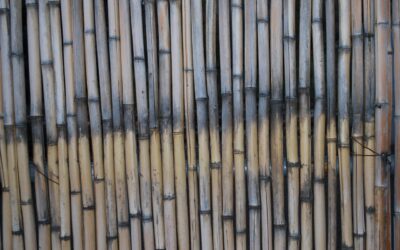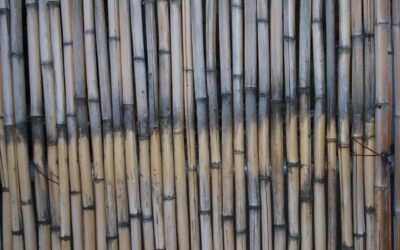
Walk into a showroom asking about sustainable floors and a salesperson will push bamboo within 30 seconds. There is a reason: natural bamboo flooring regrows in 5-7 years versus the 40-60 year cycle of oak, and a mature stand yields roughly 25 times the usable fiber per acre as hardwood. That marketing pitch hides some real complexity, though. Not all bamboo is created equal, and picking the wrong construction for your climate can buy you a buckled floor within two summers.
How Bamboo Floors Are Manufactured
Raw bamboo culms are split into strips, boiled to remove sugars, kiln-dried, and laminated into boards. Three construction methods dominate the market, and each behaves differently underfoot. Horizontal-grain boards show the classic knuckled bamboo look because strips are glued flat-side up. Vertical-grain boards hide most of the knuckles by rotating strips on edge. Strand-woven boards shred the fibers, compress them under 3,000 tons of pressure with resin, then mill the resulting blocks into planks.
Strand-woven is the hardest and most stable product on the market, while horizontal and vertical bamboo behave closer to a soft domestic hardwood. When a manufacturer just says “bamboo,” assume horizontal construction and ask for the Janka rating before buying.
Hardness and Real-World Durability
Janka hardness scores measure dent resistance. Horizontal bamboo rates 1,380 on average, vertical at 1,450, and strand-woven anywhere from 3,000 to over 5,000. Red oak, for reference, sits at 1,290. On paper, strand-woven bamboo is among the hardest flooring you can buy short of ipe. In practice, a high Janka number does not prevent scratches from pet claws, gritty shoes, or dragged furniture. It means the wood resists indentations, not surface scuffs.
Carbonized bamboo (heat-treated to darken the color) loses roughly 30 percent of its hardness during processing. That honey-amber look comes at a real durability cost and is a poor pick for kitchens, hallways, or any high-traffic path.
Pros Worth the Hype
- Rapid renewability. A moso bamboo culm reaches harvest maturity in 5-6 years without replanting.
- Price per square foot. Solid bamboo runs $2.50-$6 per sq ft, versus $4-$12 for domestic hardwoods of similar quality.
- Natural color variation. Unstained boards show soft blonde and amber tones that work across contemporary, coastal, and Scandi-style interiors.
- Refinishable in some cases. Solid strand-woven bamboo sands and refinishes two or three times over its lifespan.
Drawbacks to Weigh Carefully
Humidity swings are bamboo’s biggest enemy. The material moves more than domestic oak at the same relative humidity change, so gap-and-buckle cycles show up fast in houses without stable HVAC. Aim for 30-50 percent relative humidity year-round and acclimate boards in the installation room for 72 hours minimum before laying. Skip the acclimation and you will see cupping by the first heating season.
Cheap imports sometimes leak formaldehyde from urea-formaldehyde binders. Look for CARB Phase 2 or FloorScore certification on the box, and avoid unbranded product from gray-market sellers. A reputable brand like Cali Bamboo, Ambient, or Teragren publishes third-party emissions data and sells only NAUF (no added urea formaldehyde) boards.
Solid Versus Engineered Bamboo
Solid bamboo planks are 1/2 inch to 5/8 inch thick and nail down to a plywood subfloor. Engineered bamboo laminates a 1/8 inch bamboo wear layer over a plywood or HDF core, and can be glued, floated, or clicked together over concrete or radiant heat. Engineered handles basements and slab-on-grade installations that solid bamboo simply cannot tolerate.
For most US homes on a slab or with radiant floor heat, engineered strand-woven bamboo is the right starting point. For second-floor nail-down jobs over plywood, solid strand-woven at 9/16 inch thickness delivers the most long-term refinishing potential.
Installation Methods and Subfloor Prep
Subfloor moisture is non-negotiable. Test plywood at 12 percent moisture content or less and concrete at 3 pounds per 1,000 sq ft per 24 hours or lower using a calcium chloride test. Skip this step and the board warranty is worthless. Click-lock engineered bamboo floats over a 6 mil poly vapor barrier and 2-3 mm foam pad, with 3/8 inch expansion gaps at every wall. Nail-down solid bamboo uses 1-3/4 inch cleats every 6-8 inches along the tongue.
Glue-down applications require a moisture-cured urethane adhesive like Bostik BEST or Sika SikaBond. Avoid old-school acrylic adhesives — they fail under bamboo’s expansion pressure.
Finish Options and Sheen Levels
Factory finishes on quality bamboo are aluminum-oxide urethane with 7-9 wear layers, rated for 20-25 years in residential use. Matte and ultra-matte sheens hide scratches and dust better than semi-gloss — a practical choice for households with dogs or kids. If you want to stain on site, look for unfinished strand-woven boards and use a waterborne polyurethane like Bona Traffic HD over two coats of Bona NordicSeal for maximum wear.
Oil-finished bamboo (hardwax oil, Rubio Monocoat) gives a flat, natural look but needs reoiling every 2-4 years in high-traffic areas.
Cost Breakdown and Installed Pricing
Budget horizontal or vertical bamboo costs $2.50-$4 per sq ft for materials. Mid-grade strand-woven falls in the $4-$6 range. Premium wide-plank strand-woven and hand-scraped looks climb to $7-$9 per sq ft. Installation labor adds $3-$6 per sq ft for nail-down or glue-down, $2-$3 per sq ft for floating click-lock. A typical 500 sq ft living room installed therefore runs $3,250-$7,500 depending on product tier and labor market.
Budget an extra 8-10 percent overage for cuts, mistakes, and future repairs. Manufacturers change color lots yearly and matching boards three years later is often impossible.
Maintenance Over the Long Haul
Sweep or vacuum with a hard-floor attachment daily in high-traffic rooms. Damp-mop weekly with a pH-neutral cleaner like Bona Hardwood Floor Cleaner or Bruce Hardwood Floor Cleaner. Never use vinegar, ammonia, or steam — all three break down urethane topcoats and can delaminate engineered bamboo. Felt pads under every furniture leg stop the most common source of scratches. Place walk-off mats at every exterior door to capture grit before it reaches the floor.
Done right, natural bamboo flooring can look better at year 15 than cheap engineered hardwood does at year 5. Done wrong, it warps, separates, and teaches an expensive lesson about construction quality and humidity control.
Prefer to explore on your own?
See how new flooring looks in your actual room in seconds — free, no signup.
Try the free Floor Studio →