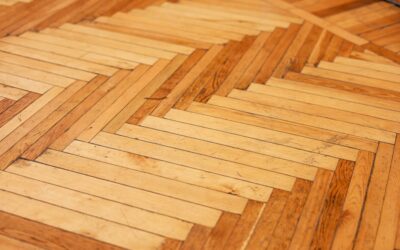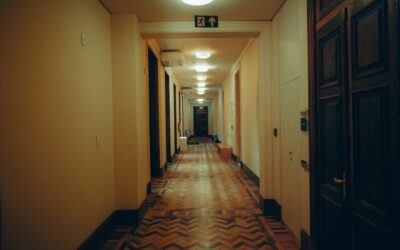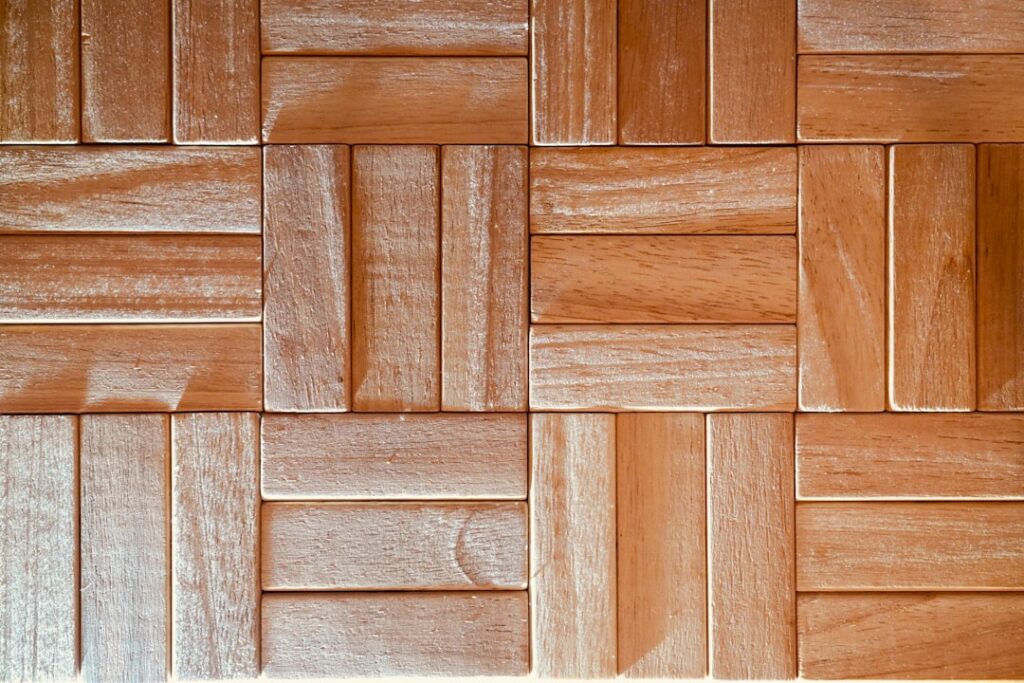
Versailles laid the first chevron parquet in 1684. Three centuries later the pattern still adds 12 to 18 percent to a home’s resale value when it is installed correctly. Oak chevron flooring uses pre-mitered planks that meet at a clean point, creating the distinctive zigzag that separates it from herringbone’s interlocking rectangles. The look is elegant, the install is technical, and the price tag reflects both. Here is what to know before you commit a five-figure budget to a chevron floor.
- Chevron vs Herringbone — Settle the Confusion
- Pros That Make the Investment Worth It
- The Trade-Offs You Need to Plan For
- Plank Dimensions and Angle Choices
- Subfloor and Substrate Requirements
- Installation Walkthrough
- Finish Options and Their Trade-Offs
- Cost Breakdown for a 400 Sq Ft Room
- Maintenance Over a 60-Year Life Span
- FAQ
Chevron vs Herringbone — Settle the Confusion
Both patterns use rectangular planks. The difference sits at the joint. Chevron boards have angled ends (typically 45 or 60 degrees) and meet at a continuous V where two rows form a clean point. Herringbone boards have square 90 degree ends and stagger so each plank butts perpendicular to its neighbor.
Chevron looks more formal and creates strong directional lines that lengthen a room. Herringbone reads as denser and more rustic. From a cost perspective, chevron runs about 15 to 25 percent higher because of the angled cuts and greater material waste during install (around 15 percent versus 8 percent for herringbone).
Pros That Make the Investment Worth It
The visual impact is unmatched in residential flooring. A chevron field draws the eye through a room, makes ceilings feel taller, and disguises out-of-square wall conditions because the pattern sets its own geometry. Engineered oak chevron in 14 to 16 mm thicknesses offers the same dimensional stability as standard wood plank but with a 60+ year structural life span.
Refinishing potential is real. Engineered chevron with a 4 mm wear layer can take three to four sand-and-finish cycles, and solid oak chevron handles five to seven. That puts it in the same multi-generational category as solid hardwood plank, with a far more distinctive face.
The Trade-Offs You Need to Plan For
Material costs run $9 to $25 per sq ft for engineered oak chevron, with French and Italian premium brands like Listone Giordano and Ets. Marie pushing $35 per sq ft. Installation adds $7 to $14 per sq ft because the work needs a finish carpenter, not a generic floor crew. Plan a total budget of $16 to $40 per sq ft installed.
Lead times also stretch out. Custom-stained chevron from European mills runs 10 to 16 weeks from order to delivery. Off-the-shelf North American options like Hallmark Floors and Mirage trim that to 3 to 5 weeks but limit color options. Domestic retailers stock fewer than 20 chevron SKUs combined, while hardwood plank counts in the hundreds.
Plank Dimensions and Angle Choices
Standard chevron blocks measure 90 mm to 140 mm wide and 500 mm to 700 mm long, with a 45 degree end cut. The 60 degree variant produces a steeper, more elongated point that suits modern interiors. Width drives perceived scale — 90 mm reads classical and tight, 140 mm reads contemporary and open.
- French chevron 45 degrees: Traditional, formal, suits historic homes and ornate trim packages.
- French chevron 60 degrees: Modern, dynamic, longer point creates strong rooms with high ceilings.
- Hungarian point: A close cousin with mitered ends meeting at the centerline; rarer but stunning.
For rooms over 400 sq ft, lean toward 110 mm or 140 mm widths. Smaller planks in big rooms make the pattern look busy. Smaller rooms benefit from 90 mm to keep proportions balanced.
Subfloor and Substrate Requirements
Chevron is unforgiving of subfloor irregularities because the angled joints amplify any high or low spots. The flatness target is 1/8 inch over a 10 ft straightedge, tighter than the 3/16 inch standard for plank flooring. Concrete slabs need a moisture reading below 4 percent on a Tramex meter and a 6-mil polyethylene moisture barrier under glue-down installs.
Plywood subfloors must be 3/4 inch CDX or better, screwed (not nailed) at 6 inch on center. Skipping the screws is the most common reason chevron floors squeak after a year — the angled joints have less surface area to absorb subfloor movement than rectangular planks.
Installation Walkthrough
The work demands a chalk-line layout starting from the room’s longest sight line. Get the centerline wrong and every plank reveals the error.
- Snap a centerline along the room’s primary axis and a perpendicular guide for the first chevron point.
- Dry-lay 6 to 8 rows along the centerline to confirm the V points fall where you want.
- Spread MS polymer adhesive (Bostik MVP4 or Sika MaxTack) at 16 sq ft per gallon using a 3/16 inch V-notch trowel.
- Set planks tongue-into-groove with painters tape across joints to hold position during cure.
- Work outward from the centerline in both directions, maintaining a 1/2 inch expansion gap at all walls.
- Allow 24 hours cure before walking on it, 72 hours before placing furniture.
Finish Options and Their Trade-Offs
Factory pre-finished chevron arrives with 7 to 9 coats of UV-cured aluminum oxide urethane, rated for 20 to 25 years of residential traffic. The micro-bevels at each joint make seams visible — some buyers love the definition, others prefer the seamless look of site-finished work.
Site-finished oak chevron uses unfinished planks installed first, then sanded and coated in place. This eliminates bevels and lets you stain to a custom color but adds 5 to 10 days to the project and exposes the floor to dust during finishing. Two coats of waterborne polyurethane like Bona Traffic HD over a base coat gives the most durable finish at $4 to $7 per sq ft labor.
Cost Breakdown for a 400 Sq Ft Room
Mid-grade French oak chevron at $14 per sq ft puts material at $5,600 plus 15 percent waste ($840), totaling $6,440. Add adhesive and underlayment ($240), professional install at $9 per sq ft ($3,600), and a finish carpenter for trim ($600). Total project: $10,880, or roughly $27 per sq ft installed. Premium custom-finish chevron from European mills can push the same project past $20,000.
Maintenance Over a 60-Year Life Span
Sweep daily, dust-mop weekly, and damp-mop monthly with a hardwood-specific cleaner like Bona Hardwood Floor Cleaner. Avoid steam mops, vinegar, and ammonia — all of them strip the urethane wear layer. Recoat the finish every 7 to 12 years to refresh sheen and protect the wood beneath, and plan on a full sand-and-refinish at year 25 to 30.
Hold indoor relative humidity between 35 and 55 percent year round. Wide swings beyond that range cause the angled joints to gap or cup more visibly than they would on rectangular planks.
FAQ
Is oak chevron flooring more expensive than herringbone?
Yes — typically 15 to 25 percent more, due to angled-end milling and higher install waste. Expect $16 to $40 per sq ft installed for chevron versus $14 to $32 for comparable herringbone.
What angle is best for chevron flooring?
The 45 degree cut is the traditional French style and works in almost any room. The 60 degree cut creates longer points and reads more modern, suited to contemporary spaces with high ceilings.
Can I install oak chevron flooring myself?
Most DIYers struggle with the centerline layout and adhesive timing. Even experienced flooring DIYers should consider hiring a finish carpenter for the first 80 sq ft to nail the layout, then continuing the field work themselves.
How long does oak chevron flooring last?
Engineered oak chevron with a 4 mm wear layer lasts 50 to 70 years with proper care and one or two refinishings. Solid chevron lasts 80 to 100+ years and accepts more refinishing cycles.
Does oak chevron flooring work over radiant heat?
Engineered chevron 14 mm or thinner works well over radiant heat as long as floor surface stays below 81 degrees F. Solid oak chevron is not recommended for radiant systems due to expansion risks.
Prefer to explore on your own?
See how new flooring looks in your actual room in seconds — free, no signup.
Try the free Floor Studio →