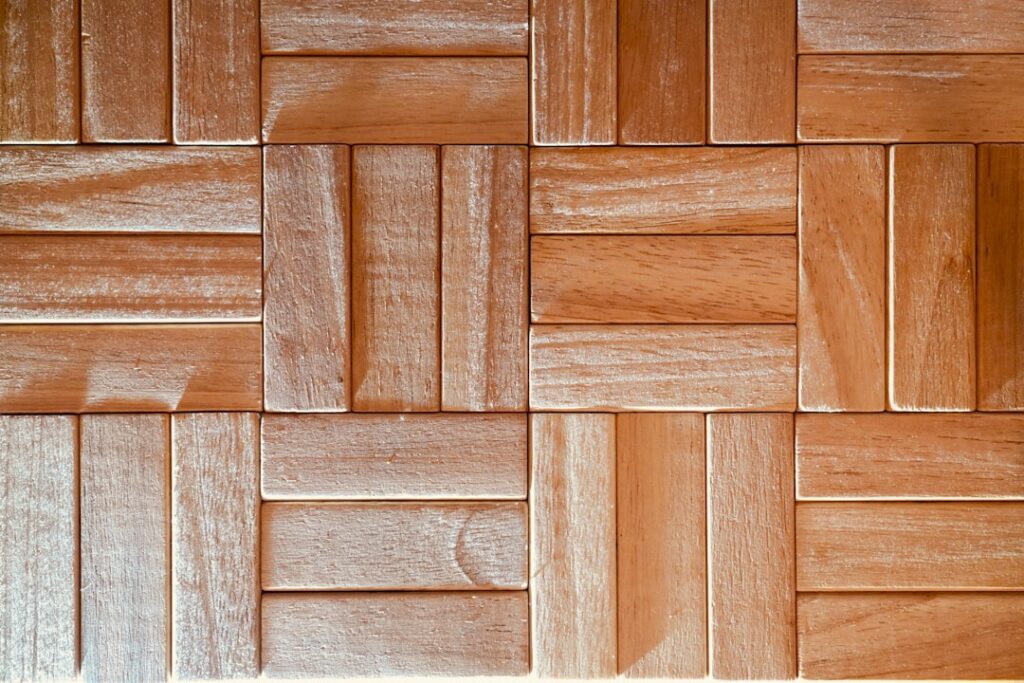
Walk into any 1920s bungalow on the East Coast and odds are the original floors are still there — that is the case for oakwood flooring in a nutshell. Oak has anchored American homes for over a century because the math works: dense fibers, open grain that hides scratches, and a price tag below most exotic species. If you are weighing oak against maple, hickory, or engineered alternatives, the species earns its reputation but it is not flawless.
White Oak vs Red Oak: The Real Difference
White oak rates 1,360 on the Janka hardness scale; red oak comes in at 1,290. That five percent gap matters less than the visual difference. White oak skews golden brown with tight, straight grain and reads modern when finished with a matte water-based poly. Red oak runs pinkish-amber with a wilder cathedral pattern that reads traditional.
White oak is also closed-cell, meaning the pores are sealed with tyloses. That makes it the only choice for wire-brushed and reactive-stain finishes, and it is why nearly every European wide-plank look uses white oak rather than red.
What You Will Pay Per Square Foot
Domestic 2.25-inch red oak strip runs $3.50 to $5 per square foot for material at home centers. White oak in the same width sits closer to $5 to $7. Move up to 5-inch and 7-inch wide planks and pricing jumps to $8 to $14 for prefinished engineered, and $9 to $18 for character-grade rift-and-quartered solid white oak from a specialty supplier.
Add $4 to $7 per square foot for nail-down installation by a contractor, plus $1.50 to $3 if you need subfloor repairs. A 500 sq ft living room in mid-grade prefinished oak typically lands between $7,500 and $11,000 installed.
Solid vs Engineered Oak
Solid 3/4-inch oak can be sanded and refinished six to ten times across a 75 to 100 year service life. That is the long-game advantage. Engineered oak — a 3mm to 6mm oak veneer over a plywood core — handles slabs and basements where solid wood will cup, and it can typically take two to three refinishes if the wear layer is at least 4mm.
For a moisture-prone room or a condo with concrete subfloor, engineered is the right call. For an upstairs bedroom over a wood subfloor, solid oak will outlast the engineered product by decades.
Pros of Oak You Will Actually Notice
- Hides damage. The open grain pattern visually breaks up scratches, dents, and uneven sun-fade better than maple or birch.
- Takes stain predictably. Both species accept dark walnut, weathered gray, and natural finishes without the blotching that plagues maple and pine.
- Wide availability. Every flooring shop in the US stocks oak. Repair pieces and matching trim are easy to source ten years later.
- Stable in normal humidity. When kept between 35 and 55 percent relative humidity, oak moves less than hickory or pine.
Cons Worth Knowing Before You Buy
Oak is not bulletproof. Red oak in particular shows wear paths in high-traffic kitchens within five years if you skip area rugs. Both species are reactive to moisture: a leaking dishwasher will cup planks within 48 hours, and unaddressed pet urine will turn into permanent black stains that even a deep sanding cannot reach.
The grain is also opinionated. If you want a flat, uniform Scandinavian look, oak — especially red — fights you. Maple, beech, or rift-only white oak read smoother in those rooms.
Best Finishes for Oak
Site-finished oak with three coats of Bona Traffic HD waterborne poly remains the gold standard for durability — expect 15 to 20 years before you need a screen-and-recoat. Prefinished factory finishes with aluminum oxide top coats outlast site-finish on the surface but show seams between boards because of the micro-bevels.
For modern rooms, a hardwax oil like Rubio Monocoat in Smoke or Pure looks unbeatable, but it requires re-oiling every two to four years in busy households.
Installation Tips That Save Money
- Acclimate planks in the install room for at least five days. Oak that is delivered in a 70-degree truck and nailed down the same day will gap by winter.
- Check subfloor moisture with a meter. Wood subfloor should read under 12 percent and within 4 percent of the oak planks.
- Use 1-3/4-inch cleats with a pneumatic flooring nailer for solid 3/4-inch oak. Staples can blow through and split the tongue.
- Rack out three to four boxes at once and mix planks. Single-box installation creates obvious color stripes.
- Leave a 3/4-inch expansion gap at every wall, hidden by base shoe or quarter round.
Maintenance Across the First Decade
Sweep or vacuum weekly with a soft-floor head. Damp mop monthly with Bona Hardwood Cleaner — never with a wet mop, never with vinegar. Plan a screen-and-recoat at year 8 to 12, which adds a fresh topcoat without going through to bare wood. A full sand-and-refinish becomes the right move at year 20 to 30 when scratches penetrate past the finish. Felt pads on every furniture leg, area rugs in front of sinks and exterior doors, and a rolled-vinyl mat under any rolling office chair will buy years of clean appearance.
Who Should Choose Oak
Oak is the right floor for almost any homeowner who wants a wood floor that will outlast the mortgage, holds resale value, and accepts changes in design taste through restains. Skip oak if you live in a beach condo where humidity swings 30 percent seasonally — engineered oak is fine there but solid is asking for movement. Skip it also if you specifically want a tight, glassy modern look — that is maple or beech territory.
For everyone else, well-installed oakwood flooring remains the safest, most refinishable hardwood investment you can make in a US home — a floor that ages into a feature rather than wearing out as a liability.
Prefer to explore on your own?
See how new flooring looks in your actual room in seconds — free, no signup.
Try the free Floor Studio →