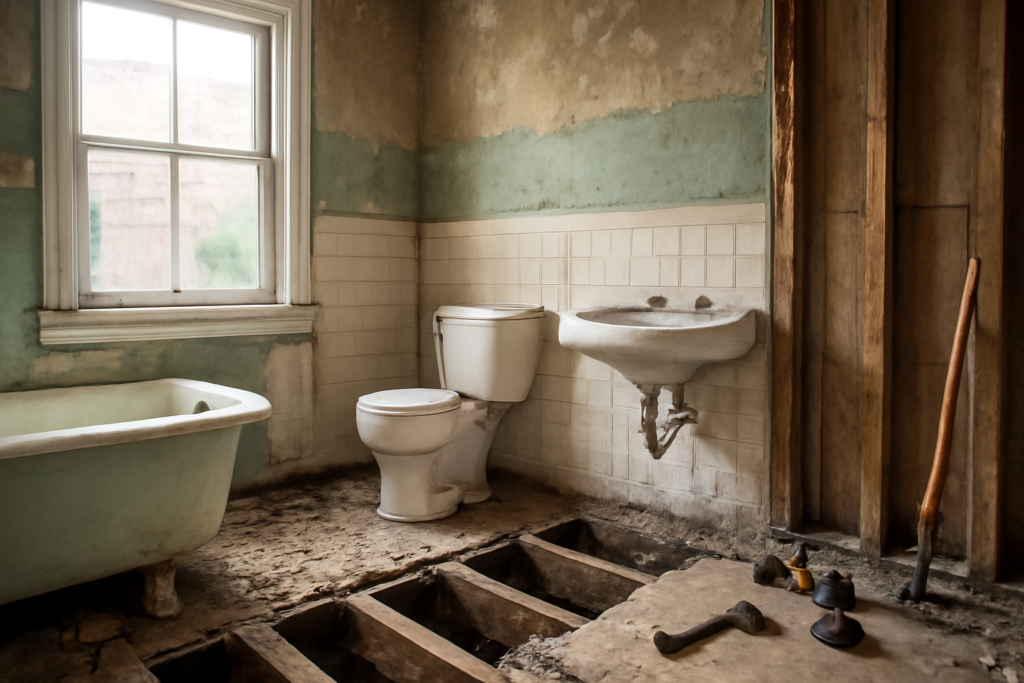
Tearing into a bathroom that has not been touched in 40 years is part renovation, part archaeology. An old bathroom remodel almost always reveals something the previous owner buried: rotted subfloor, corroded galvanized pipes, knob-and-tube wiring, or a layer of asbestos behind the tile. None of these are reasons to panic, but they are reasons to plan carefully and budget generously. This guide explains what makes remodeling an older bathroom different and how to do it right.
Part of our Bathroom Remodeling & Flooring guide — explore the full guide →
- Why Old Bathrooms Need Extra Caution
- Watch for Hazardous Materials
- Plan the Layout Before You Demolish
- Budgeting an Old Bathroom Remodel
- The Order of Work
- Don’t Skip Waterproofing
- Smart Upgrades for Older Homes
- Choosing Durable, Period-Appropriate Finishes
- Ventilation Is Not Optional
- When to Call a Pro
Why Old Bathrooms Need Extra Caution
The systems hidden inside the walls of an older home rarely meet today’s standards. Galvanized steel supply lines clog with mineral buildup and rust, lowering water pressure. Cast-iron drains crack over decades. Older wiring may lack a ground, and bathroom outlets almost certainly predate GFCI protection, which code now requires. A remodel is the ideal moment to bring these systems up to date while the walls are open.
Watch for Hazardous Materials
Homes built before 1980 may contain asbestos in old floor tiles, mastic, and pipe wrap, and lead in paint or solder. Do not sand, scrape, or demolish these materials yourself. If you suspect asbestos or lead, hire a licensed abatement professional to test and remove it safely. The cost of testing is small compared with the health risk of disturbing these materials. This is not an area to cut corners.
Plan the Layout Before You Demolish
Decide early whether you are keeping the existing footprint or moving fixtures. Leaving the toilet, sink, and tub in place keeps plumbing costs down dramatically. Relocating them means new supply and drain lines, which in an older home can mean opening walls and floors you had hoped to leave alone. If the layout is genuinely cramped, the investment may be worth it, but go in knowing it raises both cost and timeline.
Budgeting an Old Bathroom Remodel
Older bathrooms reliably hide expensive surprises, so build a healthy contingency into your budget. General ranges to expect:
- Cosmetic refresh: $3,000 to $8,000 for new fixtures, paint, and a vanity
- Midrange full remodel: $10,000 to $20,000 with new tile, plumbing fixtures, and lighting
- Full gut with layout changes: $20,000 to $40,000 or more
Set aside an extra 20 percent for hidden damage. In older homes, water has often been quietly working behind the tile for years, and you only learn the extent once demolition begins.
The Order of Work
Sequencing keeps an old bathroom remodel from stalling. The proven order looks like this:
- Demolition: remove tile, fixtures, and damaged drywall down to the studs
- Inspection: check the subfloor, joists, and framing for rot and repair as needed
- Rough plumbing and electrical: replace old pipes and wiring, add GFCI and venting
- Waterproofing: install a proper shower pan and membrane
- Drywall and cement board: use moisture-resistant board near wet areas
- Tile and flooring: set wall and floor tile, then grout and seal
- Fixtures and finishes: vanity, toilet, faucets, lighting, mirror, and paint
Don’t Skip Waterproofing
The biggest mistake in older bathroom remodels is failing to waterproof correctly. Old construction often relied on nothing more than tile and grout to keep water out, which is why so many of these rooms hide rot. Modern practice uses a waterproof membrane behind the tile and a properly sloped shower pan. Spend the money here. A leak that returns in two years costs far more than doing it right the first time.
Smart Upgrades for Older Homes
While the walls are open, a few additions pay off for years:
- An exhaust fan vented to the outside to control the moisture that destroyed the old room
- A GFCI outlet near the vanity for safety and code compliance
- Blocking in the walls for future grab bars, even if you do not need them yet
- A comfort-height toilet and a curbless or low-threshold shower for long-term accessibility
Choosing Durable, Period-Appropriate Finishes
In an older home, finishes that nod to the home’s era often look better than aggressively modern ones, but they still need to perform in a wet room. Porcelain tile is a workhorse for both floors and walls because it resists water and wear. Subway tile suits homes of nearly any age and stays affordable. For flooring, slip-resistant porcelain or quality sheet vinyl handles moisture far better than wood. If you want a vintage feel, hexagon mosaic floor tile is a classic that fits early-twentieth-century homes beautifully.
Pick fixtures with replaceable parts from brands that stock cartridges and seals, since a quality faucet should last well over a decade with simple maintenance. Spend on the items you touch daily, like the faucet and shower valve, and save on purely decorative pieces.
Ventilation Is Not Optional
Many older bathrooms were built with little or no mechanical ventilation, relying on a window that no one opens in winter. That trapped moisture is exactly what rotted the walls you are now repairing. Install an exhaust fan sized to the room, vented all the way to the outside rather than into the attic, where it would just relocate the moisture problem. Run it during every shower and for 15 to 20 minutes afterward. Good ventilation is one of the cheapest insurance policies against future mold and rot.
When to Call a Pro
Adding storage during the remodel is a smart move, since older bathrooms are notoriously short on it. A recessed medicine cabinet, a vanity with drawers, and built-in niches in the shower wall add function without crowding the floor. Plan these in early, while the walls are open, because retrofitting storage later means opening the walls all over again. A small linen cabinet or open shelving above the toilet uses otherwise wasted vertical space.
Cosmetic updates like painting, swapping a faucet, or installing a new vanity are reasonable DIY projects. Anything involving moving plumbing, updating wiring, structural repair, or suspected asbestos belongs to licensed professionals. Permits are usually required for plumbing and electrical work, and an inspector will check the rough-in before the walls close. A successful old bathroom remodel respects what is hidden behind the walls, fixes the underlying problems, and waterproofs properly, so the finished room lasts another generation rather than failing in a few short years.