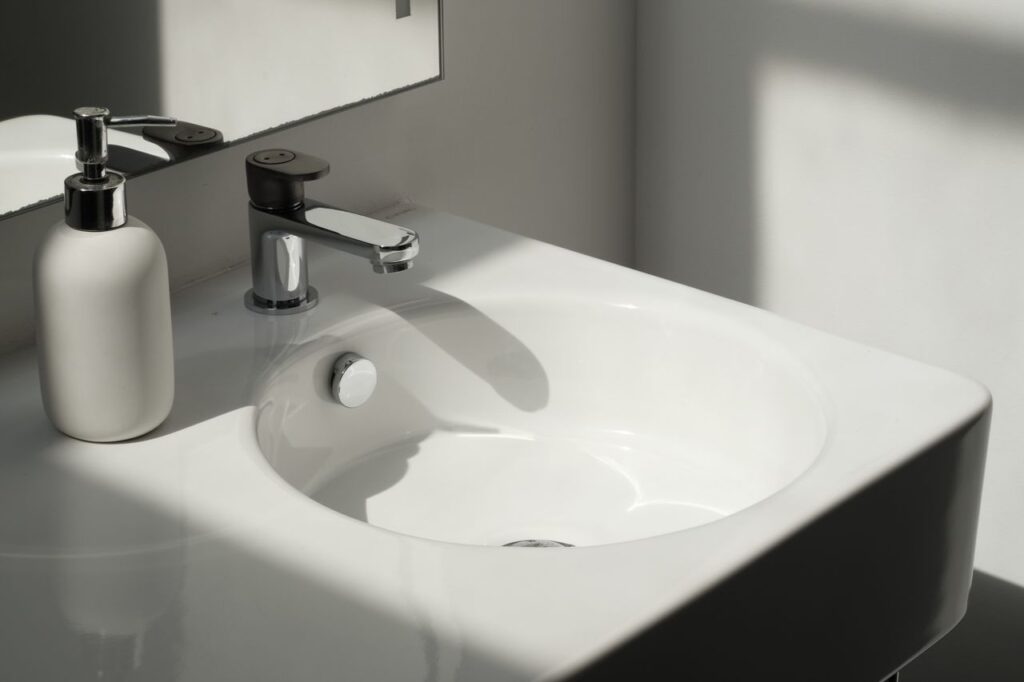
Walk into any modern bathroom showroom and the sleek, single-spout look dominates, and that look comes from a one hole bathroom faucet, also called a single-hole faucet. It mounts through one opening in the sink or counter and combines the spout and handle into a single fixture. The style suits small vanities beautifully, but buying one means understanding hole sizes, deck plates, and whether your existing sink can accept it. This guide covers how single-hole faucets work, how to size the opening, and how to install one without a leak under the counter.
Part of our Bathroom Remodeling & Flooring guide — explore the full guide →
What Single-Hole Means
A one-hole faucet routes everything through a single deck penetration. The spout and the handle, or a single joystick-style lever, sit on one base, and both hot and cold supply lines plus the mixed output run down through that one hole. Compare that to a widespread faucet, which uses three separate holes, or a centerset, which uses three holes on a 4-inch base.
The single-hole look is minimalist and easy to keep clean, since there are fewer bases and gaps to trap grime. It reads modern, which is why it dominates contemporary and transitional bathroom designs.
Sizing the Sink Hole
The standard faucet hole diameter is 1.375 inches, often listed as 1-3/8 inch. Most single-hole faucets are built to fit that opening, but always check the spec sheet, since a few designer models need a slightly larger bore. Measure your existing sink’s hole before ordering.
Many bathroom sinks come pre-drilled for either one or three holes. If yours has three and you want the single-hole look, that is where a deck plate comes in, which the next section covers.
Deck Plates for Three-Hole Sinks
You can install a one-hole faucet on a three-hole sink using an escutcheon, or deck plate. This oblong cover spans the 4-inch or 8-inch hole spacing and lets the single faucet mount through the center hole while hiding the two outer holes.
Many single-hole faucets include an optional deck plate in the box, giving you flexibility to mount them either way. If yours does not, buy a matching-finish deck plate separately so it blends rather than clashes. This trick lets you modernize a bathroom without replacing the whole sink.
Matching Finish and Style
Coordinate the faucet finish with the other metal in the room, drawer pulls, towel bars, and the shower trim. Common finishes include chrome, brushed nickel, matte black, and brushed gold, each with its own maintenance character. Matte black hides water spots but shows dust, while chrome shows spots but wipes clean easily.
Consider spout height and reach too. A tall gooseneck spout looks striking but can splash in a shallow vessel sink, while a lower spout suits a standard drop-in basin better.
Installation Steps
- Shut off both supply valves and open the old faucet to relieve pressure
- Disconnect the supply lines and remove the old faucet from below
- Clean the deck, then set the new faucet’s gasket or the deck plate over the hole
- Feed the faucet’s supply lines and shank down through the hole
- Secure the mounting nut from underneath and check the faucet sits straight
- Connect the supply lines to the shutoff valves, using new braided supply lines if the old ones are stiff
Hand-tighten the mounting hardware, then snug it with a basin wrench, but do not overtighten, which can crack a ceramic sink. A single-hole faucet’s compact base makes this one of the easier faucet swaps a DIYer can tackle.
Connecting Supply Lines and Testing
Most single-hole faucets come with attached flexible supply hoses, which simplifies the connection. Thread them onto the angle stops, tighten to snug plus a slight turn, and avoid cranking hard on the small nuts. If the faucet has a pop-up drain assembly, install and adjust the lift rod at this stage.
Turn the water back on slowly and check every joint for drips with a dry paper towel. Run hot and cold, confirm the handle mixes properly, and watch the connections under the sink for a full minute before calling it done.
Common Problems and Fixes
A wobbly faucet usually means the mounting nut needs another turn or the deck plate gasket is not seated. Low flow after install often traces to the aerator, which can trap debris knocked loose during the swap, so unscrew and rinse it. A drip at the base points to a missing or pinched gasket.
If the handle feels stiff or the temperature will not adjust, the cartridge may be seated wrong or the supply lines may be reversed, sending hot to the cold side. Double-check that hot connects to the left and cold to the right.
Cost and Value
- Budget single-hole faucet: $40 to $90
- Mid-range brand-name model: $100 to $250
- Premium designer faucet: $250 to $600
- Matching deck plate, sold separately: $15 to $40
- Professional installation: $120 to $300
A single-hole faucet is often the cheapest way to refresh a bathroom’s look, and the compact design makes DIY installation realistic for most homeowners. Spend a little more on a reputable brand with a ceramic-disc cartridge, since that is what keeps the faucet drip-free for a decade rather than a couple of years.
Single-Hole vs Widespread vs Centerset
Knowing how the single-hole style compares helps you commit with confidence. A centerset faucet mounts on a 4-inch three-hole base and suits small standard sinks, while a widespread spreads its handles and spout across 8 inches for a more custom, luxurious spread. The single-hole faucet splits the difference, giving a clean modern face with the easiest installation of the three. For a compact vanity or a vessel sink, single-hole is almost always the right call, since a widespread would crowd a small basin and a centerset can look dated. Match the faucet type to the sink’s drilling first, then to the room’s style, and the choice usually makes itself.