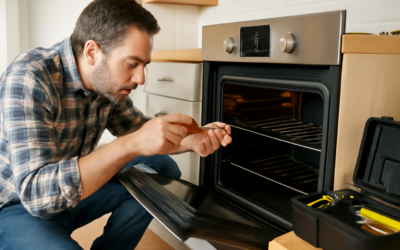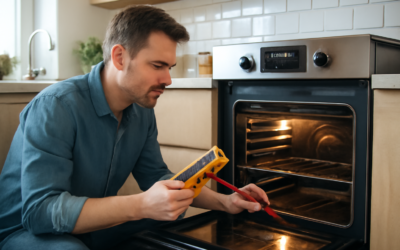
Roast pulled out of the freezer, oven set to 375, and twenty minutes later the cavity is still cold. An oven not lighting can mean a $20 part or a $400 service call, but you can diagnose most failures in under fifteen minutes with a flashlight and a multimeter. After troubleshooting hundreds of gas and electric range failures across Whirlpool, GE, Frigidaire, LG, Samsung, and Bosch units, I can walk you through the same diagnostic order I follow in the field. Safety first: never poke at gas components with the supply line open or live electrical components without flipping the breaker.
- Gas Oven Versus Electric Oven Issues
- Gas Oven: Check the Igniter First
- Gas Oven: Spark Module and Pilot Issues
- Electric Oven: Test the Bake Element
- Electric Oven: Broil Element and Control Board
- Sensor and Thermostat Problems
- Common Error Codes to Watch For
- Safety Steps Before Any Repair
- When to Call a Professional
Gas Oven Versus Electric Oven Issues
Gas ovens fail most often at the igniter, gas safety valve, or thermostat sensor. Electric ovens fail at the bake element, broil element, or control board. Identifying which fuel type you have changes the entire diagnostic path. Look at the back of the range for the gas connection or for a 240-volt plug to confirm.
Dual-fuel ranges from Bosch, Wolf, and Thermador combine a gas cooktop with an electric oven. If the cooktop lights but the oven does not, treat the unit as electric for diagnostic purposes.
Gas Oven: Check the Igniter First
The hot surface igniter is the single most common point of failure in modern gas ovens, accounting for roughly 70 percent of no-heat calls. Igniters degrade over five to seven years even with normal use, drawing less current as they age until they cannot open the gas safety valve.
Watch the igniter from inside the oven cavity with the door open. Set the oven to bake and observe. A healthy igniter glows bright orange within 60 to 90 seconds. A weak igniter glows dull yellow or red and never opens the gas valve. If you see no glow at all, the igniter is open and needs replacement.
Replacement igniters run $25 to $60 at parts retailers like RepairClinic, AppliancePartsPros, or PartSelect. OEM Whirlpool, GE, and Frigidaire igniters cost slightly more than universal options but install with no wiring modifications. Plan 45 minutes to swap one with the oven cool and the gas shutoff valve closed.
Gas Oven: Spark Module and Pilot Issues
Older gas ovens built before 1990 use a standing pilot light. If the pilot has gone out, locate it at the bottom of the oven cavity, hold down the red reset button, and light with a long match or BBQ lighter. If the pilot will not stay lit after 30 seconds, the thermocouple has failed. Thermocouples run $15 to $30 and thread into the gas valve with a wrench.
Spark ignition systems on midcentury ranges use a spark module to fire each burner including the oven. Listen for a clicking sound when you turn on the oven. No clicking means the spark module has failed. Modules cost $40 to $90 and swap in 20 minutes after pulling the back panel.
Electric Oven: Test the Bake Element
The bake element sits at the bottom of an electric oven cavity. Visual inspection catches most failures. Look for blisters, breaks, or burn spots along the loop. A failed element often shows a clear burn-through where 240 volts arced to ground.
If visual inspection looks fine, test with a multimeter set to ohms. Pull the back panel after unplugging the range. Disconnect both wires from the element terminals. Healthy elements read 19 to 115 ohms depending on wattage. An infinity reading means an open circuit and a failed element. Replacement bake elements cost $35 to $90 and slide in after removing two mounting screws.
Electric Oven: Broil Element and Control Board
If the broil element fires but the bake element does not, the bake circuit on the control board has failed rather than the element itself. Control boards run $150 to $400 from parts retailers and are model-specific. Whirlpool W11122555 and Frigidaire 316576604 are common replacements, but always verify with your model number.
Test broil function before assuming the board failed. Press broil on the control panel and watch the top element. If the broil element glows red within 60 seconds, the element itself works fine. If neither element heats and the display shows the temperature correctly, the relay board is likely the culprit.
Sensor and Thermostat Problems
The oven temperature sensor, a small probe sticking into the upper-rear cavity, tells the control board when to cycle the heating element. A failed sensor reports incorrect temperatures, causing the oven to run too cool, overheat, or shut down entirely on an F1 or F3 error code.
Test the sensor with a multimeter at room temperature, around 70 degrees Fahrenheit. A healthy sensor reads 1080 to 1090 ohms. Significantly different readings mean replacement, which runs $25 to $60 and swaps in 30 minutes with the back panel off.
Common Error Codes to Watch For
- F1: Control board or keypad failure on most GE and Whirlpool models
- F2: Oven over-temperature, often a stuck relay
- F3 or F4: Open or shorted temperature sensor
- F5: Door latch or self-clean lockout malfunction
- E15 or PF: Power failure or control board reset needed; cut breaker for 60 seconds
Always consult the user manual or model-specific service sheet, because Samsung, LG, and Bosch use their own code conventions.
Safety Steps Before Any Repair
For gas ovens, turn the shutoff valve perpendicular to the supply line before touching any internal component. The valve sits behind the range or in the cabinet next to it. For electric ovens, flip the double-pole 240-volt breaker at the panel, then verify the range is dead by trying to power it on. Wear cut-resistant gloves when handling sheet metal panels, which carry sharp edges.
Never bypass safety controls or jumper out a failed thermostat. A runaway oven can start a house fire within minutes if the heating element cannot cycle off.
When to Call a Professional
Gas valve replacement, control board reprogramming on smart ranges, and sealed combustion chamber repairs all justify calling a licensed appliance tech. Average diagnostic service calls run $85 to $135, with parts and labor on a typical repair landing between $180 and $450. If your range is over 12 years old and needs $400 in repairs, replacement makes more financial sense than fixing. For everything else, an oven not lighting is usually a straightforward fix that pays for itself the first time you skip the service call.