A standard 8x8x16-inch concrete block costs about $1.50 to $2.75 at the home center, which makes it one of the cheapest building materials in any garden center. Yet most people never look twice at it. Painted cinder block garden ideas take that plain gray brick and turn it into raised beds, tiered planters, decorative borders, and vertical succulent walls that look far more expensive than they are. With a $30 gallon of masonry paint and a weekend, you can build a garden feature that lasts for decades. This guide covers the best designs, the right paint and sealer for concrete, and the specific steps that keep your color from flaking off after one rainy season.
Part of our Paint & Walls guide — explore the full guide →
- Why Cinder Blocks Work So Well in the Garden
- Ten Painted Cinder Block Garden Designs Worth Copying
- Choosing the Right Paint for Concrete Blocks
- Step-by-Step: How to Paint Cinder Blocks That Last
- Building Planters and Beds Without Mortar
- Color Schemes That Look Intentional, Not Random
- Frequently Asked Questions
Why Cinder Blocks Work So Well in the Garden
Concrete masonry units, the correct name for what most people call cinder blocks, are heavy, frost-resistant, and modular. A single block weighs 28 to 38 pounds, so a stacked wall stays put without mortar in most low structures. The hollow cores double as built-in planting pockets, which is why they show up in so many DIY vertical gardens.
Because they are cast concrete, they take paint beautifully once sealed. The rough face gives primer plenty of tooth to grip. And unlike wood raised beds that rot in five to eight years, a painted block bed can outlast the house if you seal it properly. The trade-off is weight and a industrial look you have to dress up, which is exactly where paint earns its keep.
Ten Painted Cinder Block Garden Designs Worth Copying
Start with the structure, then decide on color. These layouts all use standard 16-inch blocks and require no mortar unless noted.
- Ombre planter wall: Stack blocks two or three high and paint each row a slightly deeper shade of the same color, fading from pale to saturated. A quart each of three coordinating blues runs about $45.
- Rainbow herb border: Line a bed edge with single blocks laid on their sides, painting each core opening a different bright color and planting basil, thyme, and mint inside.
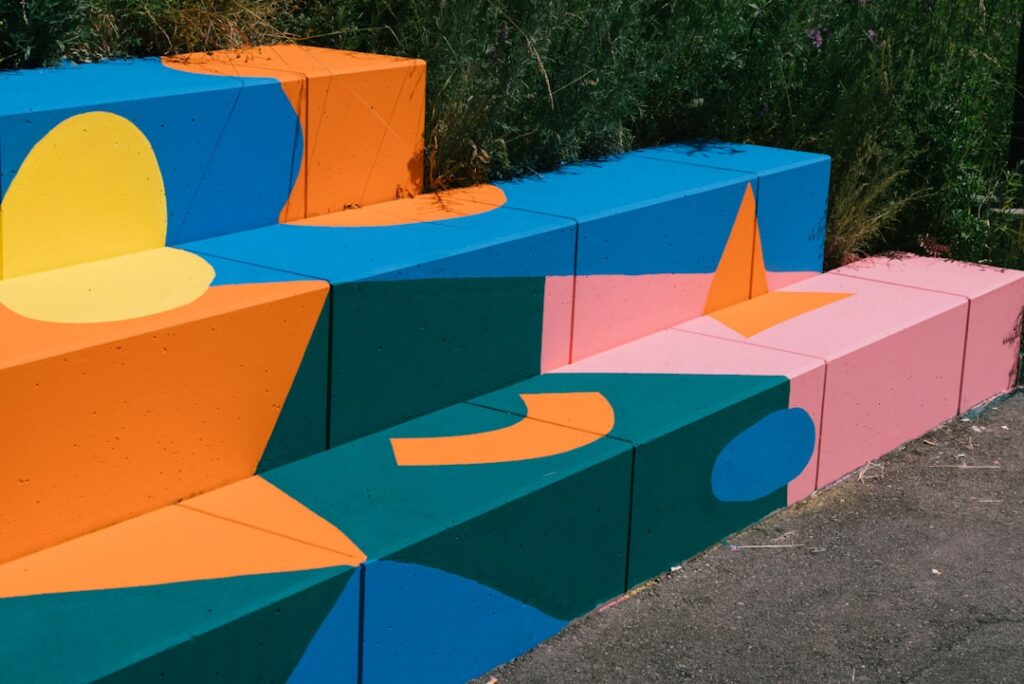
- Geometric raised bed: Build a 4×8-foot bed two blocks high (that is 20 blocks per course) and paint a repeating triangle or chevron pattern using painter’s tape.
- Succulent letters: Arrange blocks to spell a word or house number, paint them white, and fill the openings with hen-and-chicks or sedum.
- Tiered strawberry tower: Stagger blocks in a pyramid so each level’s cores face out, paint terracotta orange, and cascade strawberries down the front.
- Modern black bench-planter: Two block columns painted matte black with a cedar plank across the top makes a $60 garden bench with planters at each end.
- Faux terracotta border: Paint blocks a warm clay color and sponge on a darker wash to mimic aged pots for a Mediterranean look.
- Kids’ chalkboard planter: Coat the outer face with chalkboard paint so children can draw plant labels.
- Coastal blue-and-white: Alternate crisp white and navy blocks for a New England feel that pairs with hydrangeas.
- Metallic accent wall: Base coat charcoal, then dry-brush copper or gold on the raised edges for a dramatic evening garden.
Choosing the Right Paint for Concrete Blocks
Regular wall paint will peel within a season outdoors on concrete. You need products rated for masonry and exterior exposure. Here is what actually holds up:
- Masonry and stucco paint: Acrylic-latex elastomeric paint like Behr Premium or Sherwin-Williams Loxon flexes with the block and resists cracking. Expect $35 to $55 a gallon, covering roughly 100 square feet on rough block.
- Concrete stain: For a natural, mottled look that soaks in rather than sits on top, a water-based concrete stain ($30 a gallon) will not peel because it becomes part of the surface.
- Spray paint for masonry: Rust-Oleum makes a textured masonry spray that speeds up small projects, around $8 a can, though coverage is limited to about 15 square feet.
Skip cheap interior latex, milk paint, and craft acrylics for any block that gets rain or irrigation. They fail fast. If a block only lives on a covered porch, you have more freedom.
Step-by-Step: How to Paint Cinder Blocks That Last
- Clean the blocks. Scrub with a stiff brush and a solution of one cup TSP substitute per gallon of water to strip dust and efflorescence. Rinse and let dry 24 hours. Wet concrete will not hold paint.
- Prime with masonry primer. Roll on a coat of alkali-resistant block filler or masonry primer such as Zinsser Watertite ($40 a gallon). This fills pinholes and blocks the high pH of fresh concrete from attacking the color coat.
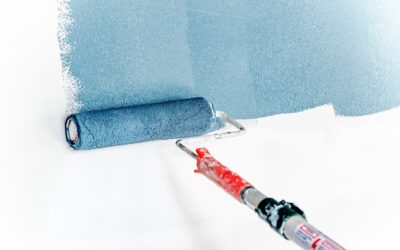
- Apply two color coats. Use a 3/4-inch nap roller to push paint into the porous surface, and a brush to catch the recessed mortar lines. Wait the full recoat time on the label, usually 4 hours, between coats.
- Add patterns after the base cures. Let the base coat dry overnight before taping off stripes or chevrons, or the tape will lift fresh paint.
- Seal the finish. Two coats of a clear water-based masonry sealer ($25 a quart) lock in the color and repel moisture. This single step is what separates a bed that still looks good in year five from one that is flaking by fall.
Plan on one full day for prep and priming, and a second day for color and sealing so each layer cures properly.
Building Planters and Beds Without Mortar
Most decorative block projects stay under two feet tall, which is well within dry-stack territory. Level the ground with a few inches of compacted gravel so the first course sits flat, then stagger the joints between rows like brickwork for stability. For anything over three courses or a load-bearing wall, use construction adhesive such as Loctite PL 500 ($6 a tube) between blocks, or set them in mortar.
When you plant directly in the cores, line the bottom with landscape fabric and add a two-inch layer of gravel for drainage before your potting mix. Concrete leaches a small amount of lime that raises soil pH over time, so acid-loving plants like blueberries are not ideal choices for the block cavities.
Color Schemes That Look Intentional, Not Random
The fastest way to make painted blocks look cheap is to use too many unrelated bright colors. Pick a three-color palette and repeat it. Warm terracotta, sage green, and cream reads Mediterranean. Navy, white, and natural wood reads coastal. Charcoal, blush, and brass reads modern. If you want bold rainbow blocks, keep them all the same saturation level so they feel like a set rather than paint leftovers.
Frequently Asked Questions
Do painted cinder blocks fade in the sun?
Quality exterior masonry paint holds its color for 7 to 10 years. Deep reds and bright purples fade fastest because those pigments are less UV-stable, so lean toward earth tones and blues if longevity matters. A UV-blocking sealer slows fading further.
Is it safe to grow vegetables in painted cinder blocks?
Paint the outside only and leave the inner cores bare, or line the cavity with plastic before adding soil so roots never touch the paint. Modern concrete blocks no longer contain fly ash with heavy metals the way older cinder blocks sometimes did, but lining is cheap insurance for edibles.
How many blocks do I need for a raised bed?
A 4×8-foot bed one course high needs 12 blocks; two courses high needs 24. Measure your layout, divide the perimeter in inches by 16, and add four blocks for corners and cuts.
Can I paint over old, weathered cinder blocks?
Yes, as long as you remove loose material, kill any mold with a diluted bleach solution, patch large cracks with concrete filler, and prime bare spots. Weathered blocks actually hold paint well because the surface is rough and open.
Painted cinder blocks prove that a good garden feature is about design and finish, not budget. Choose a structure that fits your space, use masonry-rated paint and sealer, and take the extra day to prime and cure. The result is a colorful, weatherproof garden bed that costs a fraction of stone or composite and lasts far longer than wood.