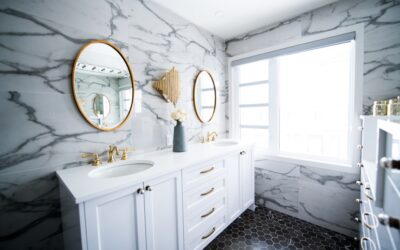
Patterned tile is the design move that turns a plain bathroom into a magazine cover and a bland entryway into a memorable arrival moment. Patterned tile flooring ranges from authentic Moroccan cement tiles handmade in Marrakech to digital-printed porcelain that mimics those same patterns at a fraction of the price and effort. Knowing the difference matters because the install process, maintenance, and lifespan vary wildly across product types.
Part of our Tile & Grout guide — explore the full guide →
This guide covers the major patterned tile categories, the design styles that work in 2026, what each option costs, and the installation realities that catch homeowners off guard.
The Major Categories
Encaustic Cement Tile
The original patterned tile, hand-poured from pigmented portland cement and pressed in metal molds. Each tile is a small piece of art with patterns running deep into the tile body, not just printed on top. Brands like Granada Tile, Cement Tile Shop, and Zia Tile sell authentic cement tiles for $10 to $25 per sq ft.
Cement tiles need sealing before grouting, frequent resealing, and mild cleaning chemistry only. They patina with use rather than wearing through, which appeals to design purists.
Porcelain Pattern Tile
The volume play. Inkjet-printed porcelain replicates encaustic, terrazzo, mosaic, and Spanish patterns at $3 to $9 per sq ft. Brands like Bedrosians Cloe, Daltile Memoir, Mediterranea, and Marazzi all offer extensive pattern libraries. The print runs through a glaze layer but does not penetrate the body.
Porcelain is fully waterproof, easier to install than cement, and needs no sealing. The trade-off is the pattern wears as the glaze wears, eventually showing the porcelain body underneath in extreme high-traffic zones.
Ceramic Pattern Tile
Less dense than porcelain but cheaper at $2 to $6 per sq ft. Suitable for residential walls and low-traffic floors. Skip ceramic for entryways, kitchens with island traffic, or any commercial space.
Mosaic Sheet Tile
Small-format tiles (1×1, 2×2, hexagon, penny round) come pre-mounted on mesh sheets that combine into larger patterns. Penny round black-and-white floors, hex with pattern accents, and Spanish-style geometric mosaics fall in this category. Pricing $5 to $15 per sq ft.
Top Pattern Styles for 2026
Spanish and Mediterranean Geometric
Bold geometric patterns in blue, terracotta, white, and ochre define the Spanish revival look. Works best in entryways, mudrooms, and laundry rooms where the pattern is the visual anchor of the space.
Black and White Encaustic
Timeless and graphic. Pairs with everything from modern kitchens to Victorian bathrooms. Floral and damask patterns currently outsell pure geometrics in this colorway.
Terrazzo Print
The terrazzo aesthetic exploded with millennial-pink retail interiors and is now mainstream. Multi-color chip patterns on porcelain bodies offer the look without the installation complexity of real terrazzo.
Vintage Victorian
Tiny mosaic patterns in muted greens, blues, and whites fit period homes and trendy farmhouse renovations. Ann Sacks and Walker Zanger lead in custom Victorian-pattern mosaics.
Moroccan Zellige Layout
True zellige is hand-cut, but porcelain field tiles in zellige-inspired patterns offer the look at a tenth the price.
Where Patterned Tile Flooring Works Best
- Entryways and foyers (high impact, moderate square footage keeps cost reasonable)
- Powder rooms (small space, dramatic effect)
- Kitchen runners and islands (defining a workspace)
- Laundry rooms (utility space gets a personality boost)
- Outdoor patios (frost-rated porcelain only)
- Mudrooms and back entries
Patterned tile across an entire main floor is too much pattern for most homes. Reserve it for accent zones and pair with simple field tile or wood elsewhere.
Cost Per Square Foot Installed
- Porcelain pattern tile: $9 to $18 per sq ft installed
- Ceramic pattern tile: $7 to $14 per sq ft installed
- Encaustic cement tile: $20 to $40 per sq ft installed
- Custom mosaic and zellige: $25 to $80 per sq ft installed
Pattern alignment requires more cuts and more layout planning than field tile, so installation labor typically runs 30 to 50 percent higher per sq ft.
Installation Realities
Patterned tile demands a perfect substrate. A 1/4 inch dip in a 10-foot run shows immediately when straight pattern lines waver. Plan for self-leveling underlayment if your slab or subfloor is not within tolerance.
Layout starts in the center of the room and works outward, with cuts hidden under future furniture or against walls. Installing a busy pattern with cuts at the entry of the room ruins the visual immediately.
Use a pattern-matched grout color. Bright white grout on a black-and-white pattern feels harsh, so most designers specify warm gray or off-white. Cement tiles need sealing before grouting or the pigments will absorb grout haze permanently.
Sealing Cement Tiles
Authentic encaustic cement tiles need three rounds of penetrating sealer before grouting (using products like Miracle 511 Impregnator or Aqua Mix Sealer’s Choice Gold), one application of grout release before grouting, then two more sealer coats after grout cures. Skip any of these steps and the tiles permanently absorb grout, food spills, or staining liquids.
Reseal cement tiles annually in residential settings. Porcelain pattern tiles need no sealing.
Pros and Cons Summary
Patterned tile flooring delivers visual impact that no other floor can match. The downsides are higher installation cost, pattern fatigue over a long ownership, and the resale risk that bold patterns may clash with the next homeowner’s taste.
Use pattern as a focal point, not a wall-to-wall statement, and the floor stays exciting without becoming overwhelming.
Maintenance Notes
Daily sweep, weekly mop with pH-neutral cleaner. Avoid bleach, vinegar, and acidic chemistries on cement tile. Porcelain handles most cleaners but check the manufacturer’s spec sheet. Reseal grout every 18 to 36 months in wet areas to prevent staining.
Final Thoughts
Patterned tile flooring is one of the most impactful design moves available for under $5,000 in a typical entry or powder room. Choose porcelain for durability and budget, cement for authenticity and patina, and always invest in proper substrate prep and pattern-aware installation. Done well, the floor becomes a permanent design centerpiece that lifts every other element of the room.
Prefer to explore on your own?
See how new flooring looks in your actual room in seconds — free, no signup.
Try the free Floor Studio →