A bathroom is the one room where you can take a design risk that would overwhelm a larger space, and the floor is the perfect canvas. Patterned bathroom floor tiles turn an ordinary powder room into a showpiece, adding color, geometry, and vintage or modern character underfoot without the cost of a full renovation. Because the footprint is small, a bold encaustic or Moroccan-inspired pattern that would feel busy in a kitchen becomes a jewel-box moment in a bathroom.
Why Pattern Works So Well in Bathrooms
Small rooms reward high-impact design. A bathroom floor might be only 25 to 50 square feet, so even a dramatic pattern reads as tailored rather than chaotic, and the limited square footage keeps the material cost manageable even for premium tile. Pattern also does practical work: busy geometric and mottled designs hide the water spots, hair, and everyday grime that show mercilessly on a solid-color floor, so the room looks cleaner between mopping.
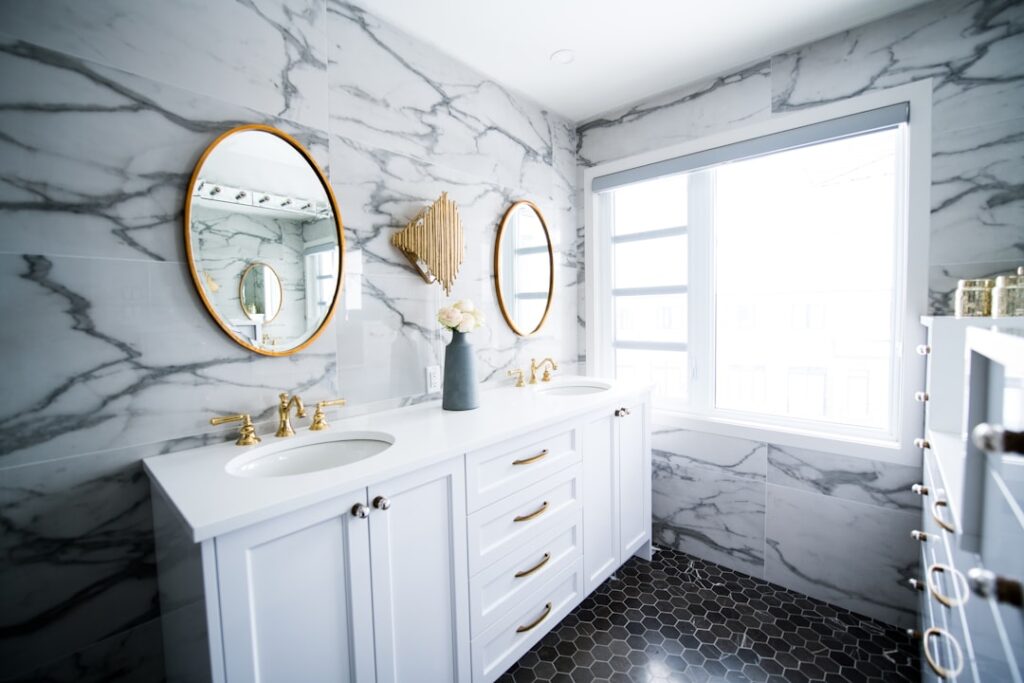
There is a design flexibility bonus, too. Because the floor carries the visual interest, you can keep walls, vanity, and fixtures simple and let the tile be the star. A neutral bathroom with white subway walls and a crisp vanity comes alive the moment you drop a black-and-white geometric floor beneath it, and the look costs far less than importing personality through expensive fixtures or custom cabinetry.
Popular Styles of Patterned Tile
The category is broad, and each style sets a different mood. Choosing the right family for your home keeps the bathroom feeling cohesive rather than trendy for its own sake.
- Encaustic and cement-look: the classic Spanish and Moroccan patterns in ochre, navy, and terracotta, now widely reproduced in easy-care porcelain.
- Black-and-white geometric: timeless hexagons, checkerboards, and basketweave that suit both period homes and modern remodels.
- Moroccan fish-scale and arabesque: curved, scalloped shapes that add softness and movement.
- Penny round and mosaic mixes: tiny tiles arranged in florals or gradients for a vintage bath-house feel.
Porcelain versions of these patterns have transformed the category. Traditional encaustic cement tiles are beautiful but porous and high-maintenance, needing sealing and gentle cleaners. Modern porcelain look-alikes print the same designs onto a dense, waterproof, stain-resistant body, giving you the vintage look with none of the fussy upkeep, which is exactly what you want on a wet bathroom floor.
Choosing the Right Material
Material choice matters more in a bathroom than almost anywhere else because of constant moisture. Porcelain is the top recommendation for patterned bathroom floor tiles: it is dense, waterproof, frost-proof, and rated for wet-area floors, and its patterns run through a printed and glazed surface that shrugs off water and cleaning products. Ceramic is a budget-friendly alternative that works well too, though it is slightly softer and less suited to heavy traffic.
Whatever material you choose, check the slip rating. Bathroom floors get wet, so look for tiles with a coefficient of friction rated for wet areas, often labeled with a DCOF value of 0.42 or higher. A matte or textured finish grips better than a high-gloss glaze, and small tiles with lots of grout lines actually add traction underfoot, a nice bonus of many mosaic patterns.
Layout and Design Tips
How you use pattern is as important as which pattern you pick. The safest and most elegant approach is to let the patterned tile be the only bold element in the room. Pair a busy floor with quiet walls, a simple vanity, and understated fixtures so the eye has somewhere to rest. When everything competes, nothing wins.
Consider a border or a framed inset if you want pattern without committing the whole floor. Running a field of patterned tile through the center and capping it with a solid border creates a rug-like effect that looks intentional and expensive. For very small bathrooms, keep the pattern scale proportional; a giant motif can get chopped up by the walls, while a smaller repeat reads as a complete, deliberate design. Always dry-lay a few boxes before setting to check how the repeat falls against your walls and fixtures.
What It Costs to Install
Budgeting is friendlier here than in bigger rooms because of the small area. Patterned porcelain and ceramic floor tile typically runs $5 to $15 per square foot, with premium imported encaustic climbing to $20 to $40. For a 40-square-foot bathroom, mid-range patterned tile costs roughly $200 to $600 in materials.
Professional installation generally adds $8 to $15 per square foot, and patterned tile can push toward the higher end because precise alignment of the repeat takes more time and skill than plain tile. Expect a pro-installed patterned bathroom floor to total $700 to $1,500 for an average bath. A careful DIYer with a wet saw can cut that to materials plus tools, though matching a complex repeat around a toilet flange and vanity is genuinely tricky work.
Coordinating Pattern With Walls and Fixtures
The single biggest mistake with a patterned floor is letting it compete with an equally busy wall or a bold vanity. Because the floor is doing the heavy design work, everything else in the room should recede. Keep wall tile simple, a plain white subway or a quiet solid color, and choose a vanity, mirror, and hardware in restrained finishes so the eye lands on the floor without confusion. When the pattern is the only loud element, the whole bathroom feels curated rather than chaotic.
Pull one color from the pattern into the rest of the room to tie it together. If your encaustic tile carries a navy motif, a navy vanity or navy towels create a subtle thread of repetition that makes the design feel intentional. Metals matter too: warm brass fixtures flatter earthy terracotta and ochre patterns, while chrome or matte black suits cooler black-and-white geometrics. This kind of restrained coordination lets an ambitious floor look designed by a professional instead of merely busy, and it is what separates a bathroom that feels bold and confident from one that feels cluttered.
Keeping a Patterned Floor Looking Great
Maintenance is simple once the tile is in. Glazed porcelain and ceramic wipe clean with a damp mop and a pH-neutral cleaner; skip harsh acids and abrasive pads that can dull the glaze over time. The one part that needs attention is the grout, which should be sealed after curing and resealed every year or two to keep moisture and mildew out. Choosing a mid-tone grout that complements the pattern hides dirt and simplifies upkeep.
With the right material and a thoughtful layout, patterned bathroom floor tiles deliver more design payoff per dollar than almost any other bathroom upgrade. Pick a durable porcelain, let the floor be the hero, and you will have a space that feels custom and full of character every time you walk in.
Prefer to explore on your own?
See how new flooring looks in your actual room in seconds — free, no signup.
Try the free Floor Studio →