A single band of bold print can turn a plain bathroom into the most photographed room in the house. Patterned ceramic floor tile gives you that impact without the fragility of cement encaustic or the price of hand-painted stone, because the design is baked right into a durable glazed surface. Whether you are drawn to Moroccan stars, Victorian geometrics, or a subtle tonal repeat, this guide covers the styles, costs, and practical details you need to choose and install with confidence.
Part of our Tile & Grout guide — explore the full guide →
What Makes Patterned Ceramic Different
Traditional encaustic tiles carry their color all the way through the body, which makes them beautiful but porous, expensive, and demanding to maintain. Patterned ceramic tile achieves the same look by printing or glazing the design onto a clay body and firing it hard. Modern inkjet glazing produces astonishingly crisp, varied prints, so a box of tiles can mimic a hand-laid mosaic or a worn vintage floor while resisting stains and water far better than the cement original.
Because the pattern sits in the glaze, these tiles clean up like any other ceramic and rarely need sealing. The trade-off is that heavy wear over decades can dull a glossy printed surface, so it pays to buy a floor-rated tile with a solid wear rating rather than a wall tile pressed into floor duty.
Popular Pattern Styles
The category is broad, and the style you pick sets the tone for the whole room. Some designs read historic and formal, while others feel playful and modern.
- Moroccan and Mediterranean: interlocking stars, quatrefoils, and arabesques in blues, terracotta, and cream.
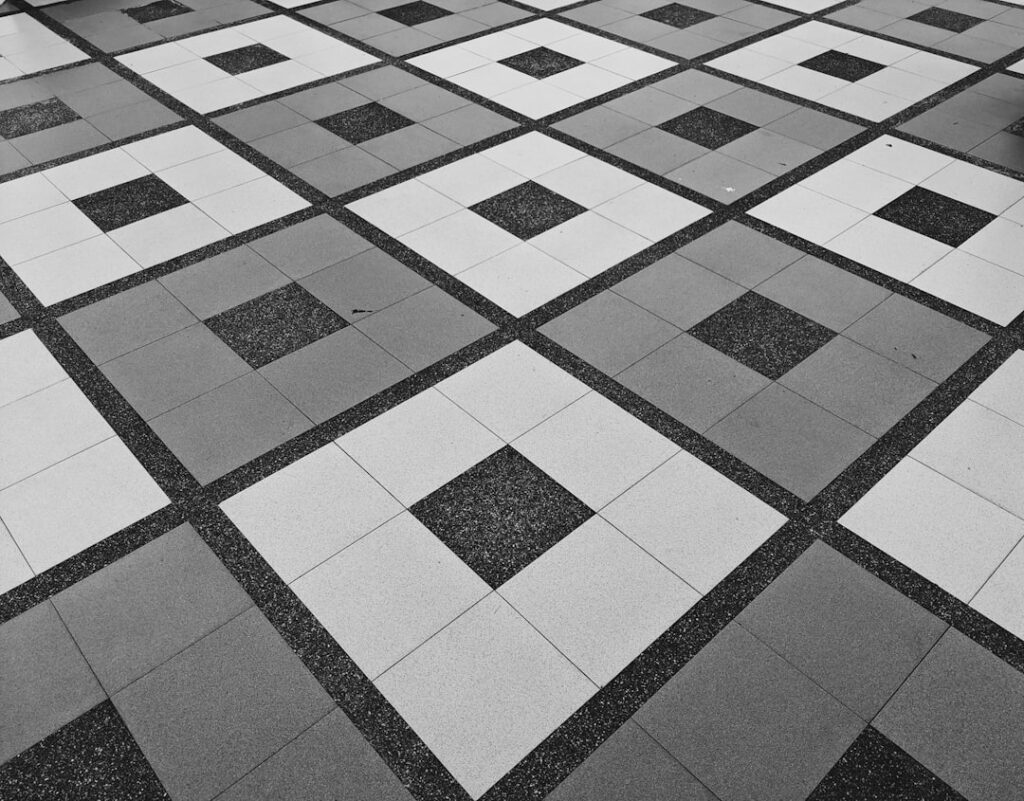
- Victorian geometric: black-and-white diamonds, hexagons, and borders that suit period homes and entryways.
- Encaustic-look: faded, matte prints that imitate a century-old cement floor.
- Talavera and folk: bright hand-painted-style motifs for kitchens and sunrooms.
- Tonal and modern: subtle textures and low-contrast repeats for a quieter statement.
Many collections mix plain field tiles with patterned accents, letting you frame a printed rug in the center of a room or run a decorative border around a solid floor.
Where to Use It
Patterned floor tile earns its keep in rooms where a floor can afford to be a focal point. Small spaces are ideal because a bold repeat overwhelms less in a compact footprint and the material cost stays low. A powder room, a mudroom, a laundry, or a kitchen alcove can all carry a strong pattern that would feel busy across a whole great room.
The trick in larger spaces is restraint. Use pattern as a defined zone, such as a runner down a hallway, an inset under a kitchen island, or a hearth-style rectangle inside a border of plain tile. That approach delivers the drama while keeping the room from feeling frantic, and it makes future repairs easier because you are working with a smaller printed area.
Cost and What Drives It
Patterned ceramic sits in a wide price band. Machine-printed collections from major manufacturers often run $4 to $10 per square foot, a fraction of what genuine encaustic cement costs. Imported or artisan-look lines with more intricate glazing can reach $12 to $25 per square foot, and specialty hand-decorated pieces climb higher still.
Installation labor typically adds $8 to $15 per square foot. Patterned floors sometimes cost more to set because the installer has to align the print across joints and orient each tile correctly, which is slower than laying a random-look plank. Budget for 10 to 15 percent extra tile for cuts and future repairs, and confirm the batch is from a single production run so colors match across every box.
Durability and the Ratings That Matter
For a floor that lasts, read the box. The PEI rating measures glaze wear resistance on a scale from 1 to 5, and you want at least PEI 3 for a residential floor, or PEI 4 for an entryway or kitchen that sees grit and heavy traffic. Check the coefficient of friction too if slip resistance matters, especially in a bathroom.
Ceramic is harder than most people assume but softer than porcelain, so it can chip under a dropped cast-iron pan. In a busy kitchen, a porcelain-bodied patterned tile is the more forgiving choice. Either way, glazed patterned tile shrugs off spills, pet accidents, and muddy boots far better than any through-body cement product.
Layout and Installation Tips
Design work happens before any mortar is mixed. Dry-lay several tiles to understand how the pattern repeats and to find the room’s center so the design stays balanced. Many patterned tiles are directional, meaning each piece must face the same way or rotate in a set sequence, so number the boxes and follow the manufacturer’s layout diagram.
Set the tiles into a full bed of thin-set combed with a 1/4-inch notched trowel over a flat, rigid substrate, and back-butter large or heavily textured pieces to avoid hollow spots. Keep grout joints tight and choose a grout color deliberately: a matching grout lets the pattern flow continuously, while a contrasting grout emphasizes the grid. Because most patterned ceramic is glazed, only the grout lines need sealing.
Keeping It Looking Sharp
Daily care could not be simpler. Sweep or vacuum to remove grit, then mop with a pH-neutral cleaner and warm water. Avoid abrasive pads and harsh acids that can scratch or dull the printed glaze over time. The grout is what ages, so wipe up spills before they sit and reseal cement grout once a year to keep the whole floor looking crisp.
Choosing Grout and Border Details
The finishing details around a patterned floor influence the final look as much as the tile itself. Grout color is the first big decision: a grout that matches the tile’s background lets the pattern flow uninterrupted across the room, which suits busy encaustic-look designs, while a contrasting grout frames each tile and emphasizes a geometric grid. For most patterned floors, a mid-gray grout is the safe, forgiving choice because it hides dirt and does not fight the design. Consider how the field meets the walls, too. Running a plain border of solid tiles around a patterned center creates a rug-like effect that looks deliberate and helps you avoid awkward partial cuts of the pattern at the room’s edges. In doorways and transitions, plan where the repeat lands so the pattern reads as intentional rather than chopped off. These small planning choices, made on paper before any mortar is mixed, are what separate a floor that looks custom from one that looks like an afterthought.
The Bottom Line
A patterned ceramic floor tile is the practical way to get statement-floor drama without the upkeep of cement encaustic or the cost of natural stone. Choose a floor-rated tile with a PEI 3 or higher, use pattern as a focused accent in small rooms or defined zones, and follow the manufacturer’s layout diagram for a clean install. Do that, and you will have a durable, low-maintenance floor with genuine personality that holds up for decades.
Prefer to explore on your own?
See how new flooring looks in your actual room in seconds — free, no signup.
Try the free Floor Studio →