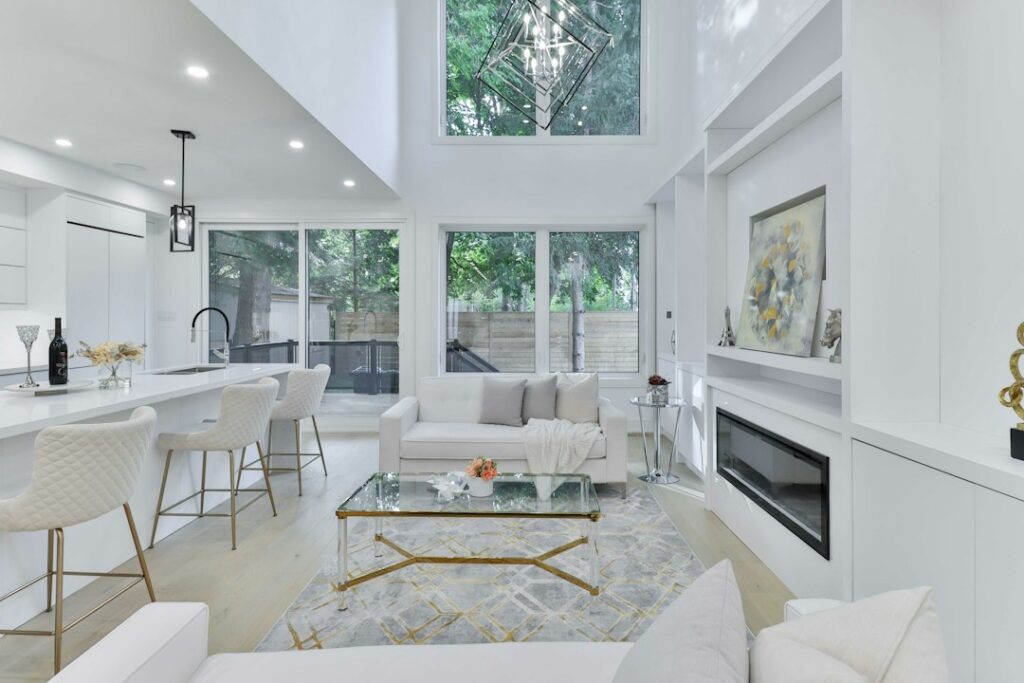
A picture window that is just a little too small looks like an afterthought, and one that is too large can overheat a room or strain the wall that holds it. Picture window sizes span a huge range, from 24-inch square accents beside a fireplace to 96-inch spans that frame a whole backyard. Because the glass is fixed and does not open, you can go bigger than any operable window of the same budget. The trick is matching the size to the wall, the view and the structure.
Part of our Windows & Doors guide — explore the full guide →
For most living rooms, a picture window between 48 and 72 inches wide and 48 to 60 inches tall feels right. Standard widths usually step in 6- or 12-inch increments from 24 to 96 inches, and heights run from about 24 to 72 inches, with taller custom units available. Large spans often combine a fixed center panel with operable casements or double-hungs on each side so the room still gets fresh air.
- Standard Picture Window Sizes
- How to Choose the Right Picture Window Dimensions
- Glass Size Limits and Structural Concerns
- Picture Window Combinations
- Installing a Picture Window: Overview
- Glass Handling Safety
- Troubleshooting Common Issues
- Cost Ranges and When to Call a Pro
- Large House Windows: Picture Windows vs Other Big-Glass Options
- Frequently Asked Questions
Standard Picture Window Sizes
Every manufacturer has its own grid, but most stock vinyl and wood picture windows fall within these common ranges. Sizes are listed width by height.
| Category | Common sizes (W x H) | Typical location |
|---|---|---|
| Small accent | 24 x 24, 24 x 36, 30 x 30 in | Stairwells, beside fireplaces, baths |
| Medium | 36 x 48, 48 x 48, 48 x 60 in | Bedrooms, dining rooms, offices |
| Large | 60 x 60, 72 x 48, 72 x 60 in | Living rooms, great rooms |
| Extra large | 84 x 60, 96 x 48, 96 x 72 in | Feature walls, view walls |
Small picture windows are often square or slightly vertical and can be grouped in rows. Medium sizes line up with the head height of nearby doors. Large and extra-large units usually require a bigger header and sometimes a structural upgrade.
Rough opening versus unit size
Window catalogs list both the unit dimension and the rough opening. For new construction, the rough opening is typically about 1/2 inch larger than the unit in each direction to allow for shimming and leveling. Replacement inserts are ordered about 1/4 to 1/2 inch smaller than the existing frame opening. Always measure the opening in three places in each direction and use the smallest figure.
How to Choose the Right Picture Window Dimensions
Picture window sizes are easier to narrow down once you look at the wall, the view and the room. Several simple rules help you narrow the choice before you start comparing quotes.
Match the wall
- Leave at least 12 to 18 inches of wall on each side of the window for trim, furniture and structure. Corners need framing too.
- A picture window covering roughly one third to one half of the wall width looks balanced. Covering more than two thirds starts to read as a window wall.
- Align the top of the window with the head height of nearby doors and windows, often 80 or 82 inches from the floor in older homes.
Match the view
- Sit where you normally sit and look out. The sill should fall below the horizon line or treetops you want to see.
- A sill height of 18 to 24 inches works well for living areas with a garden or water view. In bedrooms, 30 inches or higher adds privacy.
- If the view is close, such as a neighbor’s fence, a wide but shorter window often looks better than a tall one.
Match the room
- West- and south-facing glass gains heat. Large spans in those directions benefit from low-E coatings and good shading.
- Glass area across the whole room should balance with wall and floor. As a loose guide, total window area around 15 to 20 percent of the floor area gives bright rooms without excess glare.
- Furniture placement matters. A low sofa can sit under a 24-inch-high sill; a desk needs at least 30 inches.
Glass Size Limits and Structural Concerns
Fixed glass can be larger than operable sashes, but it still has limits. Each manufacturer publishes maximum glass sizes based on glass thickness, wind load and the frame material. Vinyl frames commonly top out around 96 inches wide in stock sizes, while aluminum, fiberglass and wood frames can go larger. Very large panes need thicker glass, which adds weight.
Building codes generally require safety glazing (tempered or laminated glass) in certain hazardous locations, such as glass near doors, glass close to the floor, glass in wet areas and some large panes. A large picture window with a low sill near a walkway often falls into that category. Your window supplier and building department can confirm the requirement for your opening, but plan on tempered glass for any pane that sits low and large.
The wall above matters too. Widening a window opening in a bearing wall means installing a properly sized header supported by jack studs on each side. A 96-inch span carries much more load than a 36-inch opening, and in some homes a doubled or engineered beam is needed. Get the header sized by a qualified framer or engineer and pull a permit for any change in opening size.
Picture Window Combinations
Because picture windows do not open, many homeowners pair them with operable units:
- Picture with flanking casements: a center fixed pane with a crank-out casement on each side. Classic for living rooms.
- Picture with flanking double-hungs: a traditional look that matches older homes.
- Picture with transom: a shorter fixed or awning unit above the main pane adds height and light.
- Bay or bow window: a center picture window set out from the wall with angled side units.
When combining units, the overall size adds up quickly. A 72-inch center with two 24-inch casements becomes a 120-inch assembly, which almost always needs structural review.
Installing a Picture Window: Overview
Replacing a picture window in the same opening is a two-person job at minimum. Large units can weigh 100 pounds or more.
- Measure the existing opening and order the new unit. Allow lead time for custom sizes.
- Remove interior trim and the old sash or glass, then the frame. Wear cut-resistant gloves and eye protection.
- Inspect the sill and framing for rot. Repair before going further.
- Install a sill pan or flashing tape, sloped to drain outward.
- With a helper, set the window in the opening, center it, and shim at the setting block locations shown in the instructions.
- Check for level, plumb and square. Fasten per the manufacturer’s schedule.
- Flash the sides and head in the correct order (bottom, sides, then top), seal the exterior, and insulate the gap inside with low-expansion foam.
- Reinstall trim and caulk.
Glass Handling Safety
Large panes are dangerous to move. Always carry them with two or more people, vertically, and never lay a large insulated unit flat on an uneven surface. Wear gloves and eye protection. Do not flex the unit, twist it or strike the glass edges, since edge damage can cause a pane to crack days later. Use suction cup lifters for heavy units, and plan a clear path from the truck to the opening before you start. For upper-floor picture windows, work from inside when possible and use scaffolding rather than ladders for exterior steps. Two-story installations are best left to a professional crew.
Troubleshooting Common Issues
- Condensation between panes: the insulated glass seal has failed. Replace the glass unit or the window.
- Room overheats in summer: add exterior shading, solar-control film or swap to a low-E glass unit.
- Window looks too small: add wider casing or flanking units rather than enlarging the structure.
- Drafts around the frame: the foam or exterior seal is incomplete. Remove trim and re-seal.
- Cracked pane after install: often caused by uneven shimming that stressed one corner.
Cost Ranges and When to Call a Pro
A small vinyl picture window can cost a couple hundred dollars, while medium sizes commonly run a few hundred to around a thousand dollars for the unit. Large and extra-large picture windows, especially in fiberglass or wood, can cost well into the thousands. Installation in an existing opening typically adds a few hundred dollars or more, and widening an opening with a new header adds framing, drywall, siding and permit costs.
Hire a pro for any opening change in a bearing wall, any window above the first floor, any unit over about 60 square feet, or when you find rot in the framing.
Large House Windows: Picture Windows vs Other Big-Glass Options
Large house windows come in several forms, and a picture window is only one of them. Fixed picture units give the most glass for the money, but window walls, multi-panel sliding doors, bay or bow assemblies and stacked transoms are other ways to bring a big view inside. The best choice depends on whether the room needs airflow, how wide the wall can open, and how much structure the house can give up.
Comparing Big-Glass Options
| Option | Typical span | Opens? | Best for |
|---|---|---|---|
| Single picture window | Up to about 96 in wide in stock vinyl | No | Framing one view at low cost |
| Picture with flanking casements | About 8 to 10 ft assembled | Side units only | Living rooms that need cross breeze |
| Stacked picture and transom | Tall walls, two-story rooms | Usually no | Vaulted ceilings and stair halls |
| Window wall of joined units | Most of the wall width | Optional operable units | View walls in great rooms |
| Multi-panel sliding or folding door | Wide openings to a deck or patio | Yes, fully | Indoor and outdoor living |
| Bay or bow window | Projects out from the wall | Side units | Adding light and a seat nook |
What Changes as Windows Get Bigger
- Structure. Wider openings need deeper headers, and very wide spans or corner glass may need an engineered beam or posts.
- Energy. Glass loses more heat than an insulated wall, so large panes call for double or triple glazing with low-E coatings, especially on west and south walls.
- Safety glazing. Big panes close to the floor, doors or walkways usually require tempered or laminated glass.
- Privacy and glare. Plan for shades, exterior overhangs or landscaping before the glass goes in, not after.
- Frame material. Aluminum, fiberglass and steel frames are slimmer and stiffer, which lets very large units look lighter than vinyl of the same size.
Getting the Proportions Right
On a modern house, large windows often line up into bands or full-height walls that run from near the floor to the ceiling. On traditional homes, the same glass area usually looks better split into a center picture unit with operable side windows and matching trim. In both cases, keep head heights consistent across the elevation so the large unit reads as part of the house rather than an add-on. Any new or widened opening in a bearing wall needs a permit and a properly sized header.
Frequently Asked Questions
What is a standard picture window size for a living room?
Most living rooms use picture windows between 48 and 72 inches wide and 48 to 60 inches tall, often with operable side windows for ventilation.
How large can a picture window be?
Stock vinyl units often reach about 96 inches wide. Larger sizes are possible in other frame materials, but glass weight, wind load and structure limit the maximum.
Do picture windows need tempered glass?
Large panes near the floor, near doors or in wet areas usually require safety glazing. Confirm with your supplier and local building department.
Are small picture windows worth it?
Yes. Small fixed windows add light to stairwells, baths and hallways without the cost or air leaks of operable units.
How high should a picture window sill be?
About 18 to 24 inches above the floor suits most living areas, while bedrooms and offices often use sills around 30 inches.