The pineapple guava shrub is one of those rare plants that earns its keep three times over, giving you silvery evergreen foliage, showy edible flowers, and tropical-tasting fruit from a single low-maintenance plant. Known botanically as Feijoa sellowiana (recently reclassified as Acca sellowiana), it hails from the highlands of South America, which is exactly why it handles more cold than most people expect from something that tastes like a cross between pineapple and mint. If you garden in a mild climate and want an ornamental that also feeds you, this shrub deserves a spot.
Hardiness and Where It Thrives
Pineapple guava is hardy in USDA zones 8 through 11, surviving brief dips to around 15 degrees Fahrenheit once established. It performs best in Mediterranean-type climates with warm, dry summers and cool, wet winters, which is why it is so common along the West Coast and in the milder parts of the South. In zone 8 it may drop some leaves or suffer tip damage in a hard freeze, but it typically recovers. It is not a plant for cold-winter regions unless you grow it in a large container that you move under cover.
One quirk worth knowing: the plant needs a stretch of winter chill, roughly 50 to 100 hours below 45 degrees Fahrenheit, to fruit well. In the true tropics it grows happily but often flowers and fruits poorly, so the sweet spot is a climate with real, if gentle, seasons.
Mature Size and Spacing
Left alone, a pineapple guava grows into a broad, multi-stemmed shrub 10 to 15 feet tall and nearly as wide, though it is slow to moderate in speed and easy to keep smaller. Many gardeners prune it into a hedge, an espalier against a warm wall, or even a single-trunk small tree.
- As a specimen shrub: allow 12 to 15 feet of spread
- As a hedge or screen: space plants 4 to 5 feet apart
- Espalier or wall-trained: a single plant covers 8 to 10 feet of wall
Expect roughly 12 to 24 inches of growth a year in good conditions. It tolerates hard pruning, so you are never locked into its full size.
Sun, Soil and Water
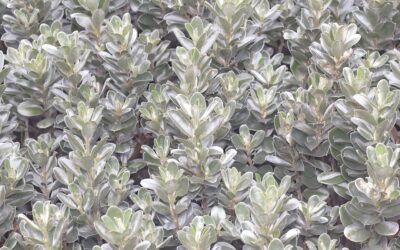
For the best flower and fruit production, plant in full sun, which means six or more hours of direct light. It will grow in part shade and still look handsome as a foliage plant, but you will harvest far less fruit. The undersides of the gray-green leaves are silvery-white, and they shimmer in the wind, which is a bonus in a breezy spot.
This shrub is not picky about soil. It grows in sand, loam, or clay as long as drainage is reasonable, and it tolerates a pH from mildly acidic to slightly alkaline. It even handles some salt spray, making it useful in coastal gardens. Water regularly through the first two summers to build a strong root system. After that it is notably drought tolerant, though consistent moisture during flowering and fruit set produces larger, juicier fruit and prevents premature fruit drop.
Flowers You Can Eat
In late spring to early summer the plant produces striking flowers with white, cupped petals and a starburst of long crimson stamens. Those fleshy petals are edible, sweet, and faintly cinnamon-flavored, and you can pluck them for salads and desserts without sacrificing your fruit crop, because the fruit forms from the center regardless. This dual purpose is a big part of the shrub’s charm.
Pollination and Fruit
Here is the detail that makes or breaks your harvest. Some named varieties are self-fertile, but many pineapple guavas fruit far better with a second, genetically different plant nearby for cross-pollination. If fruit is your goal, plant at least two, or choose a proven self-fertile cultivar such as ‘Coolidge’, ‘Nazemetz’, or ‘Apollo’. The flowers are pollinated partly by insects and partly by birds attracted to the sweet petals, so a garden friendly to both helps.
The oval, gray-green fruit ripens in fall, roughly four to six months after flowering. It does not change color much when ripe, so the reliable trick is to let the fruit fall naturally and collect it from the ground each morning, or gently shake the branches. Inside is a fragrant, jelly-like pulp you scoop out with a spoon. Fruit does not store long, so plan to eat, freeze, or preserve it within a week or two.
Pruning and Training
Prune right after harvest in late fall or winter, before the next round of flower buds sets. For a hedge, shear lightly to keep the shape, accepting that heavy shearing reduces fruit. For fruit production, thin the interior to open it up to light and air, remove crossing and dead branches, and shorten overly long shoots. To grow it as a small tree, select a single strong trunk and remove the lower side branches over a couple of seasons.
Feeding and Maintenance
Pineapple guava is a light feeder. Apply a balanced or slightly nitrogen-forward fertilizer in early spring and again in early summer during the establishment years, then back off as the plant matures. A layer of organic mulch conserves moisture and feeds the soil slowly. Avoid heavy nitrogen, which pushes leafy growth at the expense of flowers and fruit.
Harvesting and Using the Fruit
The reward for growing a pineapple guava shrub is that fall harvest, and knowing how to handle the fruit makes all the difference. Ripe feijoa has a fragrant, aromatic pulp with a flavor often described as a blend of pineapple, guava, mint, and strawberry. Because the fruit does not change color to signal ripeness, spread a sheet or tarp beneath the plant during harvest season and gather the fruit that drops each day; a ripe feijoa releases cleanly on its own. Fruit picked slightly early will finish ripening on the counter over a few days.
To eat one fresh, slice it in half and scoop the jelly-like center out with a spoon, skin and all discarded. The pulp is excellent raw, but it also shines in jams, chutneys, smoothies, fruit leathers, and baked goods, and it freezes well for later use. Because the harvest often comes all at once and the fresh fruit stores only a week or two, preserving the surplus is the practical way to enjoy a heavy crop long after the tree has finished dropping for the season.
Growing in Containers
In climates colder than zone 8, you can still grow pineapple guava by keeping it in a large container. Choose a pot at least 18 to 24 inches across with excellent drainage, use a quality potting mix, and grow the plant in full sun through the warm months. Before the first hard freeze, move the container into an unheated garage, sunroom, or greenhouse where it stays cool but above about 15 degrees Fahrenheit. Container plants stay naturally smaller and can be pruned to keep them manageable, though fruit set is often lighter than on plants in the ground.
Pests and Problems
This is a remarkably trouble-free plant. Serious pests are uncommon, though a few issues can appear:
- Scale and mealybugs: occasional; treat with horticultural oil if populations build
- Fruit drop: usually caused by poor pollination or drought stress during fruit set
- Black scab or fruit spot: minor cosmetic fungal issues in wet climates
- Birds: attracted to the flower petals and ripe fruit, which is generally a fair trade
Deer will sometimes browse the foliage, but the shrub is not a preferred target and usually recovers.
Why Plant One
A pineapple guava shrub gives you a lot for very little effort: an evergreen backbone that looks good all year, an edible bloom in early summer, and a genuinely delicious fall harvest, all from a plant that tolerates drought, salt, and imperfect soil. Plant two for cross-pollination if you can, give them full sun and decent drainage, and this understated South American beauty will feed both your family and your landscape for decades.