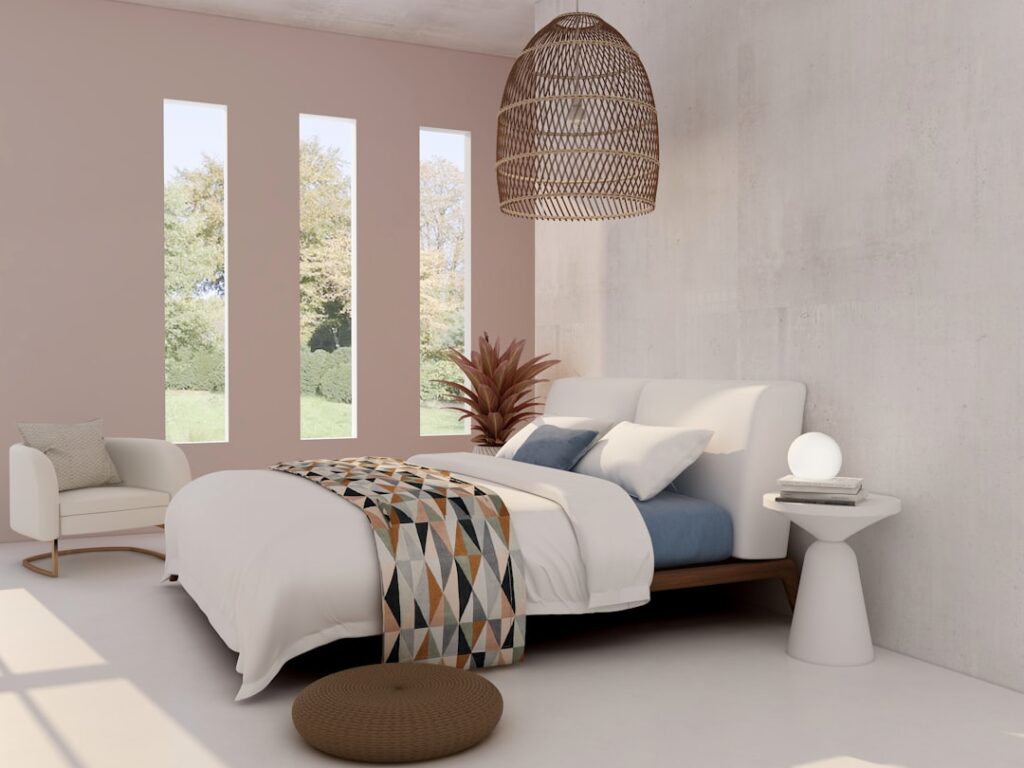
Pink walls have come a long way since the bubble-gum nurseries of the 1980s, and the right shade can feel as sophisticated as any Farrow & Ball neutral. Pink bedroom walls work in almost any home when you choose an undertone that matches your natural light, your trim color, and the wood finishes already in the room. The trick is to stop thinking of pink as a single color and start thinking of it as a spectrum that runs from warm peachy blush to cool dusty rose. One end can read like a luxury hotel suite. The other end can look like a juice box exploded.
Why Pink Works So Well in Bedrooms
Color psychologists have studied pink walls in residential settings since the 1960s. The findings are consistent: muted pinks lower heart rate slightly and create a sense of calm warmth that pairs well with the function of a bedroom. The same color in an office or kitchen often feels distracting, but in a sleep space it reads as restful.
Pink also reflects warm light beautifully. A bedroom that faces north and feels cool with white walls suddenly comes alive when painted in a warm blush. Even south-facing rooms benefit because pink walls catch and amplify the natural light without the institutional feel of pure white.
The Undertone Map
Every pink leans warm or cool. Choose the wrong direction and the whole room fights itself.
- Warm pinks: Peach, salmon, coral, terracotta blush. Pair with cream trim, oak floors, brass hardware.
- Cool pinks: Dusty rose, mauve, mushroom pink. Pair with white trim, walnut floors, brushed nickel.
- Neutral pinks: True blush, soft beige-pink. Work with almost anything.
Hold a 12 by 12-inch sample at several spots on the wall and check at three times: 9 a.m., 2 p.m., and 9 p.m. with the room lights on. A pink that looks lovely at noon can read like Pepto-Bismol after dark.
Designer-Approved Pink Paint Shades
These five colors show up in professionally designed bedrooms again and again. Each has a different undertone and ages differently with sunlight exposure.
Benjamin Moore First Light 2102-70
The 2020 Color of the Year. A barely-there warm blush that reads almost neutral in low light. Best for north-facing rooms.
Farrow & Ball Calamine No. 230
A pale, slightly chalky pink with cool undertones. The bedroom equivalent of a custom shirt. Best in rooms with white trim and dark wood.
Sherwin-Williams Romance SW 6323
A dustier, more muted pink with brown undertones. Sophisticated and grown-up. Excellent with brass fixtures.
Behr Pink Dust PPU17-08
A warmer, more golden pink. Reads as a soft peach in daylight. Pairs beautifully with rattan furniture and oak floors.
Clare Pink Sands
A modern blush with the slightest gray undertone. Photographs as a neutral and changes character throughout the day. Best for primary bedrooms.
Trim and Ceiling Pairings
The trim and ceiling color carry as much weight as the pink itself.
- Crisp white trim (Benjamin Moore Chantilly Lace OC-65): Modern, clean, photographs beautifully
- Warm white trim (Sherwin-Williams Alabaster SW 7008): Softer, more traditional
- Cream trim (Benjamin Moore White Dove OC-17): Best with warm pinks
- Same color trim and walls (drench): Trendy, dramatic, works best in small rooms
For ceilings, stay one shade lighter than the wall or go pure white. Pink ceilings work in very few cases and almost never on a 9-foot or taller ceiling.
Furniture Colors That Complement Pink
Three palette directions work consistently with pink walls:
Soft and Tonal
Cream, ivory, beige, and white bedding. Light oak or rattan furniture. A single deeper accent color (forest green throw, navy lampshade) anchors the look.
Bold and Saturated
Deep emerald green, navy blue, or burgundy as the contrast color. Black or dark walnut furniture. White or cream bedding to keep the eye moving.
Black and White Graphic
Black metal bed frame, white bedding, and pink walls. Add one rust or terracotta pillow. This look photographs especially well and reads as designer-intentional.
Flooring That Works Underfoot
Pink walls pair best with these floor options:
- Light oak hardwood: Most flexible. Pairs with any pink undertone.
- White oak with natural finish: Classic and timeless
- Walnut hardwood: Adds richness, especially with cool pinks
- Neutral wool carpet: Soft and cozy, hides traffic
- Cream sisal or jute rug over wood: Layered and inviting
Avoid red-toned hardwoods like cherry and Brazilian walnut. They clash visually with pink walls because the two warm tones fight each other rather than blending.
Lighting Pink Walls Correctly
Pink walls read very differently under different bulb temperatures. Use 2700K to 3000K LED bulbs for a warm, hotel-suite glow. Avoid 4000K and higher because the cooler light pushes the pink toward gray and removes its warmth.
Layer three light sources: an overhead fixture (chandelier, semi-flush, or recessed cans), a pair of bedside lamps with linen shades, and a low accent light like a small lamp on a dresser. The layered approach prevents the flat one-tone feel that ruins many otherwise good bedroom designs.
Cost and Application Notes
A standard 12 by 12-foot bedroom needs about 1.5 gallons of paint at $50 to $90 per gallon for the brands above. Two coats are mandatory because pink rarely covers well in one pass over a different base color. Plan on 6 to 8 hours of labor for a DIYer, less if the trim is already painted.
For best results, prime first with a tinted primer matched to the pink. Sherwin-Williams will tint Primer X to your wall color for about $35, which dramatically reduces the number of coats needed.
The Quick Decision Rule
Stuck between options? Test 3 pinks on adjoining 2 by 2-foot patches and live with them for at least a week. The right shade will feel right at every time of day and under every light source. Anything that looks great in the morning but wrong at night is not the answer. Pink walls done well age into a sophisticated, comforting bedroom that feels current for a decade or more.