A thriving plant wall indoor turns a blank stretch of drywall into a piece of living architecture, but most failed installs trace back to one mistake: no plan for water. Vertical gardens dry out from the top down and pool at the bottom, so the planters that look effortless on social media usually hide a drip line and a catch basin. Get the engineering right and you can grow dozens of plants in a footprint barely four inches deep. This guide walks through every system, plant, and dollar you need to budget.
Part of our Windows & Doors guide — explore the full guide →
What an Indoor Plant Wall Actually Is
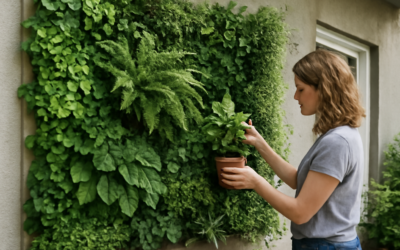
At its core, a vertical garden mounts plants on a wall instead of a floor or shelf. The category splits into two camps. Modular pocket systems use felt or plastic cells you fill with potting mix, while framed panel systems hold pre-grown plants in a rigid grid. A third option, the faux-live hybrid, mixes real trailing plants with preserved moss to cut maintenance.
Coverage ranges from a single 2-by-3-foot accent panel above a console table to a full floor-to-ceiling installation spanning 60 square feet or more. Smaller is smarter for a first build. You learn the watering rhythm on something forgiving before scaling up.
Choosing Between Soil, Felt, and Hydroponic Systems
Soil-based pocket planters are the cheapest entry point, running $30 to $90 for a 36-pocket felt wall hanger. They drain unevenly, though, so plan to rotate plants every few months. Rigid plastic cassette systems like those from GroVert cost $120 to $250 per panel and hold moisture far more evenly thanks to a built-in reservoir tray.
Felt-based systems, the kind used in commercial lobbies, wick water across the fabric and support semi-hydroponic growing with no soil at all. They look seamless but demand a recirculating pump and a nutrient schedule. Expect $300 to $600 per 10-square-foot section for a quality felt kit before plants.
- Soil pockets: lowest cost, best for renters, needs frequent rotation
- Plastic cassettes: mid-range, even moisture, easy plant swaps
- Felt hydroponic: premium look, lush growth, requires pump and nutrients
Lighting Your Living Wall
Few interior walls get enough natural light to sustain dense foliage, so supplemental lighting is the difference between lush and leggy. Aim for 1,500 to 3,000 lux at the plant surface for low-light species and double that for anything flowering. Full-spectrum LED grow bars mounted 12 to 18 inches off the wall deliver even coverage without the heat of older fixtures.
Budget $40 to $120 for a single linear LED grow bar with a built-in timer. Run lights 10 to 12 hours a day. If the wall sits near a south-facing window, you may only need supplemental light during winter months when daylight drops below eight hours.
Watering and Drainage Without Wrecking Your Drywall
This is where a plant wall indoor lives or dies. Hand-watering a tall wall means standing on a step stool with a long-spout can, soaking each pocket until you see runoff, and catching that runoff in a tray. It works for walls under 12 square feet. Anything larger benefits from a drip irrigation line on a timer.
A simple recirculating setup uses a reservoir at the base, a small submersible pump rated around 200 gallons per hour, and a half-inch supply line feeding emitters across the top row. Gravity pulls water down through the system into the reservoir, where the pump cycles it again. Always install a waterproof membrane or PVC backing behind the planters. Direct contact between damp felt and drywall invites mold within weeks.
Best Plants for an Indoor Vertical Garden
Pick species that tolerate the wall’s light level and share similar water needs, because mixing a drought-tolerant succulent next to a thirsty fern guarantees one of them suffers. For low-to-medium light, lean on pothos, heartleaf philodendron, pothos cultivars, peace lily, and various ferns. These trailing and clumping plants knit together into a solid green sheet within a few months.
- Pothos and philodendron: fast trailers that fill gaps quickly
- Boston and maidenhair fern: soft texture for humid, shaded walls
- Peperomia and pilea: compact rosettes that hold their shape
- Bromeliads: color accents that thrive in moderate light
- English ivy: vigorous trailer, but prune aggressively
Skip cacti and most succulents unless you build a dedicated low-water wall with bright light. Their drainage needs clash with the moisture a felt or pocket system holds.
Maintenance and Long-Term Care
Plan on 15 to 30 minutes of upkeep per week for a mid-sized wall. Tasks include checking moisture, pruning runners that block neighbors’ light, removing yellow leaves, and topping up the reservoir. Every two to three weeks, mix a diluted liquid fertilizer at half the label strength into the water. Living walls grow fast and burn through nutrients quickly.
Watch for pests. The dense, humid environment that plants love also suits spider mites and fungus gnats. Inspect the undersides of leaves during weekly maintenance and treat early with insecticidal soap. Wipe down the surrounding wall and trim if growth starts creeping onto adjacent surfaces.
Costs and Whether to DIY
A modest DIY accent wall of 6 to 10 square feet runs $150 to $400 all in, covering the planting system, an LED grow bar, plants, and basic drip parts. A professionally installed felt wall with automated irrigation can reach $150 to $300 per square foot, putting a 40-square-foot statement wall well over $6,000.
For most homeowners, starting with a modular cassette panel and adding a timer-driven drip line later is the sensible path. You control the cost, learn the system, and can expand once you trust your watering routine. Done carefully, an indoor green wall pays you back in cleaner air and a living focal point no painting can match.
Wall Preparation and Mounting
The wall behind your green installation does more work than people realize, and prepping it correctly prevents the slow water damage that ruins so many vertical gardens. Start by locating the studs with a stud finder, because a fully planted and watered wall can weigh 4 to 8 pounds per square foot, and that load must hang from framing, not drywall anchors alone. A 20-square-foot felt wall can easily top 150 pounds once saturated.
Mount a moisture barrier first. A sheet of PVC, marine-grade plywood sealed with polyurethane, or a dedicated waterproof backing panel separates the damp planting system from your drywall. Seal any seams with silicone. Then attach a French cleat or a sturdy mounting rail into the studs, which spreads the weight and lets you lift the planted panel off for deep cleaning. Leave a small air gap of half an inch between the barrier and the wall so any condensation can evaporate rather than collect.
Finally, think about the floor below. Even a well-drained system occasionally drips during watering or maintenance, so place a waterproof tray, a runner of tile, or at minimum a removable mat beneath the wall. Hardwood floors and living walls are a poor pairing without that protection, and the small step saves you from warped boards down the line.