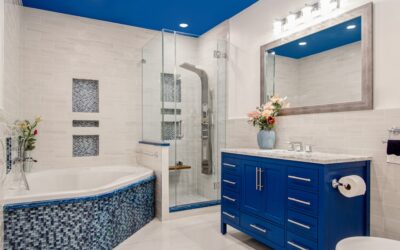
One bold wall can shift the entire mood of a room without touching the rest of the space. A well-executed statement wall draws the eye, anchors the furniture, and gives a flat builder-grade interior real personality. The trick is knowing which wall to feature, what material to put on it, and how much you should reasonably spend. Most homeowners underestimate prep work and overestimate how dramatic the finish needs to be.
What Counts as a Statement Wall
By definition, a statement wall is the single feature wall in a room that contrasts with the others through color, texture, pattern, or material. It is usually the wall your eye lands on when you walk in, often behind a sofa, headboard, dining table, or fireplace. Builders sometimes call it a focal wall or accent wall, but the intent is the same: pull attention to one plane and let the rest recede.
Picking the right wall matters more than picking the right finish. Look for the wall opposite the entry, the wall behind the longest piece of furniture, or the wall with an existing architectural feature like a chimney breast or a window seat.
Popular Material Options and Costs
Pricing varies wildly depending on whether you DIY or hire a contractor. These ballpark numbers cover an average 12-foot wall with 9-foot ceilings, roughly 108 sq ft.
- Paint — $50 to $150 in materials. Sherwin-Williams Emerald or Benjamin Moore Aura at $75 to $90 per gallon covers two coats easily.
- Wallpaper — $200 to $800 in materials. Peel-and-stick rolls run $35 to $60 per roll; traditional wallpaper $50 to $200 per roll.
- Shiplap or board-and-batten — $250 to $700 in lumber and trim. Add $400 to $900 for installation if you hire it out.
- Stone or brick veneer — $700 to $1,800 installed. Manufactured stone at $7 to $12 per sq ft is the most cost-effective look-alike.
- Wood slat panels — $400 to $1,500. Pre-made acoustic slat panels from brands like Naturewall start around $90 per 8-foot panel.
Choosing the Right Color
Dark, saturated colors read more dramatic on a statement wall than soft pastels, but they need adequate light to avoid feeling cave-like. Deep navy, forest green, terracotta, charcoal, and oxblood all hold their own against white trim. If your room gets less than four hours of direct sun a day, step one shade lighter than what looks good on the swatch in the store.
Always test paint with sample pots, not the manufacturer’s online preview. Paint a 2 ft by 2 ft poster board with two coats, let it dry overnight, and prop it against the wall at three different times of day. Color shifts dramatically between morning sun and lamp light.
Texture and Pattern Choices
Texture adds depth that flat paint cannot match, and it photographs beautifully if you ever sell. Wood slat walls have surged in popularity since 2022 because they soften echo in open-plan rooms while looking high-end. Limewash and Roman clay finishes deliver a soft Mediterranean look for $3 to $6 per sq ft in materials.
Pattern works best when the rest of the room stays restrained. If you hang bold floral wallpaper, keep furniture upholstery, rugs, and curtains in solids or small tone-on-tone weaves. The eye needs somewhere to rest.
Prep Work That Determines the Outcome
The finish quality of your statement wall depends almost entirely on what happens before the first coat goes on. Skip prep and the wall will telegraph every flaw.
- Wash the wall with a TSP substitute and a sponge, rinse, then let it dry for at least four hours.
- Patch every nail hole, dent, and hairline crack with lightweight spackle. Sand flush with 220-grit.
- Prime any patched areas, glossy paint, or dark colors going lighter. A bonding primer like Zinsser BIN runs about $25 a quart.
- Caulk the gap where the wall meets ceiling and trim with paintable acrylic latex caulk.
- Tape the perimeter with FrogTape Multi-Surface and pull it within an hour of the final coat for the cleanest line.
Lighting Makes or Breaks It
A dramatic finish in dim light just looks muddy. Add a pair of plug-in sconces, a picture light, or a ceiling-mounted directional fixture aimed at the wall. Track lighting with three to four heads adds about $200 to $400 installed and lets you adjust the angle as your art rotates. For wood or stone surfaces, warm 2700K bulbs flatter the natural tones; for cool paint colors, 3000K reads cleaner.
Common Mistakes to Avoid
Most failed accent walls share the same handful of issues. Knowing them ahead of time saves a weekend of redo work.
- Choosing the wrong wall — a chopped-up wall full of doors and windows fights the eye instead of holding it.
- Going too small with pattern. A tiny print on a 12-foot wall reads like wallpaper from twenty feet away and disappears.
- Matching trim color to the wall. White trim sharpens the contrast and frames the statement; matching trim flattens it.
- Ignoring the ceiling. A bold wall with a yellowing white ceiling looks unfinished. Repaint the ceiling in a true white like Benjamin Moore Chantilly Lace.
- Hanging undersized art. Artwork should fill at least two-thirds the width of the furniture below it.
When to Hire a Pro
Paint and peel-and-stick wallpaper are reasonable weekend projects for a homeowner with basic tools. Anything involving framing, electrical for sconces, or stone veneer over 50 sq ft is worth quoting out. Expect $300 to $800 for a painted statement wall installed, $600 to $1,400 for installed shiplap, and $1,800 to $3,500 for a stone or brick veneer wall around a fireplace. A good contractor will handle moisture barrier, mortar, and tooling the joints — three things DIYers routinely get wrong on stone projects.
Done thoughtfully, a statement wall delivers more visual impact per dollar than almost any other interior project. Pick the right wall, prep it properly, and choose a finish that contrasts cleanly with what surrounds it. The room will feel finished in a way no amount of new throw pillows can replicate.