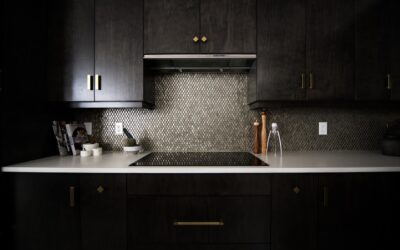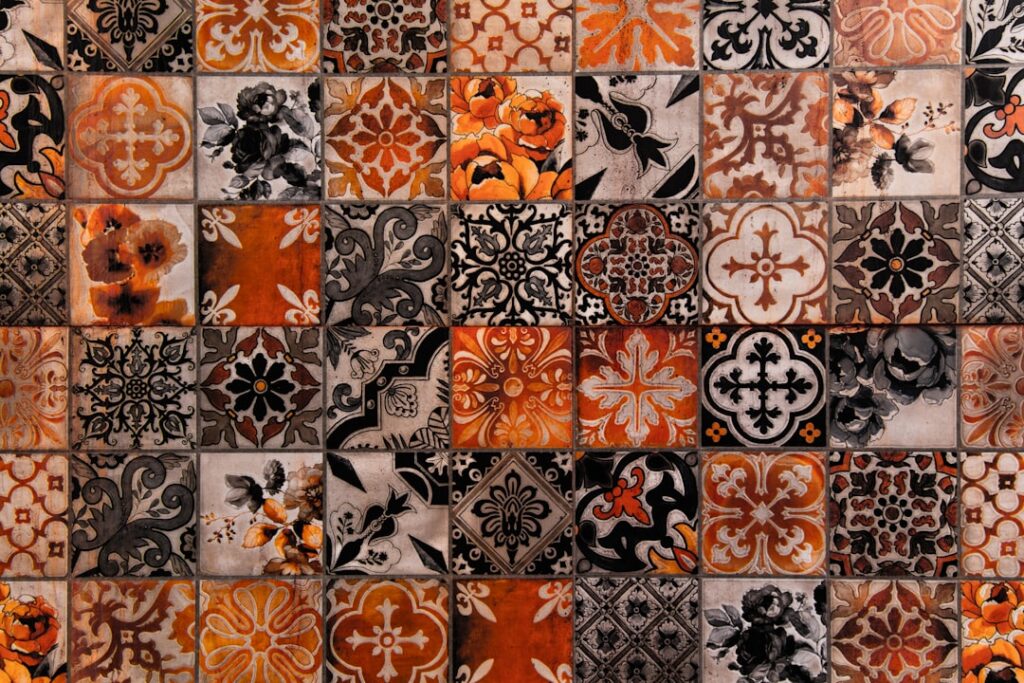
Subway tile in a running-bond pattern has quietly become the beige carpet of kitchens, everywhere and forgettable. A unique tile backsplash is how you break that mold, whether through an unexpected shape, a hand-glazed color, or a layout that turns ordinary material into a graphic statement. The goal is not weirdness for its own sake but a wall that feels considered and personal.
Part of our Kitchen Remodeling guide — explore the full guide →
Uniqueness comes from three levers you can pull in any combination: the tile shape, the color and finish, and the way pieces are arranged. Change one and you get a fresh look; change all three and you get a backsplash no neighbor can copy off the shelf. Here is how to use each without overwhelming the room.
Shapes That Break the Rectangle
Moving past the standard 3×6 inch rectangle is the fastest route to a distinctive wall. Each shape carries its own personality, from playful to architectural, and most come in the same durable ceramic and porcelain as ordinary tile.
- Elongated hexagons: A modern twist on the classic honeycomb, these stretch the six-sided shape into a sleek picket that reads contemporary.
- Fish scale and fan: Scalloped tiles bring soft, coastal movement and look striking behind a range in sea glass or blush.
- Arabesque and lantern: Curvy Moorish silhouettes add a touch of romance to transitional and Mediterranean kitchens.
- Triangles and diamonds: Faceted geometry that lets you build ombre gradients or bold two-tone chevrons.
- Zellige squares: Handmade Moroccan tiles, roughly 4×4 inches, with glossy irregular surfaces that shimmer differently on every piece.
Color as the Statement
Color is where a backsplash becomes unmistakably yours. While a white kitchen is timeless, a saturated backsplash injects character that paint and hardware cannot match. Deep jewel tones, emerald, sapphire, and oxblood, look rich against warm brass fixtures, while earthy terracotta and ochre feel current in a cabinet palette of sage or walnut.
If you love color but fear committing an entire wall, use it as an accent band above the range or a single panel behind open shelving. Hand-glazed tiles are especially effective because subtle variation from piece to piece gives depth that a flat, uniform factory glaze never achieves.
Pattern and Layout Tricks
You do not always need an exotic tile to get a unique tile backsplash. The layout itself can carry the design. Take a plain rectangle and set it in a herringbone, vertical stack, or basketweave and the wall instantly reads custom.
Herringbone and Chevron
Angling rectangles into a 45-degree herringbone or a mitered chevron adds energy and draws the eye upward. It uses about 10 to 15 percent more tile because of the cut waste, so buy accordingly.
Vertical Stack
Standing subway tile on end and stacking it in perfect columns turns a tired classic into something crisp and modern. Straight grout lines demand careful layout but cost nothing extra in material.
Mixed Mosaic
Combining two or three coordinating tiles, say a matte field with a glossy accent, creates a bespoke mosaic. Some homeowners even blend leftover tiles from different projects into a deliberate patchwork.
Finish and Texture Options
Finish quietly changes how a tile reads under kitchen light. A high-gloss glaze bounces light and makes small kitchens feel brighter, while a matte or honed surface feels grounded and hides water spots near a sink. Crackle glazes add vintage charm with their fine web of surface lines, though they need sealing because the crackle can trap stains.
Texture adds another dimension. Handmade and reclaimed tiles carry gentle waves and thickness variation that catch light along their edges. Even a flat tile gains interest from a beveled edge, which throws a thin shadow line at every joint and gives an ordinary field tile a custom look.
Materials Beyond Ceramic
The tile aisle stretches far past glazed ceramic, and the material itself can be the unique element in your kitchen or bath.
- Natural stone: Marble, slate, and travertine bring one-of-a-kind veining. Expect $12 to $40 per square foot and a sealing routine every year or so.
- Glass: Translucent and luminous, glass tile reflects light and resists stains, running $15 to $30 per square foot.
- Terrazzo: Speckled chips of marble and glass in a binder give a playful mid-century look that is having a strong revival.
- Cement: Encaustic cement tiles carry bold printed patterns and matte color, perfect for a Spanish or bohemian kitchen at $8 to $25 per square foot.
- Metal and mixed: Stainless, copper, and mother-of-pearl accents add sparkle when used sparingly.
Budgeting a Unique Tile Backsplash
Distinctive does not have to mean expensive, but specialty shapes and handmade glazes carry a premium. A basic patterned layout using standard ceramic can run as little as $10 to $15 per square foot installed. Step up to zellige, encaustic cement, or natural stone and the total climbs to $25 to $50 per square foot once you add the slower, more skilled labor those materials demand.
A typical kitchen backsplash covers 30 to 40 square feet. That puts a modest custom-layout project around $400 to $600 in materials, while a high-end handmade tile wall can reach $2,000 or more. Because the square footage is small relative to the room, a backsplash is one of the few places where splurging on a $30 tile has limited total impact and outsized visual payoff.
Rooms and Spots That Reward a Bold Tile
A unique tile backsplash pays off most where people gather and linger. Behind a kitchen range it becomes the room’s centerpiece, framed by the hood and flanking cabinets, so it earns a splurge tile you would never spread across a whole floor. A wet bar or coffee station is another prime spot, small enough that a $30 per square foot handmade tile stays affordable while delivering a jewel-box effect.
Bathrooms welcome bold tile too. A powder room, often under 20 square feet, is the perfect low-risk canvas for an adventurous choice you might hesitate to commit to in a bigger space. Behind a vanity or as a full shower accent, an arabesque or fish-scale tile turns a purely functional room into the one guests remember.
Even a laundry room or mudroom bench wall can carry a graphic cement tile. Because these utility spaces are compact and low-traffic for design scrutiny, they let you experiment with pattern and color that would feel like too much in an open-plan kitchen.
Common Mistakes to Avoid
The most frequent misstep is choosing a tile in isolation, dazzled by a showroom display, only to find its undertone clashes with the counters at home. Always bring a countertop sample and a cabinet-door chip to the tile shop, or order tile samples and test them in your own light. A second common error is skimping on quantity; specialty shapes and dye lots sell out, so buy 10 to 15 percent extra for cuts, breakage, and future repairs.
Finally, resist stacking too many statements. A busy patterned tile, a veined stone counter, and ornate cabinet hardware compete rather than complement. Pick the tile as your star and let the surrounding finishes play supporting roles, and the whole kitchen will feel designed rather than crowded.
Making It Cohesive, Not Chaotic
The risk with a bold wall is that it fights the rest of the room. Anchor a unique tile backsplash by pulling one color from your countertop or cabinets into the tile, so the eye reads the space as intentional. Keep the busiest element to a single plane, an accent wall behind the range, and let the surrounding runs stay quieter.
Sample before you commit. Order two or three tiles, tape them to the wall, and live with them through a full day of changing light. What dazzles under showroom halogen can read very differently beside your morning window, and that quick test is the cheapest insurance against a backsplash you regret.
Prefer to explore on your own?
See how new flooring looks in your actual room in seconds — free, no signup.
Try the free Floor Studio →