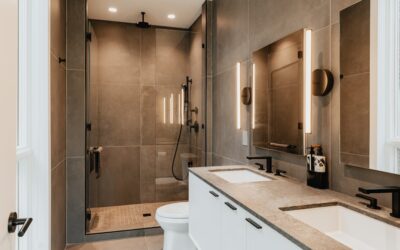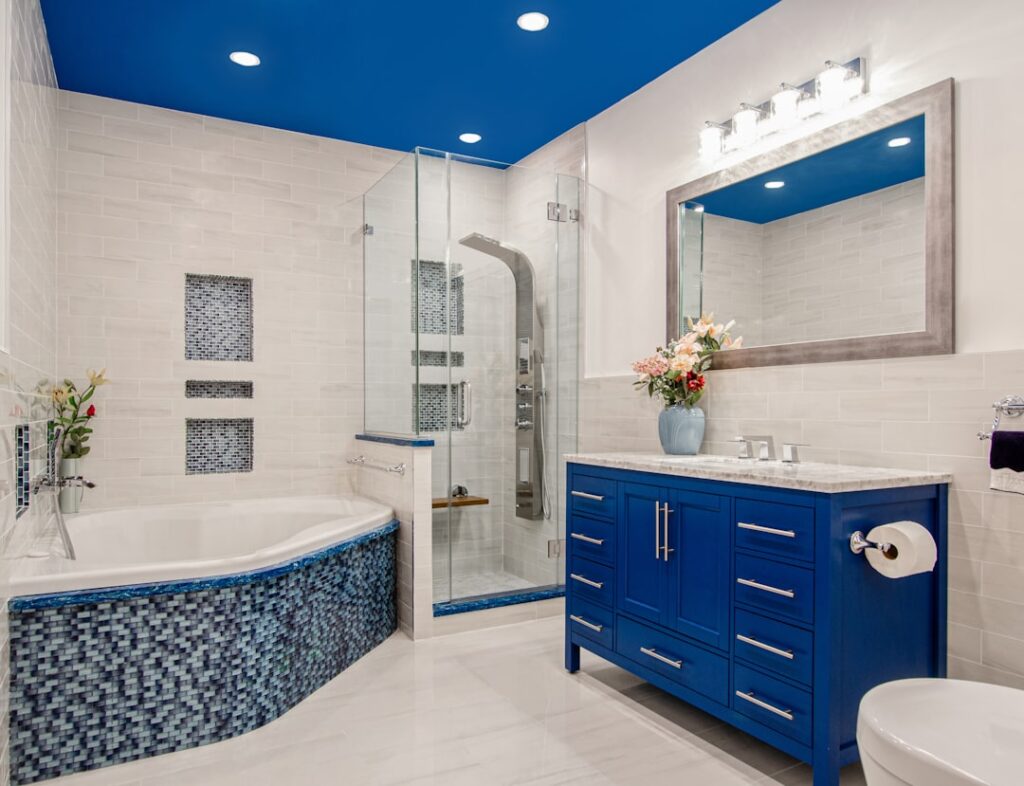
One well-chosen feature wall can turn an ordinary bathroom into the room guests remember, and it costs a fraction of tiling every surface. A tile accent wall bathroom concentrates your budget and your boldest material on a single high-impact plane, whether that is the wall behind the vanity, the shower’s back wall, or the space behind a freestanding tub. Done right, it delivers drama and durability at once. Done wrong, it leaks. This guide covers both the design and the practical must-dos.
Part of our Bathroom Remodeling & Flooring guide — explore the full guide →
Choosing the Right Wall
Not every wall makes a good accent. Pick the one your eye lands on first when you open the door, or the wall that frames the room’s focal point. Common winners include:
- The shower back wall: visible through the glass and naturally suited to tile.
- Behind the vanity: pairs with the mirror and lighting for a designer look.
- Behind a freestanding tub: creates a spa-like backdrop.
- The toilet wall in a powder room: a low-cost way to add personality.
The rule of thumb: one accent wall per bathroom. Tiling two or three competing walls dilutes the drama and starts to feel busy.
Material Choices That Make a Statement
The material carries the whole effect, so this is where to be intentional. Popular accent-wall materials each bring a different mood:
- Large-format porcelain: minimal grout lines, seamless and modern, great for marble-look slabs.
- Zellige and handmade ceramic: subtle color variation and glossy depth for an artisan, textured look.
- Mosaic and penny-round tile: intricate detail that reads as a feature all on its own.
- Vertical stacked subway or elongated tile: draws the eye up and makes ceilings feel taller.
- Natural stone (marble, travertine): luxurious but porous, so it needs sealing and careful placement away from constant water.
Waterproofing: The Non-Negotiable Behind the Beauty
Here is the part that separates a lasting accent wall from a future mold problem: what goes behind the tile. If your accent wall is a dry wall, away from direct water, standard moisture-resistant drywall (green board) is acceptable as a substrate. But if the wall is inside a shower or tub surround where it gets wet, you must use a proper waterproof system.
- Use cement backer board or a foam tile backer instead of regular drywall in wet zones.
- Apply a waterproofing membrane, either a liquid-applied product rolled on or a sheet membrane, over the backer before tiling.
- Seal all seams, corners, and the joint where the wall meets the tub or shower pan with waterproof banding.
- For natural stone, seal the tile itself and use a white, non-staining thinset to avoid shadowing through translucent stone.
Skipping waterproofing on a wet accent wall is the number-one cause of tile jobs that look great for a year and then leak behind the wall where you cannot see it.
Layout and Pattern
The pattern you choose sets the personality of the wall. A vertical stack or vertical brick layout elongates the space and feels contemporary. A herringbone or chevron pattern adds movement and visual interest. A classic horizontal brick offset reads traditional and calm. Before you set a single tile, dry-lay the pattern on the floor and snap layout lines on the wall so your grid stays plumb and level and your cuts land in the least conspicuous spots, ideally at the edges rather than dead center.
Plan where the pattern starts. Center a bold pattern on the vanity or the tub so it looks intentional, and keep partial tiles balanced on both ends rather than a full tile on one side and a sliver on the other.
Grout: Color and Type
Grout is not an afterthought on an accent wall; it defines the whole look. A contrasting grout, like charcoal against white tile, emphasizes the pattern and geometry. A matching grout makes the surface read as one continuous field, ideal for large-format and marble looks. For durability and stain resistance in a bathroom, consider these points:
- Use sanded grout for joints 1/8 inch and wider, unsanded for tighter lines and to protect polished stone from scratching.
- Epoxy grout resists mold and staining better in wet showers, though it is harder to install.
- Seal cement grout after it cures to keep moisture and mildew out.
Design Tips That Elevate the Result
A few finishing choices make an accent wall look professionally designed:
- Carry the tile all the way to the ceiling on the accent wall for maximum drama, rather than stopping partway.
- Use a metal or tile trim (like a Schluter edge) to finish exposed tile edges cleanly.
- Light the wall intentionally with a sconce or wall wash to show off texture, especially with handmade or 3D tile.
- Keep the surrounding walls simple and neutral so the accent wall stays the star.
Budgeting and What It Costs
Concentrating tile on a single wall is what makes a feature wall affordable, since you buy a fraction of the material you would for a fully tiled bathroom. Costs vary widely by material: standard ceramic and porcelain run roughly $2 to $10 per square foot, handmade zellige and mosaic $10 to $30, and natural stone and large-format porcelain slabs higher still. Because the area is small, you can often splurge on a premium tile you could never afford across the whole room and still keep the project modest. Budget separately for waterproofing materials in wet zones, thinset, grout, trim pieces, and either your labor or a tile setter’s, which typically adds $5 to $15 per square foot installed.
DIY or Hire a Pro?
A dry accent wall, like the space behind a vanity in a powder room, is a very reasonable DIY project for a confident homeowner with a tile saw and patience. A wet accent wall inside a shower is a different matter, because the waterproofing behind it must be flawless and mistakes hide until they leak. If your feature wall lives in a shower or tub surround, either invest the time to learn proper membrane installation or hire a tile professional. The tile itself is the easy part; the waterproofing and a dead-flat, plumb substrate are what separate a wall that lasts decades from one that fails behind the surface. When in doubt on a wet wall, pay the pro.
Bottom Line
A tile accent wall bathroom is one of the highest-impact, best-value upgrades you can make, but its longevity depends entirely on what happens behind the tile. Choose a wall that anchors the room, pick a material and pattern that make a deliberate statement, and never compromise on waterproofing in wet zones. Match your grout to the effect you want, finish the edges cleanly, and you get a feature wall that looks stunning and stays sound for decades.
Prefer to explore on your own?
See how new flooring looks in your actual room in seconds — free, no signup.
Try the free Floor Studio →