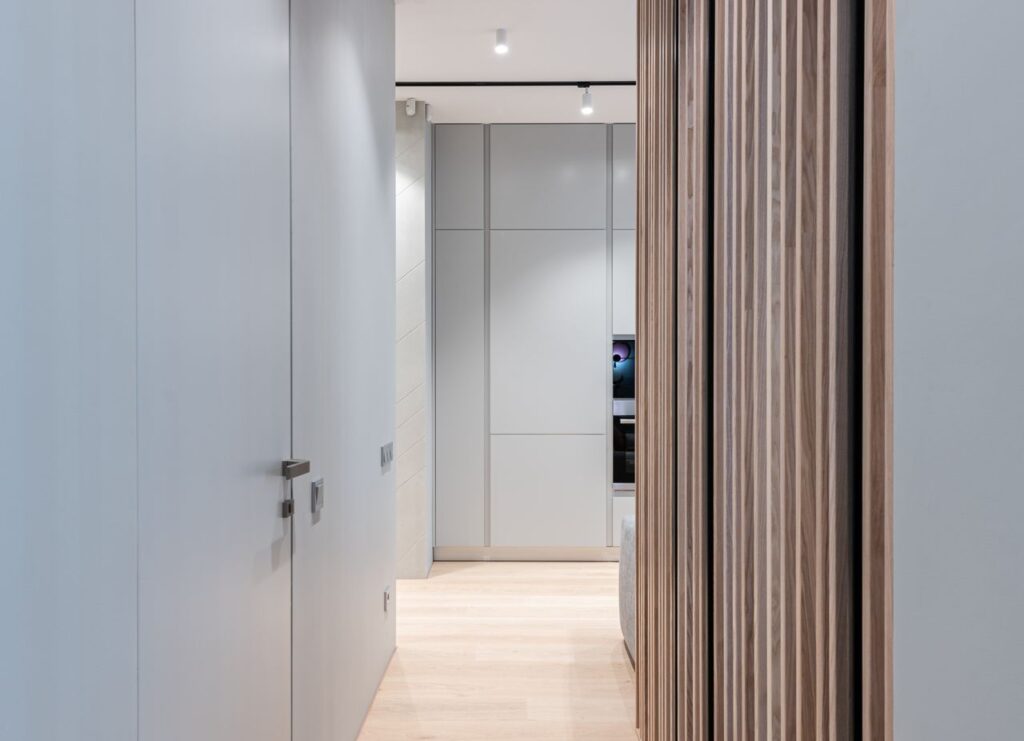
A standard swinging door steals a 3-foot arc of floor space every time it opens, and in a tight bathroom or closet that arc is often the difference between usable and cramped. That is the problem pocket door systems solve, sliding the door cleanly into a cavity inside the wall so it disappears entirely when open. Modern versions have shed the sticking, rattling reputation of old builds, but choosing and installing one still rewards a little homework.
Part of our Windows & Doors guide — explore the full guide →
How a Pocket Door Works
A pocket door hangs from rollers that ride along a track mounted at the top of the opening. When you slide it open, the door glides into a hollow pocket framed inside the adjacent wall, vanishing from view. Unlike a barn door, which slides across the wall face, a pocket door hides completely, leaving both the opening and the wall clear.
The whole assembly, the track, rollers, split studs, and header, is what makes up the system. You buy it as a frame kit, install it during framing or a wall opening, then hang your chosen door slab from the carriage.
Types of Frame Kits
Not all kits are equal, and the frame is where quality is won or lost. The two broad categories are steel-reinforced universal kits and heavier commercial-grade systems.
- Universal split-stud kits: The common residential choice, with steel-wrapped wood studs sized for standard 2×4 walls. They fit most 24-, 28-, 30-, 32-, and 36-inch doors.
- Heavy-duty kits: Built for solid-core or oversized doors, with beefier track and carriages rated for higher weight.
- Soft-close systems: Add a dampened mechanism that catches the door and eases it shut instead of letting it slam.
Weight rating is the spec that matters most. A hollow-core door under 50 pounds runs fine on a basic kit, but a solid-core or glass door pushing 100-plus pounds needs a heavy-duty track and rollers rated for the load, or it will bind within a year.
Where Pocket Doors Shine
These systems earn their keep wherever floor space is tight or a swing path collides with fixtures and furniture. A few locations come up repeatedly in remodels.
Small bathrooms top the list, since a swinging door often bumps the vanity or toilet. Closets, pantries, and laundry nooks benefit for the same reason. Pocket doors also work beautifully to separate open-concept spaces on demand, letting you close off a home office or dining room without a permanent wall or a door that juts into the room.
Framing and Wall Requirements
The catch with pocket doors is that they need a hollow wall to slide into, and that wall cannot carry plumbing, most electrical, or structural load in the pocket zone. Before committing, confirm the wall is not load-bearing and does not hide pipes or vents where the door will travel.
The rough opening also runs wider than the door itself, roughly double the door width plus a few inches, to house both the opening and the pocket. A 32-inch door needs about 66 inches of clear wall. If you are retrofitting into an existing wall, you will open the drywall on at least one side and reframe, which is where the labor cost climbs.
Installation Cost and Difficulty
Installing during new construction or a stud-down remodel is straightforward for a competent DIYer, since the wall is already open. Retrofitting into a finished wall is the harder job and usually the one homeowners hire out.
- Frame kit: $80 to $250 depending on size and quality.
- Door slab: $50 to $400, more for solid-core or glass.
- Professional retrofit: $1,000 to $2,500 including drywall repair and finishing.
Budget for the finish work. Patching drywall, retexturing, and repainting the reopened wall often costs as much as the mechanical install itself, so factor it in from the start.
Hardware and Comfort Upgrades
The base kit gets the door sliding, but a few upgrades transform the daily experience. Soft-close dampers are the most worthwhile, stopping the jarring slam that plagues cheap installs and protecting the door edge.
Because a pocket door has no swinging edge to grab, pulls and edge hardware are recessed flush. Choose an edge pull and a flush finger pull that match your other door hardware, and if the door needs to lock, such as on a bathroom, buy a pocket-door-specific privacy latch rather than a standard lockset.
Maintenance and Common Problems
Modern pocket doors are far more reliable than their reputation suggests, but a few issues still crop up, and nearly all trace back to the initial install. A door that jumps the track or drags usually means the carriages were not adjusted level or the track loosened, both fixable by re-shimming and tightening.
The other classic complaint is a door that swings and rubs inside the pocket. Adding a pair of nylon guides near the bottom of the opening keeps the panel centered so it never scrapes the pocket walls. Keep the track clean of dust and never hang anything from the door edge that could bend the carriage. Choosing a quality steel-framed kit over the cheapest option prevents most long-term headaches, since a flimsy frame is what allows the wall to flex and the door to bind years down the road.
Is a Pocket Door Right for You?
If you have a tight room where a swing door wastes space or hits a fixture, a pocket door is often the single best fix, reclaiming floor area a barn door or bifold cannot. New construction and gut remodels make the install painless.
For a retrofit into a finished, non-load-bearing wall with no utilities in the way, the project is still very doable, just budget for the drywall repair and pick a kit rated well above your door’s weight. Chosen and installed with care, pocket door systems deliver a clean, space-saving result that looks built-in because it is.