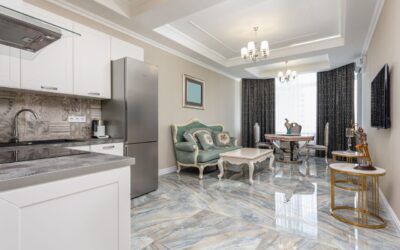
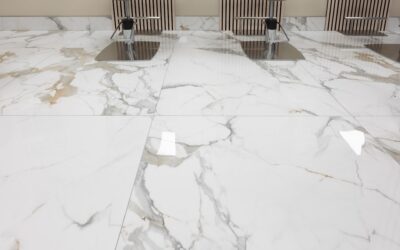
If you have ever wondered why a European tile spec sheet lists something called “porcelain stoneware” while your local showroom just says “porcelain,” you are looking at the same material described two ways. Porcelain stoneware floor tiles are fired at extreme temperatures from refined clays and feldspar until the body vitrifies into a dense, glass-hard surface that absorbs almost no water. That density is the whole story: it is what makes these tiles tougher, colder to the touch, and far more forgiving of freeze-thaw cycles than ordinary ceramic.
Part of our Tile & Grout guide — explore the full guide →
- What Makes It “Stoneware”
- Density and Water Absorption
- Glazed vs. Full-Body (Through-Body) Porcelain
- Understanding PEI and Slip Ratings
- Where Porcelain Stoneware Excels
- Practical Buying and Installation Notes
- Comparing Porcelain Stoneware to Other Floors
- Caring for Porcelain Stoneware Floors
- Is It Right for Your Project?
What Makes It “Stoneware”
The term stoneware refers to how completely the clay body fuses during firing at roughly 2,200 to 2,500°F. At those temperatures the raw materials melt and knit together, leaving very little open pore structure. The result is a tile that behaves more like natural stone than like a soft ceramic biscuit.
Manufacturers separate porcelain from standard ceramic mainly by one number: water absorption. True porcelain stoneware absorbs 0.5 percent of its weight in water or less. Ordinary glazed ceramic can absorb 3 to 10 percent. That single figure drives almost every performance advantage these tiles claim.
Density and Water Absorption
Low absorption is not a marketing footnote. It determines whether a tile can survive outdoors, in a shower, or on a patio that freezes in winter. Water trapped inside a porous tile expands when it freezes and cracks the tile from within. Because porcelain stoneware holds almost no water, it resists that damage and carries a frost-proof rating in most product lines.
The same density makes the surface highly stain- and chemical-resistant. Coffee, wine, and cooking oil sit on top rather than soaking in, which is why these tiles dominate kitchens and commercial spaces.
Glazed vs. Full-Body (Through-Body) Porcelain
Not all porcelain stoneware is built the same way, and the difference matters for how the tile ages.
- Glazed porcelain: A colored or patterned glass layer is fired onto the surface. This allows realistic wood, marble, and concrete looks, but a deep chip can reveal the different-colored body underneath.
- Full-body (through-body) porcelain: The color and mineral composition run all the way through the tile. A chip or heavy wear barely shows because the same material sits below the surface. This is the go-to for high-traffic commercial floors.
- Unglazed / technical porcelain: Left without a glaze, offering a natural matte finish and excellent slip resistance, popular for industrial and outdoor use.
For a typical home, glazed porcelain gives you the widest design range. If you are tiling a workshop, garage, or busy entryway, full-body is worth the premium.
Understanding PEI and Slip Ratings
The PEI rating (from the Porcelain Enamel Institute) grades a glazed tile’s surface abrasion resistance on a scale of 1 to 5. For residential floors, look for PEI 3 or higher; PEI 4 and 5 handle heavy foot traffic and pets without visible wear paths.
Slip resistance is measured by a coefficient of friction (COF) or the newer DCOF value. For wet areas like bathrooms and entries, choose a tile with a DCOF of 0.42 or higher, or a textured/matte surface rather than a high-polish finish.
Where Porcelain Stoneware Excels
Because these tiles are nearly waterproof and extremely hard, they work almost anywhere in the home. Kitchens benefit from the stain resistance. Bathrooms and mudrooms take advantage of the water performance. Basements pair well with porcelain because it is unaffected by moisture rising through a slab.
Outdoor patios and pool surrounds are the standout application in freeze-prone climates, where the frost-proof rating pays off. Large-format porcelain planks that mimic hardwood let you carry a single look from an indoor kitchen straight out to a covered porch.
Practical Buying and Installation Notes
Porcelain stoneware is heavy and dense, which makes it harder to cut than ceramic. Plan on a wet saw with a diamond blade rather than a snap cutter for anything beyond a few pieces. Because the body is so vitrified, thinset needs to be a modified, porcelain-rated mortar so it actually bonds to the low-porosity back.
Expect to pay somewhere in the range of $3 to $10 per square foot for quality porcelain stoneware, with designer and large-format lines climbing higher. Budget for a diamond blade, the right mortar, and a bit more labor time than a softer tile would demand.
Comparing Porcelain Stoneware to Other Floors
It helps to see how porcelain stoneware stacks up against the materials it usually competes with. Against natural stone like marble or travertine, porcelain wins on maintenance because it never needs sealing and does not etch when acidic liquids hit it, while natural stone offers a genuine, one-of-a-kind character that porcelain only imitates. Against ceramic tile, porcelain is denser, harder, and far less absorbent, which is why it costs a little more but lasts longer in demanding spaces.
Compared to luxury vinyl plank, porcelain is harder, more heat-resistant, and completely fireproof, but it is colder underfoot, harder to install, and less forgiving if you drop a glass on it. Against laminate, there is really no contest in a wet area: porcelain is impervious to water while laminate’s fiberboard core swells if moisture reaches it. Understanding these trade-offs helps you decide whether the extra installation effort is worth it for your space.
Caring for Porcelain Stoneware Floors
One of the strongest arguments for porcelain is how little upkeep it demands. Because the body is vitrified and the surface is nonporous, routine care is genuinely simple:
- Sweep or vacuum regularly to remove grit that could dull a polished surface over time.
- Damp-mop with warm water and a pH-neutral cleaner; harsh acids and bleaches are unnecessary and can dull polished finishes.
- Skip waxes and sealers, which are pointless on nonporous porcelain and only leave a film that attracts dirt.
- Wipe up spills when convenient rather than urgently, since nothing soaks in.
The grout, not the tile, is the real maintenance item. Grout lines are porous and can stain, so sealing the grout (not the tile) after installation and periodically thereafter keeps the floor looking crisp. Using a stain-resistant epoxy grout at install time eliminates most of that chore. With minimal effort, a porcelain stoneware floor can look nearly new for decades, which is a large part of its long-term value.
Is It Right for Your Project?
For most homeowners weighing a durable, low-maintenance floor, porcelain stoneware floor tiles are hard to beat. They resist water, stains, scratches, frost, and fading, and modern printing makes them look like everything from oak planks to Carrara marble. The trade-offs are weight, cutting difficulty, and a cold, hard underfoot feel that some people soften with rugs or radiant heat. If longevity and low upkeep top your list, this is the tile category to start with.
Prefer to explore on your own?
See how new flooring looks in your actual room in seconds — free, no signup.
Try the free Floor Studio →