
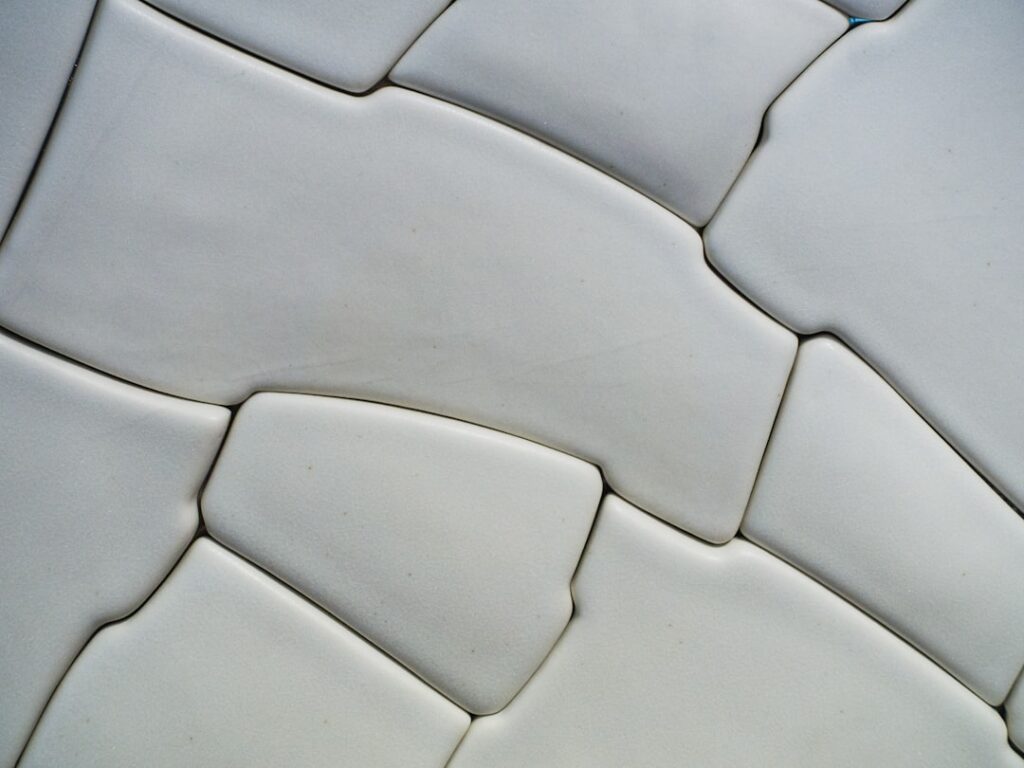
Porcelain vs ceramic is one of the most common questions in the tile world. Both are popular choices for floors, walls, and backsplashes, and they look similar enough that many homeowners wonder if there is a real difference worth paying for. The short answer is yes — porcelain and ceramic differ in composition, density, water absorption, durability, and price. Understanding these differences helps you choose the right tile for your specific application.
Part of our Tile & Grout guide — explore the full guide →
What Is Ceramic Tile?
Ceramic tile is made from natural clay mixed with water, shaped into tiles, and fired in a kiln at temperatures between 1,000 and 1,800 degrees Fahrenheit. The clay body is relatively porous and soft compared to porcelain. Most ceramic floor and wall tiles are coated with a glaze — a glass-like surface layer that provides color, pattern, and protection against moisture and stains.
Ceramic tile has been used for thousands of years and remains a staple of tile flooring and wall installations worldwide.
What Is Porcelain Tile?
Porcelain tile is a type of ceramic tile made from a more refined, denser clay that is fired at higher temperatures — typically 2,200 to 2,500 degrees Fahrenheit. This process produces a tile body that is harder, denser, and far less porous than standard ceramic. Porcelain can be glazed or unglazed (through-body), and it meets the specific ASTM standard of absorbing less than 0.5 percent moisture.
Key Differences Between Porcelain and Ceramic
Water Absorption
This is the defining technical difference. Porcelain absorbs less than 0.5 percent moisture by weight, while ceramic absorbs between 0.5 and 7 percent or more. This makes porcelain significantly better suited for wet environments, outdoor installations, and areas prone to freezing.
In practical terms, if you drop a piece of unglazed ceramic tile in water, it will absorb moisture through the body. An unglazed porcelain tile in the same conditions will absorb almost nothing. This matters most in showers, bathroom floors, outdoor patios, and below-grade installations.
Density and Hardness
Porcelain is denser and harder than ceramic, thanks to the finer clay composition and higher firing temperature. This makes porcelain more resistant to scratching, chipping, and cracking under impact. On the Mohs hardness scale, quality porcelain rates 7 or higher, while ceramic typically rates between 3 and 6.
Durability
Porcelain’s superior density translates to better long-term durability. It resists heavy foot traffic, point loads from furniture, and physical impacts better than ceramic. In commercial settings where thousands of people walk on the floor daily, porcelain is the standard choice. Ceramic works fine in residential settings with moderate traffic but will show wear faster in high-demand applications.
Through-Body Color
Unglazed or full-body porcelain carries its color and pattern all the way through the tile. If the surface chips, the damage is far less noticeable because the exposed material matches the surface. Ceramic tile relies entirely on its glaze for color — a chip reveals the white or red clay body underneath, which is clearly visible.
Cutting and Installation
Porcelain’s density makes it harder to cut. It requires a wet saw with a diamond blade and takes more time and skill to work with. Ceramic is softer and can often be scored and snapped with a tile cutter, which is faster and easier. This difference affects installation labor costs — porcelain installations typically take longer and cost more for labor.
Weight
Porcelain is heavier than ceramic because of its higher density. This matters for wall installations, where lighter ceramic tile is easier to hang and less likely to sag before the adhesive sets. It also affects shipping costs and the structural requirements for elevated floors.
Cost
Porcelain generally costs more than ceramic — both for the tile itself and for installation labor. Here are approximate ranges:
- Ceramic tile: $1 to $5 per square foot
- Porcelain tile: $3 to $12 per square foot
- Ceramic installation: $4 to $8 per square foot
- Porcelain installation: $5 to $12 per square foot
The price gap narrows for basic products and widens significantly for large-format, rectified, or specialty porcelain tiles.
When to Choose Porcelain
Porcelain is the better choice in these situations:
- Bathrooms and showers: Superior water resistance makes porcelain ideal for wet environments
- Kitchens: Handles spills, heavy traffic, and dropped items better
- Outdoor patios and walkways: Freeze-resistant porcelain can handle weather exposure
- High-traffic commercial spaces: Offices, retail stores, and restaurants benefit from porcelain’s durability
- Basements: Low moisture absorption protects against ground moisture
- Anywhere durability is the priority: If you want the longest-lasting floor, porcelain wins
When to Choose Ceramic
Ceramic makes more sense in these scenarios:
- Wall installations: Lighter weight is easier to work with on vertical surfaces
- Backsplashes: The surface does not take foot traffic, so ceramic’s softness is irrelevant
- Low-traffic floors: Bedrooms, guest rooms, and closets where wear is minimal
- Budget projects: When cost is the primary concern and the application is not demanding
- DIY installations: Easier to cut and handle, making ceramic more beginner-friendly
- Decorative accents: Ceramic’s wider range of hand-crafted and artisan options often provides more unique design choices
Porcelain vs Ceramic for Specific Rooms
Bathroom
Porcelain is the recommended choice for bathroom floors and shower walls due to its negligible water absorption. If budget is tight, glazed ceramic with a PEI rating of 3 or higher can work for the main floor, but the shower floor and walls should be porcelain.
Kitchen
Porcelain is preferred for kitchen floors because it handles spills, stains, and heavy foot traffic better. Ceramic is fine for the backsplash, where it faces minimal stress.
Living Room
Either works well. In moderate-traffic living rooms, ceramic can save money without sacrificing performance. In homes with pets or heavy traffic, porcelain provides an edge in scratch and wear resistance.
Entryway
Porcelain is the better choice for entryways, which face tracked-in dirt, wet shoes, and heavy foot traffic. Through-body porcelain is especially practical here because chips from dropped items will not show the clay body underneath.
How to Tell Porcelain from Ceramic
When shopping, look for these indicators:
- Packaging labels: Products should clearly state whether they are porcelain or ceramic
- Weight: Porcelain tiles are noticeably heavier for the same size
- Edge inspection: Look at the cut edge. Porcelain has a uniform, dense cross-section. Ceramic often shows a different-colored layer between the body and glaze
- Price: If a tile seems surprisingly cheap for its quality claims, it may be ceramic marketed with porcelain-like language
- ASTM certification: True porcelain meets ASTM C373 for water absorption below 0.5 percent
Common Misconceptions
All Porcelain Is Better Than All Ceramic
Not necessarily. A high-quality, well-made ceramic tile can outperform a cheap, poorly manufactured porcelain tile. Brand reputation, manufacturing quality, and proper installation matter as much as the tile category.
Ceramic Cannot Be Used in Bathrooms
Glazed ceramic is used in bathrooms every day. The glaze provides a waterproof surface. The concern is with the tile body absorbing moisture through unglazed edges and grout joints. In a well-grouted and maintained installation, ceramic works fine for most bathroom applications. It is simply not the optimal choice for shower floors and walls.
Porcelain Does Not Need Sealing
Glazed porcelain does not need sealing. However, unglazed porcelain can benefit from sealing because its surface, while dense, can still absorb stains over time. And regardless of tile type, cement-based grout always needs sealing unless you use epoxy grout.
Final Thoughts
The porcelain vs ceramic debate comes down to application, budget, and performance needs. Porcelain is the stronger, more water-resistant, longer-lasting option and is worth the premium for floors, wet areas, and high-traffic zones. Ceramic offers excellent value for walls, backsplashes, and lighter-duty floors where its softer nature is not a disadvantage. In many projects, the smartest approach is to use porcelain where performance matters most and ceramic where budget savings make sense — often in the same home.


